Seasonal Ranger (Iona, Staffa & Lunga)
Closing date: 25 January 2026
Apply here: https://www.nts.org.uk/volunteering-jobs/job-search/highlands-islands

Closing date: 25 January 2026
Apply here: https://www.nts.org.uk/volunteering-jobs/job-search/highlands-islands
Closing date: 26 January 2025
Apply here: https://www.nts.org.uk/volunteering-jobs/job-search/highlands-islands
There are 3 roles available:

This role can also be found on CJS here: https://www.countryside-jobs.com/job/feb23/seasonal-wildlife-ranger-mull-and-iona-community-trust-1602-1
Meanwhile the National Trust for Scotland are recruiting for 2 roles which will work alongside our ranger service here on Mull, Iona and Staffa – a Staffa Seasonal Ranger, and an Inner Hebrides Property Manager.

More details of the Staffa role can be found here: https://www.countryside-jobs.com/job/feb23/seasonal-ranger-national-trust-for-scotland-1002-6

More details of the manager role can be found here: https://www.countryside-jobs.com/job/mar23/inner-hebrides-property-manager-national-trust-for-scotland-1002-3
They say that all good things must come to an end, and my summer volunteering with the Ranger Service is no exception. I can hardly believe it’s already been two months since I arrived on this beautiful island and I’ll soon be heading back to the mainland and home to Yorkshire.
My final week on Mull started at the Tiroran Community Woodland outreach day, where visitors ate delicious cakes while watching eagles and crossbills (so I’m told….) soaring over the trees. We held our own event, planned by yours truly, later in the week. Armed with jumbo pavement chalk, we invited anyone and everyone to come and decorate the newly completed Loch Pottie Path, which joins the villages of Fionnphort and Creich. It was great to see visiting children playing hopscotch just metres away from local poets who had written special pieces for the event.

A classic game, easier to play when you’re a child (trust me)

Translation: what a light and a great view. I’m told it rhymes in Dutch!

A contribution from one of our local poets
We did a lot of survey work this week, too. Since June I’ve regularly been out to monitor a shag colony nesting on the cliffs of Iona and my final visit on Tuesday revealed two chicks I hadn’t seen previously. Good news for a colony that was completely washed away last year!
Towards the end of the week, Emily (Ranger for South Mull, Iona, Burg and Staffa) and I were fortunate enough to spend a morning with the exceptional botanist Lynne Farrell, who has scoured Mull (and various other islands) on a mission to record the plants that live there. What I lack in botanical skill I make up for in powers of observation: we found a total of 110 different species in the small area we surveyed, more than when Lynne surveyed the same plot over twenty years ago.

Lynne and I putting our binoculars to good use to zoom in on the plants over the stream
This week is a good representation of my time here; I don’t think many people will have had a summer as varied as mine. Assisting Emily, I’ve been everything from facepainter to wildlife tour guide to researcher to photographer to teaching assistant.

‘Going Wild’ at Fionnphort beach

Taking a well-earned break while surveying the plants on Burg
I’ve listened for corncrakes under a midnight sun, wild camped with the feral goats of Burg, stood top-deck on a tour boat looking for cliff-side nests and watched a sheepdog herd ducks at my first ever agricultural show.

From left: Lizzy, Emily and me at Bunessan Show

Wild camping on Burg – before the rain came
I’ve surveyed more species than I can count, (including the endemic slender scotch burnet moth and the extremely rare Iceland purslane), and my plant ID repertoire has expanded from daisy or dandelion to include such things as selfheal, butterwort and northern marsh orchid. I’ve watched dolphins playing in the sound of Iona, photographed puffins crash landing on Staffa and laughed at my own naivety for thinking a buzzard could possibly be a sea eagle.
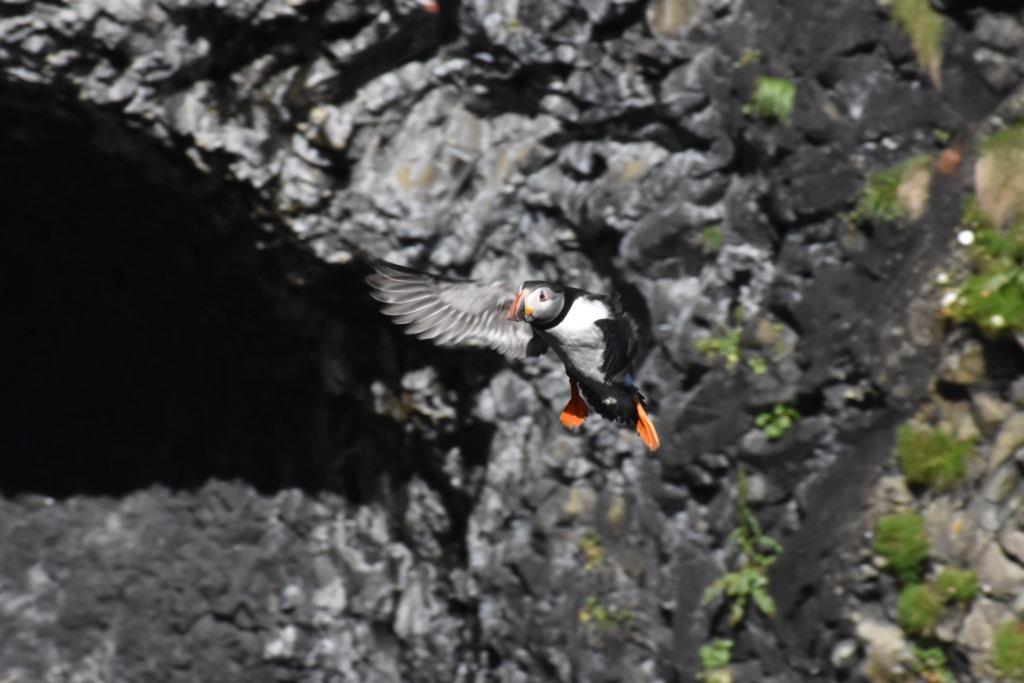
Can’t visit Staffa without photographing a puffin

Bottlenose dolphins are regular visitors to the Sound of Iona
Outside of work I’ve explored the white sandy beaches of Ardalanish, Uisken and Kilvickeon, climbed Ben More, Mull’s only Munro, and eaten a life-changingly delicious cheesecake at Dervaig Artisan Bakery (not in the same day, though that would have been the perfect reward). I’ve also seen one or two absolutely stunning sunsets and views to islands I can barely point out on a map.

Kilvickeon beach, one of my favourites
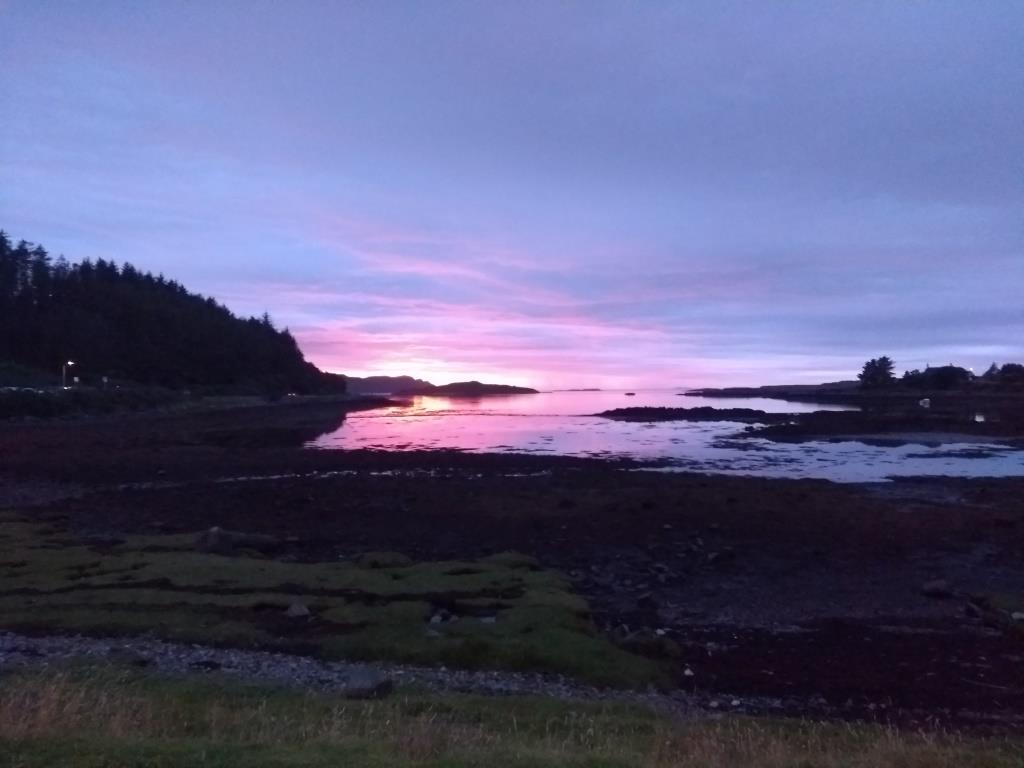
An incredible sunset seen from Bunessan
I’m sure I’ll be back, but for now I’ll bid a fond farewell to the island and its people. I’m particularly grateful to Emily for her patience, guidance and conversation, which has helped make this summer an unforgettable experience.
Emilie
Another Summer, another Volunteer Ranger! I’m Emilie, working down on the Ross of Mull with Emily W until mid-August. I’ve only been here a few weeks but already have plenty to report.

Bunessan, my home for the next 3 months.
My first day started quite relaxed, meeting Emily and sorting my paperwork, until about 4pm when we decided the weather was good enough for a midnight corncrake survey. We rushed home, grabbed our camping kit and caught the last ferry to Iona where the birds, declining across Western Europe, have a stronghold.
Exploring the island and eating a delicious pub dinner was a great way to spend the evening, made all the better by views of dolphins just off the coast! When the time came, the survey involved walking up and down the island listening to the birds’ calls and trying to figure out if you heard two individuals or one plus its echo. I’m glad Emily was there; the echoes fooled me more than once. With the survey done my first day was over and we headed to bed, slightly disappointed with the number of birds we’d heard.
The next day was just as hectic as the previous evening. We stomped across the island to find the shag nests I’ll be monitoring for the rest of the summer, then went all the way back to run an after school “nature club” at the island school. In the middle of that I managed to survey the fields to see whether they were being grazed or left to meadow – important information for conserving the corncrakes.
The next few days were slightly easier going. We took a group down to Carsaig, spotting seals and seabirds as well as the fossils the area is known for, then visited Lizzie and Caoimhe, the incredibly knowledgeable Mull Eagle Watch Rangers. Thanks to them I saw my first White Tailed Sea Eagle adult AND watched it feeding its precious chick in the nest.
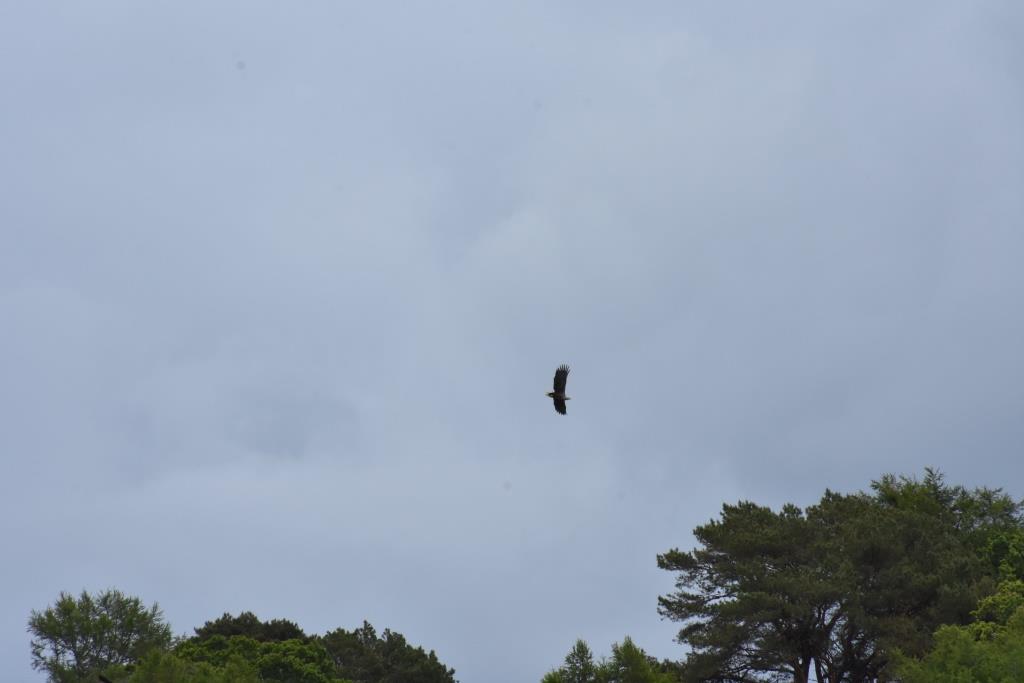
My first sea eagle, shame about the photographer!
My second week of work was just as extraordinary as the first. Starting on Sunday, Emily and I joined a Thistle Camp – a National Trust for Scotland working holiday group – that had boldly decided to wild camp on the beautiful Burg peninsula. None of us had banked on that day’s feral goat count being a 9 hour hike, but I’m starting to think that no one gets an easy first day on Mull!
The next day we rejoined the campers to count Slender Scotch Burnet Moths and survey their food plants. These moths are endemic to (only found on) Mull and Ulva, so it’s important that we keep an eye on their numbers. After some initial confusion with six-spot Burnets and cinnabar moths, the group got their eyes in and found hundreds of individuals across the sites we checked. The future looks good for these pretty insects.

Slender Scotch Burnet Moths
The camp wasn’t only about survey work. The team pulled bracken, cleared debris from the beach and helped repair the Burg bothy, a structure that will soon be restored its former glory. It was wonderful to join the campers for their final night in the wilderness, sharing their homemade mac and cheese and listening to the stories of the fun they’d had throughout the week. Thistle Camps are a great way to contribute to the maintenance of National Trust properties throughout Scotland – you can find out more here.

Not a bad place for a campsite…..
I’m not sure how I squeezed everything in, but week two also saw me head to Tiroran Community Forest with the RSPB and other conservation organisations to watch the ringing of a sea eagle chick, and revisit the shag nests on Iona to find that at least 3 chicks have hatched!
Week three has barely begun but is already off to a good start – I visited Staffa yesterday with Peter, the first dedicated Staffa Ranger, seeing bottlenose dolphins as well as the booming puffin population. It was a shame about the rain, but I suppose that’s to be expected in Scotland. We’re returning to the island later in the week to finish the seabird surveys that we couldn’t manage. A Ranger’s work is never done; there just aren’t enough hours in a day!
Last month I spent a day with Meryl at the Tiroran forest eagle hide. With the remaining chick on the nest, all age groups got a good view of it through the telescope as it was stretching its wings and moving around the nest. There was lots of great information told by Meryl to keep everyone entertained and learning new things about White tailed eagles. Thanks for letting me help for the day again Meryl.
As part of the Ross of Mull Historical Centre’s project to survey old townships, I went along to help with the walk over survey at Ardchiavaig with Argyll Archaeology. The day involved walking over a mapped area of the township identifying the buildings and wall structures and measuring each one to start getting an overall view of the site. On the day we were also joined by Alasdair Satchel who is a local documentary maker who was making a short documentary about the project and doing film making and editing with young people throughout the week. BBC Alba also came out on site to get some footage for a news segment on An Là.
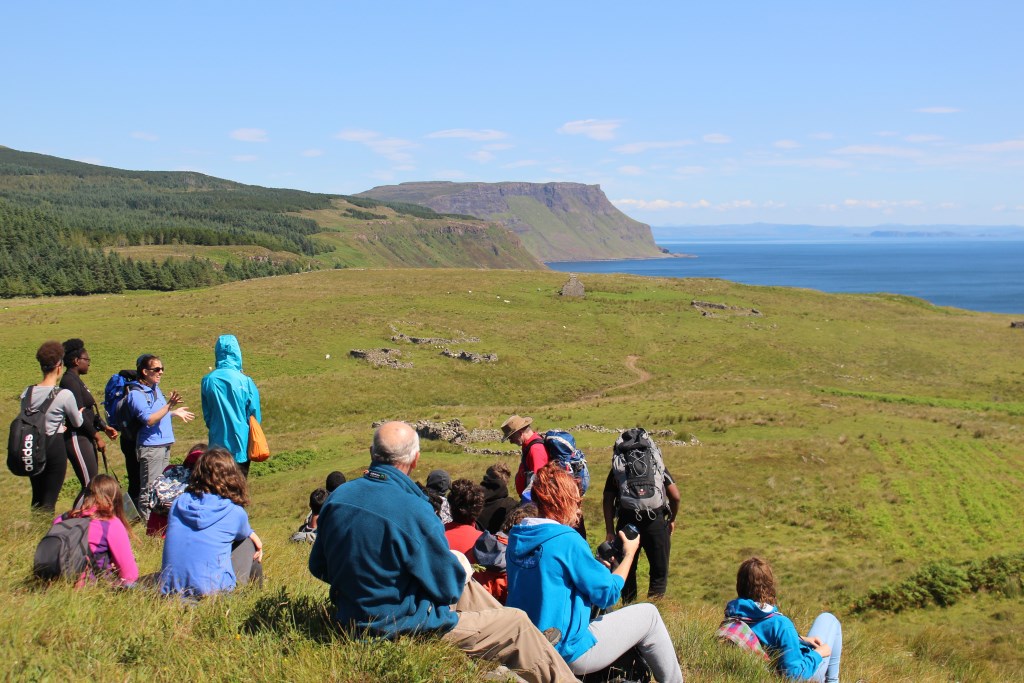
We took a group of young people who were over on Mull as part of The Stevenson Way, to Shiaba for a walk to look at the local nature. We firstly had a look at the Mariota Stone at Kilvickeon Church then the group navigated their way to Shiaba township. On the way, we saw the sheep fank, sundew plants in the bog and my first golden eagle on Mull just above our heads.
This year’s Practical plants day was a bit windy and wet but we managed to compress it all into the hall and everything ran smoothly. It was a fun filled day of a variety of plant based workshops such as wool dyeing and herbal remedies, talks and locally sourced/cooked food was on the menu for lunch. We also had our children’s table with activities such as seed bombs, insect homes, paper making and rainsticks. In the afternoon I got the chance to do the cooking workshop where we made dandelion shortbread, elderflower marshmallows and egg muffins with different herbs. Thank you to everyone who made the day such a success.


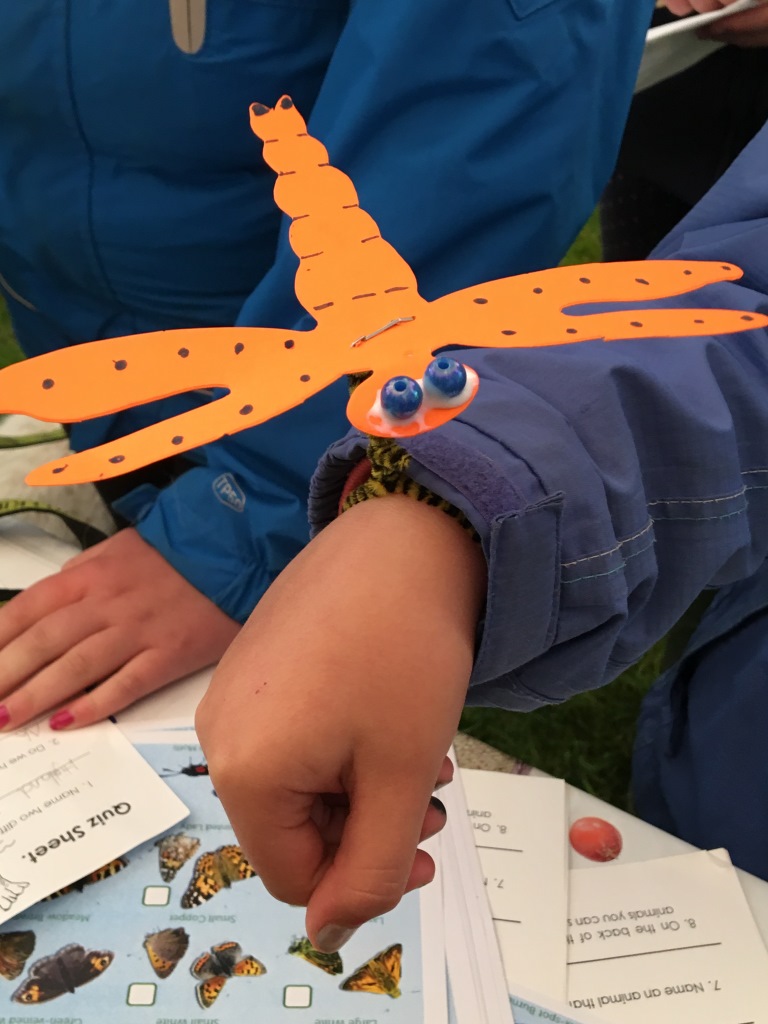
Yesterday we ran our Love Our Planet event over on Iona for 6-10 year olds. It was a lovely day where we explored the effects of climate change on our planet and what we can do to help. We looked at the clouds, explored greenhouse gases, pretended to be puffins and corncrakes on migration as well as looked for pollinators and made seed bombs to take home. We also wrote on a shell a pledge that we could do at home to help protect our planet.


Kate
Moth Morning
With the fantastic help from Sian and Chris we ran a lovely moth morning today, and what a catch! Moth trapping is a fantastic way to see some native wildlife that would otherwise go unnoticed, largely due to moth’s nocturnal habits. You can start out by simply using a white sheet hung on a washing line with a torch, or strings dipped in something sweet and sickly – hang these on a tree and see what you attract. Or go a little further by either constructing your own moth trap or spend some money to invest in one. Moth trapping is brilliant for everyone and is very exciting for children, it’s a little like a present when you have your first look in the morning.

Mothing
Sian and Chris set up a trap last night and left it running, ready for this morning. Inside among old egg cartons we had lots of moths (egg cartons are great to give shelter and hiding places). Sometimes you also get some other critters, I’ve had burying beetles before which are amazing, but beware, these smell strongly of rotting flesh so having them inside your home is definitely not recommended! All you need to ID your catch is some storage containers; these can be specifically for bugs or even something like a urine sample bottle. Collect up you moths so they’re safe before they start to become active and you lose them. You can them ID them one by one. The best way to do this is with an ID guide or book, there are lots to choose from. I’d also have a notebook and a pen handy to record your findings.
Here is our list of findings
Macro moths:
July highflyer (Hydriomena furcata) x5
Antler moth (Cerapteryx graminis) x6
Gold spot (Plusia festucae) x2
Bordered beauty (Epione repandaria) x1
Common wainscot (Common wainscot) x3
Small fan-footed wave (Idaea biselata) x1
Beautiful goldenY (Autographa pulchrina) x2
Mottled beauty (Alcis repandata) x1?
Scalloped oak (Crocallis elinguaria) x1
Lesser swallow prominent (Pheosia gnoma) x1
Lesser broad-bordered yellow underwing (Noctua janthe) x3
Dark arches (Apamea monoglypha) x3
Dun-bar (Cosmia trapezina) x1?
Lesser yellow underwing – Hebridean specimen (Noctua comes) x1

Lesser swallow prominent
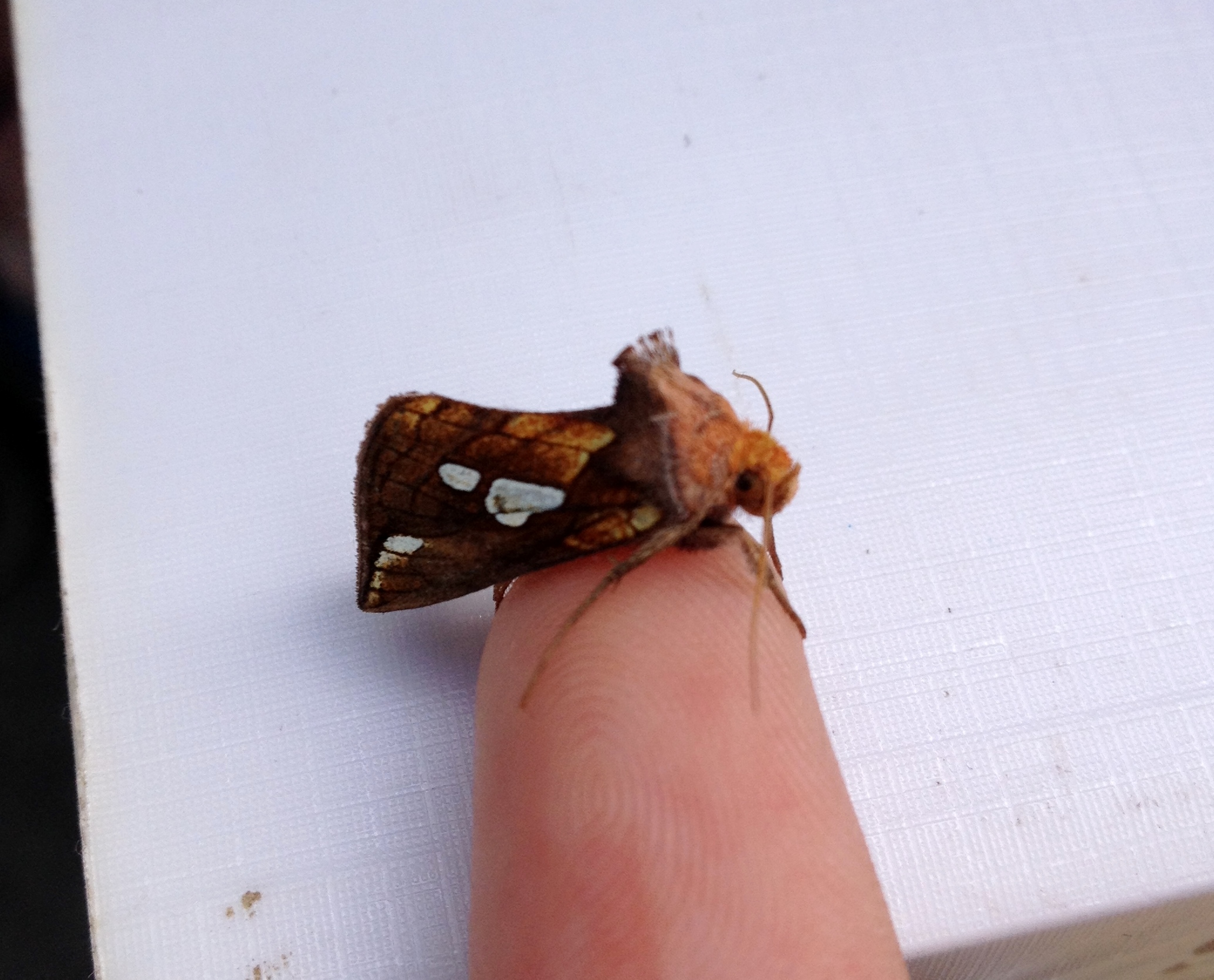
Gold Spot
Micro moths:
Honeysuckle moth (Ypsolopha dentella) x1
Bird cherry ermine (Yponomeuta evonymella) x2
Eudemia species
Depending on where you are in the UK your species list could be really different and of course it will depend on the time of year too and what food plant species you have nearby. If you trap regularly over a period of months you’ll see things change. The more you trap the better you’ll get at recognising the common moths, anything unusual will jump out at you. A lot of them are quite docile to handle and photograph but if not a safe way to slow them down is to pop them in the fridge for a while.
So, why not get outside and enjoy the UK’s 2500 species of moth? They beat our 70 species of butterfly hands down and a lot of them are just as stunning. My favourites from today were the Lesser swallow prominent and the Gold spot.
 Mull & Iona Ranger Service