Marine Education Day

Yesterday I attended a Marine Education Day in Craignure for the school children of Mull organised by the GRAB trust.

I focused on showing the link between white-tailed eagles and the marine environment – how on earth does plankton and seaweed have an impact on our apex predator? We played a great habitat web game to show this, demonstrating how everything links together one way or another. We saw how important the marine habitat is for lots of species, not just the obvious ones like dolphins and whales! I then mixed things up a bit by adding in an oil spill or plastic litter – we found how one human action can impact species right up the food chain. If we continue to damage our marine environment we could definitely see problems with our white-tailed eagles.

White-tailed eagle workshop

White-tailed eagle workshop

We also had Q&A time and kids always manage to amaze me with their questions and insight plus we had our lifesize eagle silohette and foot for everyone to enjoy. 

We ran four of these workshops throughout the day for the groups of children, Tobermory, Bunessan, Dervaig and Salen schools were all present and so it was a great way to meet some children I hadn’t managed to see this year – they’re already looking forward to a visit next season.

Life size white-tailed eagle

Life size white-tailed eagle

Also this week I led a guided walk for the Windsurf cruise ship whilst it was anchored in Tobermory. We headed off along the coastal path to Aros Park, enjoying the views of Tobermory bay and the waterfalls. We chatted about the history of Aros Park and then headed off to view the standing stones at Baliscate before heading back down toward the main street. Lovely morning and we were lucky with the weather.

Thanks for reading – Rachel 🙂

What a load of rubbish!!

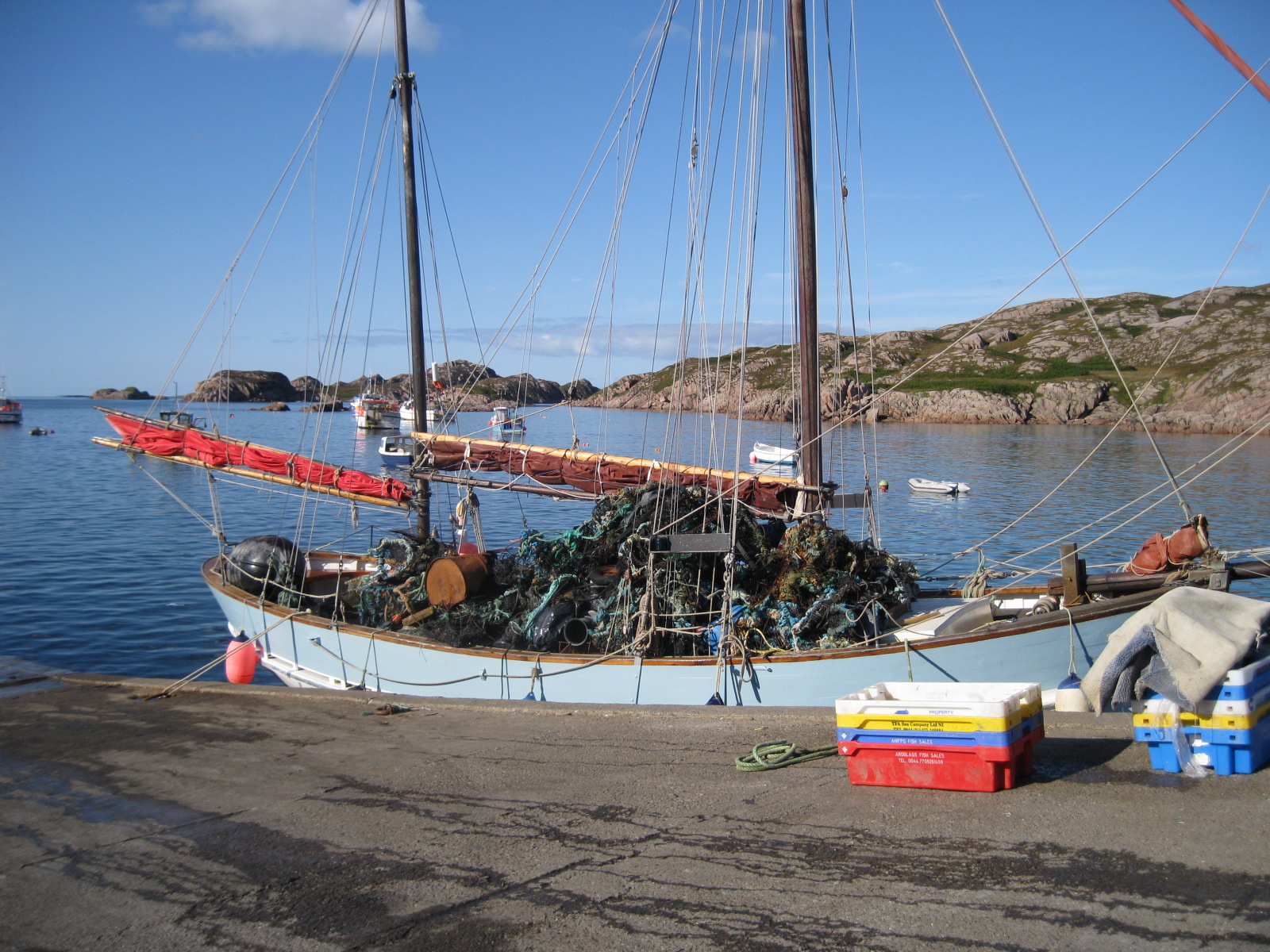
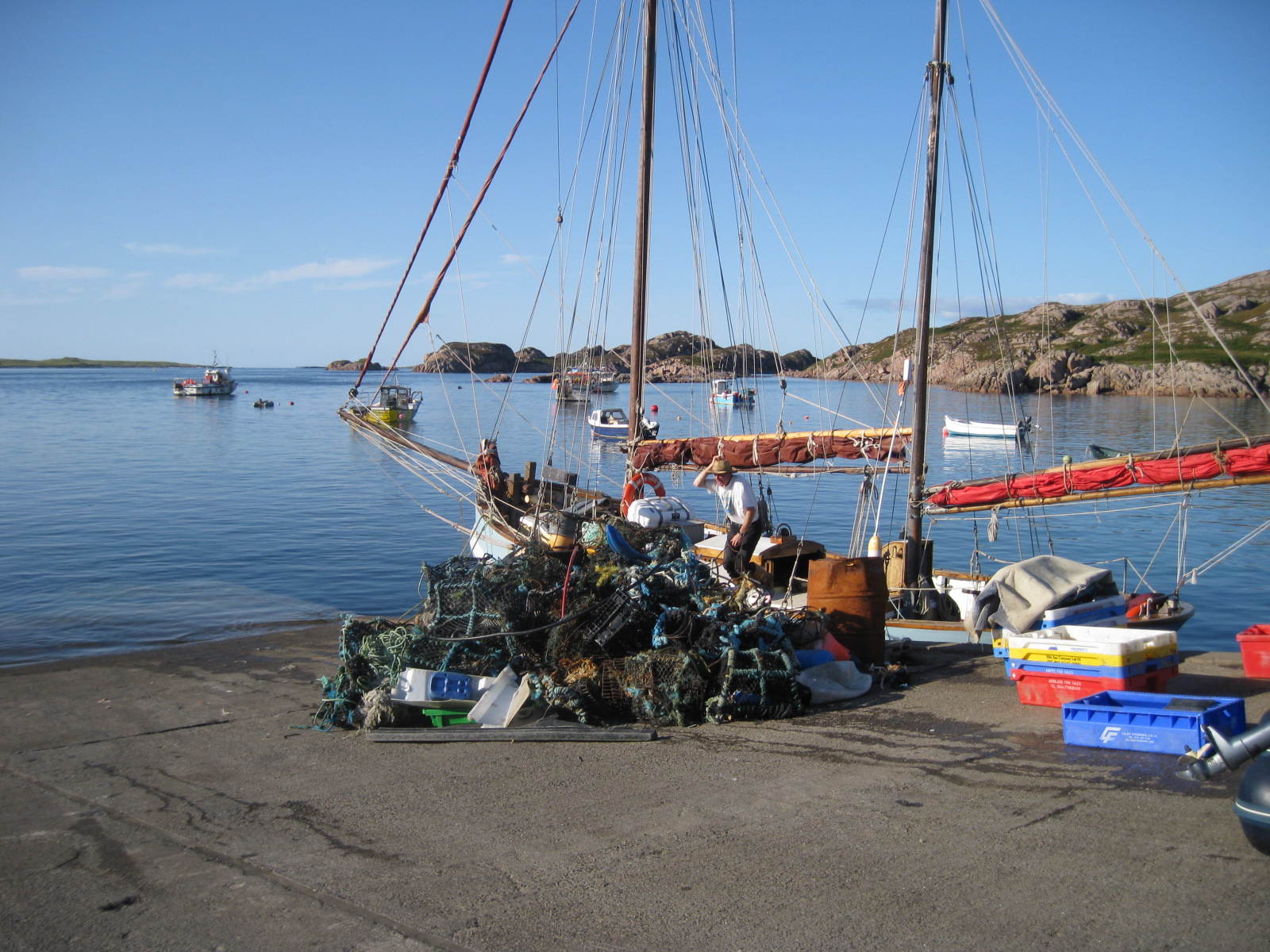
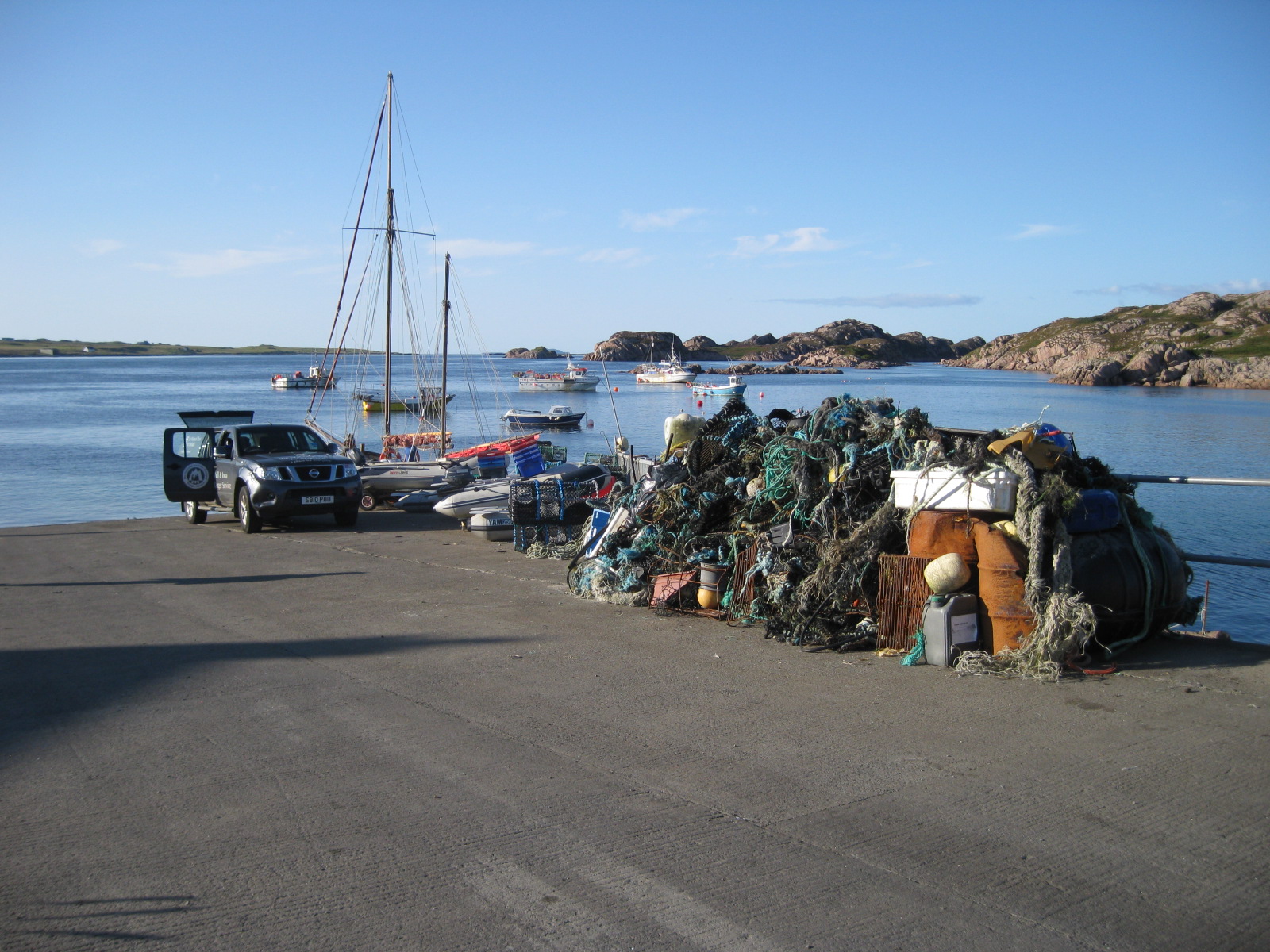
Very satisfying day today, the time was finally right to collect all that rubbish piled up on the beaches of Burg and Iona!  Earlier in the year hardworking Thistle Campers (www.nts.org.uk/thistlecamps) had cleared the coastline, taking out what they could carry and leaving behind the heavy stuff, including 2 lorry tyres and lots of broken creels.  I’ve been waiting for the right weather to take it all away and thanks to some very cheery helpers and sunny calm conditions, today was the day!  We did give the beautiful B.Marie a temporary alternative makeover as a rubbish barge, but she’s none the worse for the ordeal, and our haul is now piled as neatly as possible on Fionnphort pier ready for the bin lorry to take it away.  Many thanks to Mark, Stuart, David and Sophie for all their efforts and our contribution to making some of our coastline and seas a little bit cleaner.

You’ve probably seen some of the shocking photos of the effects of marine litter on wildlife, and even entire islands made up of floating plastic…but this week I came across a hopeful twist, a company which is processing plastic taken from the sea into threads to weave fabric, and make it into clothes to sell – how’s that for creative recycling?!

If this has inspired you, more beachcleaning opportunities after our Scoor Cave walk on 3rd September.

august 2014 030august 2014 034august 2014 035august 2014 038

Mighty moths

Moth Morning

With the fantastic help from Sian and Chris we ran a lovely moth morning today, and what a catch! Moth trapping is a fantastic way to see some native wildlife that would otherwise go unnoticed, largely due to moth’s nocturnal habits. You can start out by simply using a white sheet hung on a washing line with a torch, or strings dipped in something sweet and sickly – hang these on a tree and see what you attract. Or go a little further by either constructing your own moth trap or spend some money to invest in one. Moth trapping is brilliant for everyone and is very exciting for children, it’s a little like a present when you have your first look in the morning.

Mothing

Mothing

Sian and Chris set up a trap last night and left it running, ready for this morning. Inside among old egg cartons we had lots of moths (egg cartons are great to give shelter and hiding places). Sometimes you also get some other critters, I’ve had burying beetles before which are amazing, but beware, these smell strongly of rotting flesh so having them inside your home is definitely not recommended! All you need to ID your catch is some storage containers; these can be specifically for bugs or even something like a urine sample bottle. Collect up you moths so they’re safe before they start to become active and you lose them. You can them ID them one by one. The best way to do this is with an ID guide or book, there are lots to choose from. I’d also have a notebook and a pen handy to record your findings.


Here is our list of findings

Macro moths:

July highflyer (Hydriomena furcata) x5

Antler moth (Cerapteryx graminis) x6

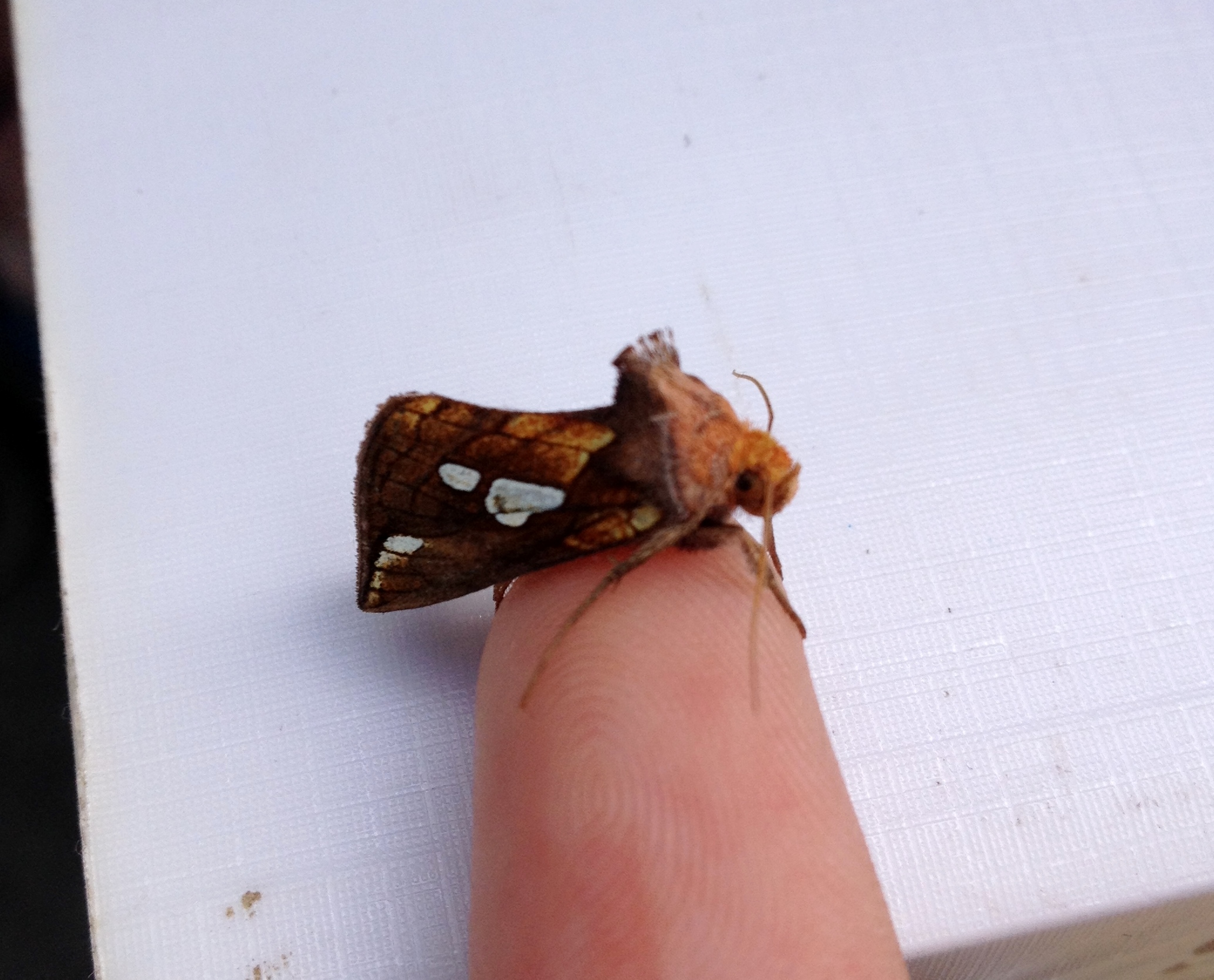
Gold spot (Plusia festucae) x2

Bordered beauty (Epione repandaria) x1

Common wainscot (Common wainscot) x3

Small fan-footed wave (Idaea biselata) x1

Beautiful goldenY (Autographa pulchrina) x2

Mottled beauty (Alcis repandata) x1?

Scalloped oak (Crocallis elinguaria) x1

Lesser swallow prominent (Pheosia gnoma) x1

Lesser broad-bordered yellow underwing (Noctua janthe) x3

Dark arches (Apamea monoglypha) x3

Dun-bar (Cosmia trapezina) x1?

Lesser yellow underwing – Hebridean specimen (Noctua comes) x1

Lesser swallow prominent

Lesser swallow prominent

Gold Spot

Gold Spot


Micro moths:

Honeysuckle moth (Ypsolopha dentella) x1

Bird cherry ermine (Yponomeuta evonymella) x2

Eudemia species

Depending on where you are in the UK your species list could be really different and of course it will depend on the time of year too and what food plant species you have nearby. If you trap regularly over a period of months you’ll see things change. The more you trap the better you’ll get at recognising the common moths, anything unusual will jump out at you. A lot of them are quite docile to handle and photograph but if not a safe way to slow them down is to pop them in the fridge for a while.

So, why not get outside and enjoy the UK’s 2500 species of moth? They beat our 70 species of butterfly hands down and a lot of them are just as stunning. My favourites from today were the Lesser swallow prominent and the Gold spot.


Moth madness

What a week!

We’re definitely lucky to be in the ranger service with weather like this, who wouldn’t want to work outside? Unfortunately the guided walk on Ulva earlier this week didn’t go ahead but we’ve still been busy! 

We’re preparing for the Uisken Beach Games which is this Sunday from 2pm, come along to see us there. We’ve got lots of fun activities for kids to enjoy and to keep them busy from fishing and beach bingo, to the “rotten game” and wee beach critters to explore. The weather is forecast to stay pretty good too so pop down and say hello.

It’s also not long till both Bunessan and Salen shows, again with lots of fun outdoor activities for the children. Rachel, our eagle ranger will be there too with eagle activities, and interesting things for adults to have a look at too.

Moth Madness  

Next Monday morning we’re running an interesting event, join Rachel and Sian Scott for a morning of moth madness. We’ll run a moth trap over night to catch lots of lovely moths, we can then investigate, ID and enjoy the contents in the morning whilst enjoying a brew too. We have about 500 moths in Scotland, most of which you’ve probably never seen before, some are absolutely stunning. Come along to Craignure Village Hall at 10am – 12pm on Monday morning.

Everyone welcome and hot drinks are on hand.

£5 per adult

£3 per child

(Costs go towards the use of the hall and to the ranger service)

Call 07540792650 for more info!

Moth Trapping