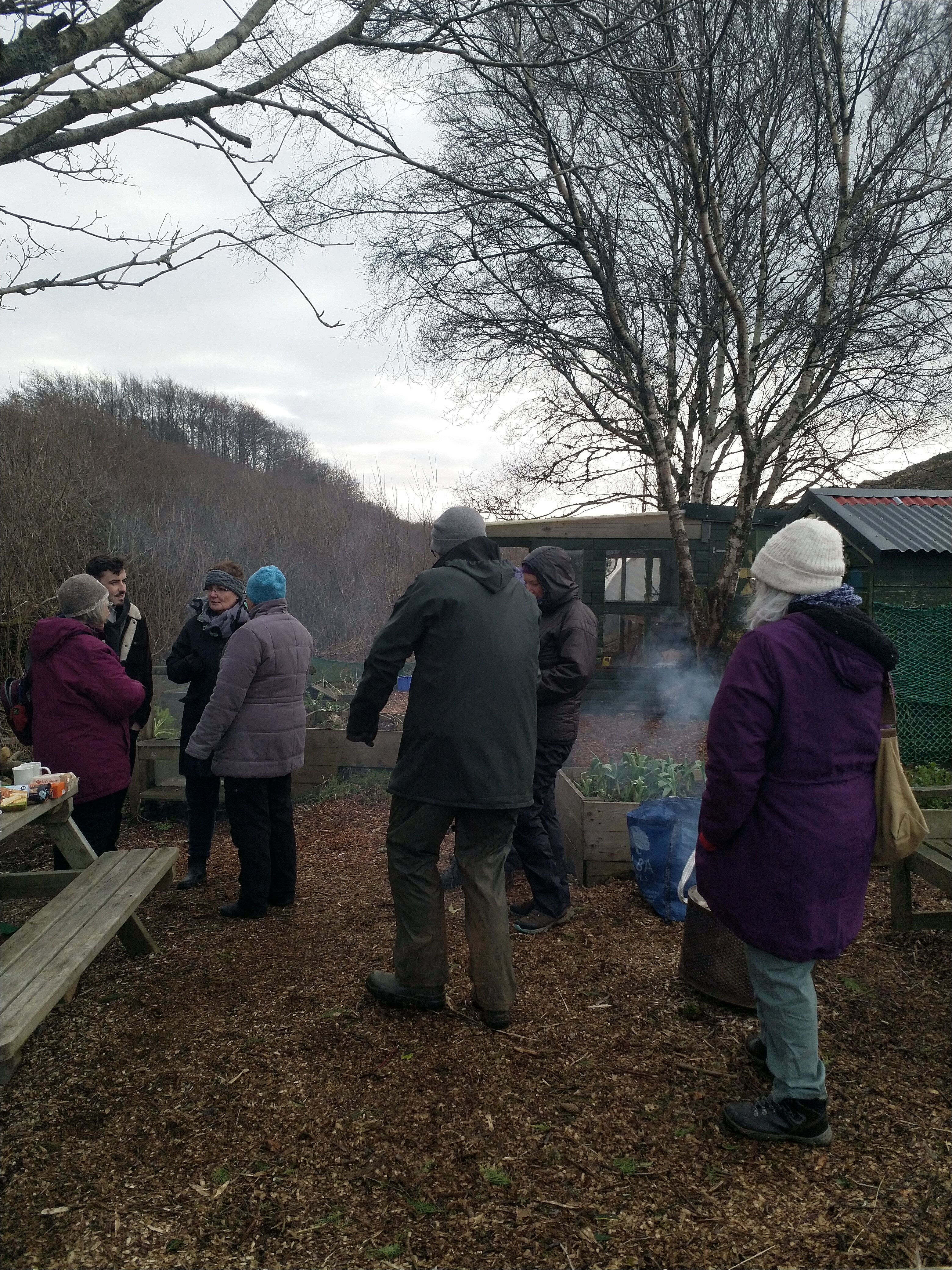
Emily teamed up with community gardener Lorraine to host another 5 sessions of Wintering Well in January and February, offering outdoor companionship and creativity at the Ross of Mull Community Garden.
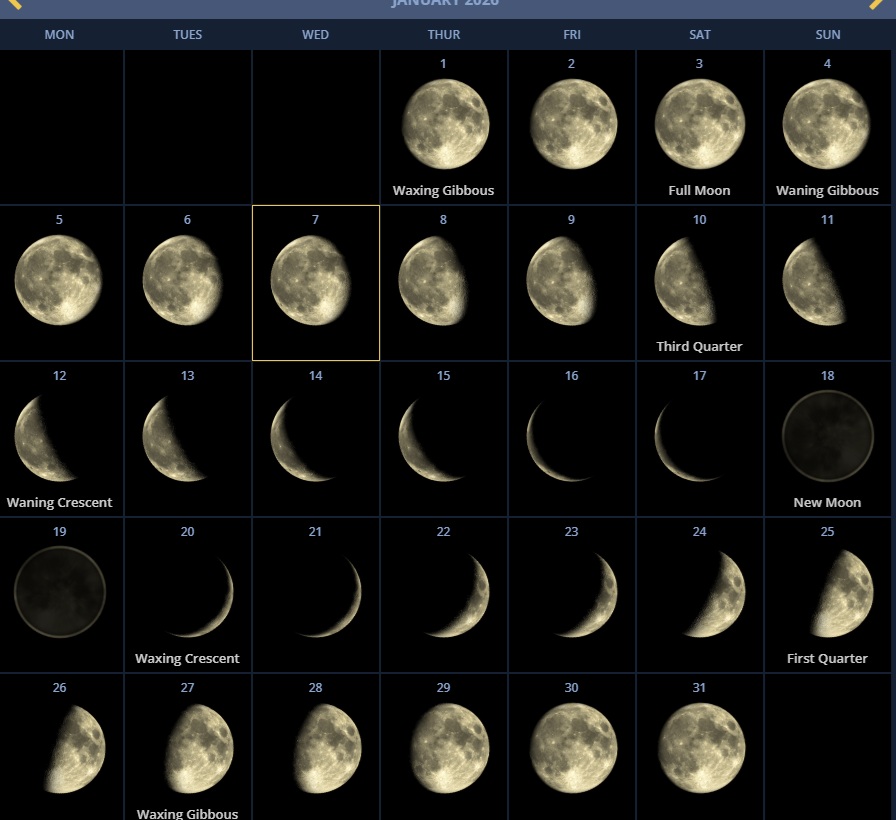
This year we explored winter light in all its forms. Our first session took a fresh look at seasons, inspired by this book. We started noticing how nature is responding to incremental changes in light and temperature (studying this is known as phenology) and thought about phases of the moon. A chilly start with a cold north wind resulting in numb toes despite hot tea and wrapping up in lots of layers! Each week we were accompanied by an appropriate poem or reflection, and started by reading this one from Nick Welsh: https://iona.org.uk/darkness-and-light/
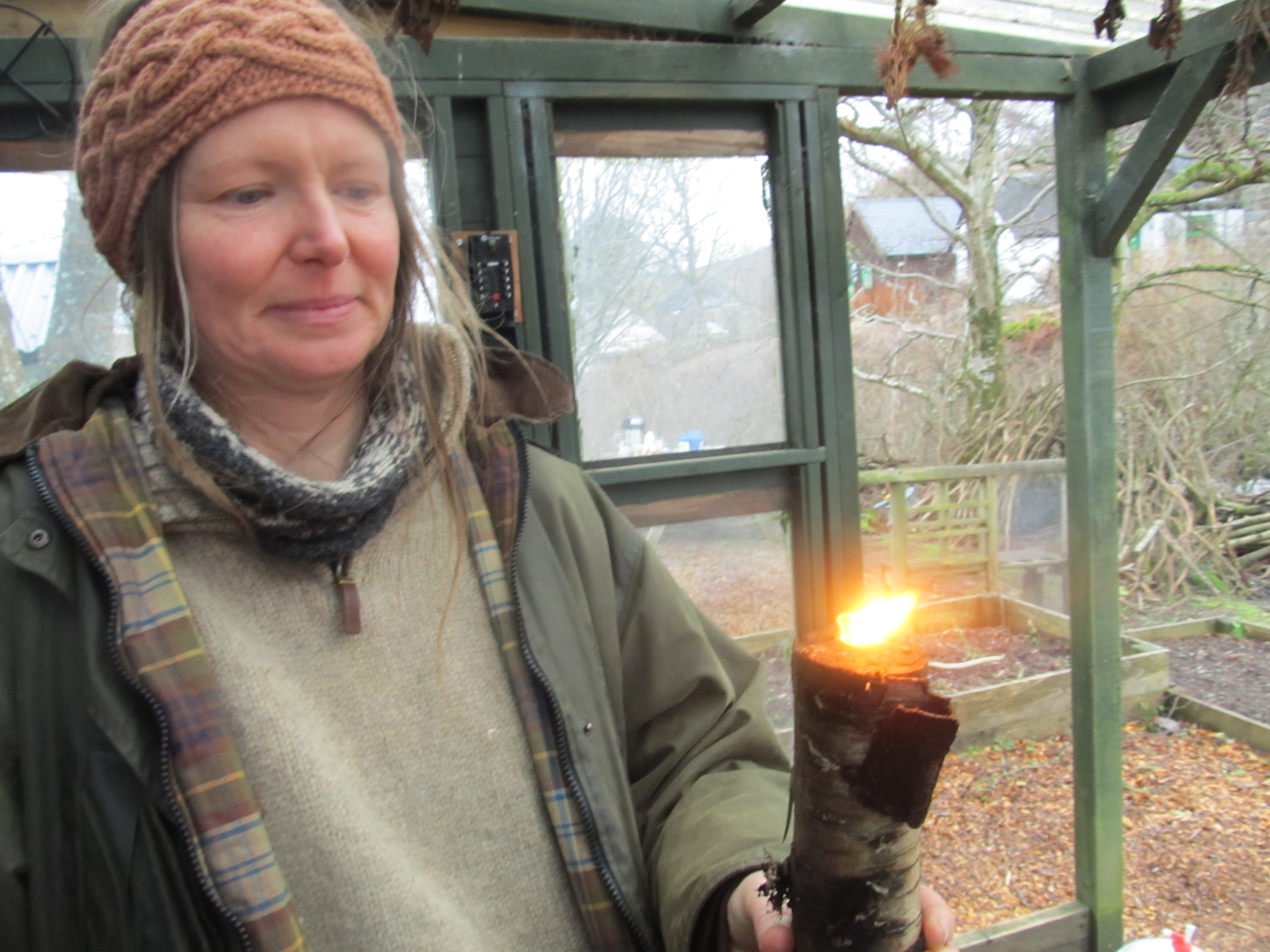
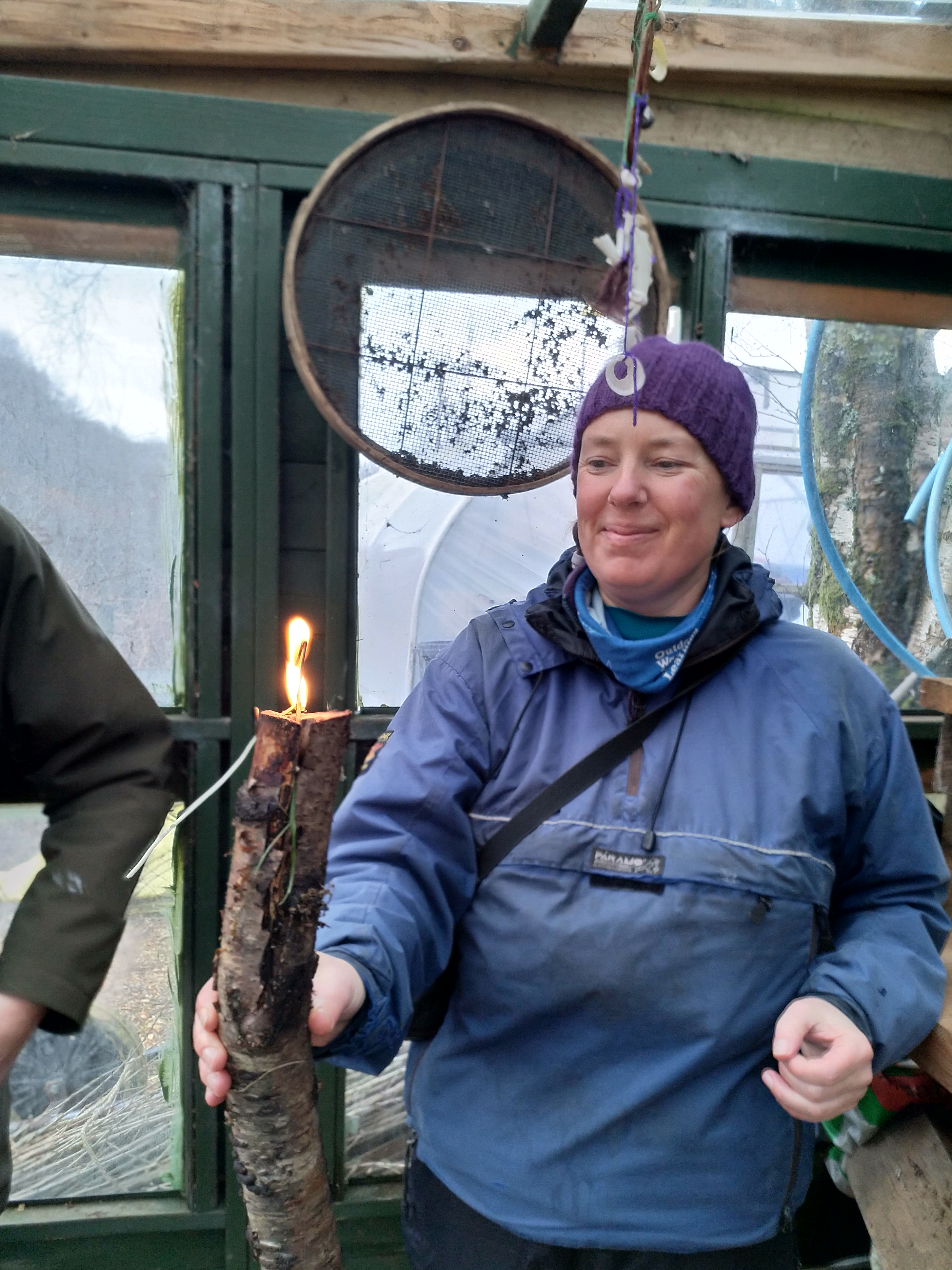
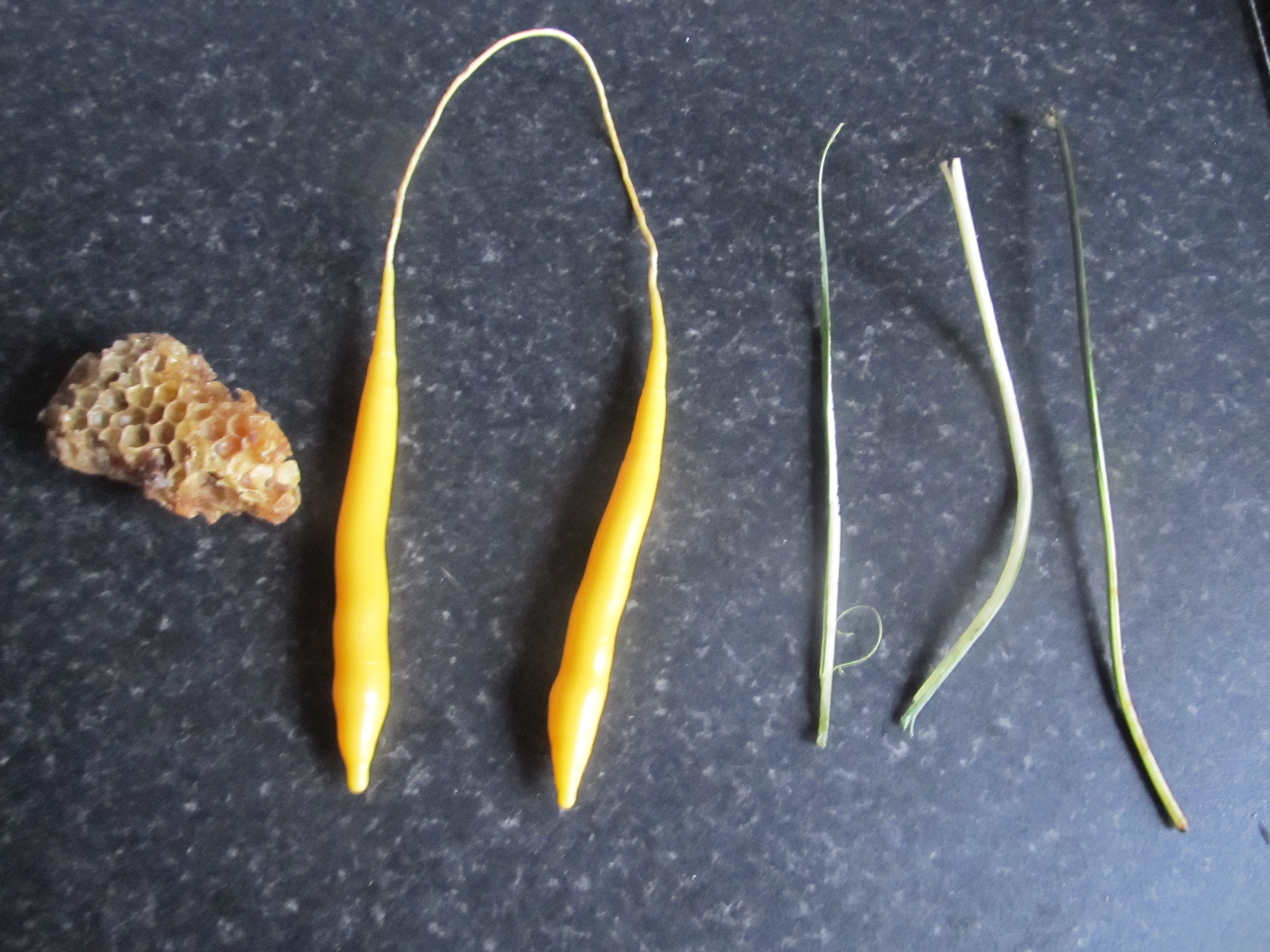
Week two was about candlelight, we thought about how making simple lamps from rushes dipped in oil would have been a constant household task around here in times past, and had a go ourselves. Later that day the nature club children also tried out beeswax candle dipping. This week we read Jan Sutch Pickard’s Candlemas poem, here’s an extract:
In the dark days

under rain-heavy clouds,

among broken branches,

on sodden earth,

the snowdrops light their candles.


A flame that cannot be put out

by darkness or gales or doubt...
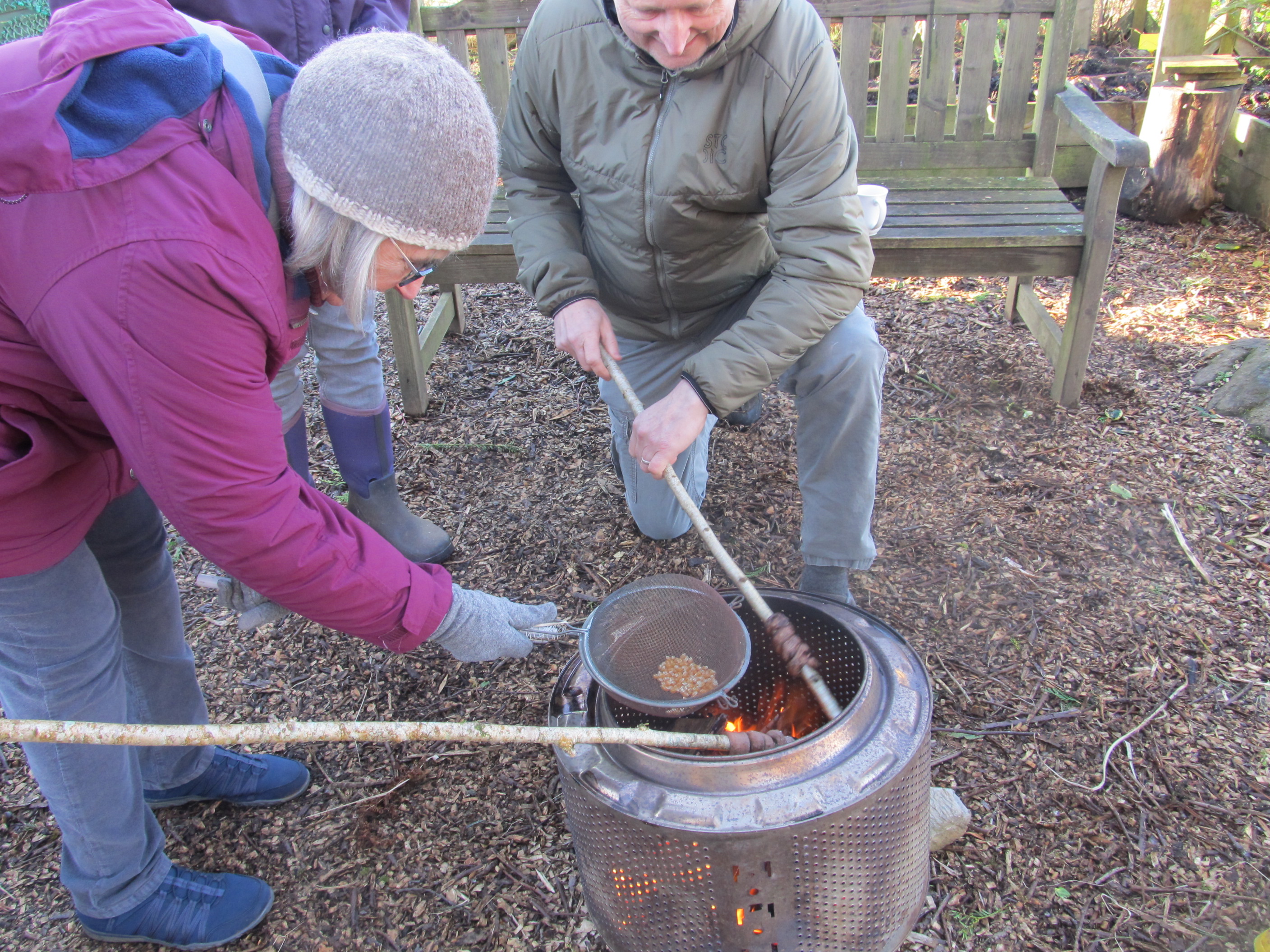
Firelight was the theme of our third session, and we focused on the simple joy of cooking snacks at the firepit – chocolate bread and popcorn! Rosemerry Trommer’s poem In the Bleak Midwinter spoke to us of belonging.
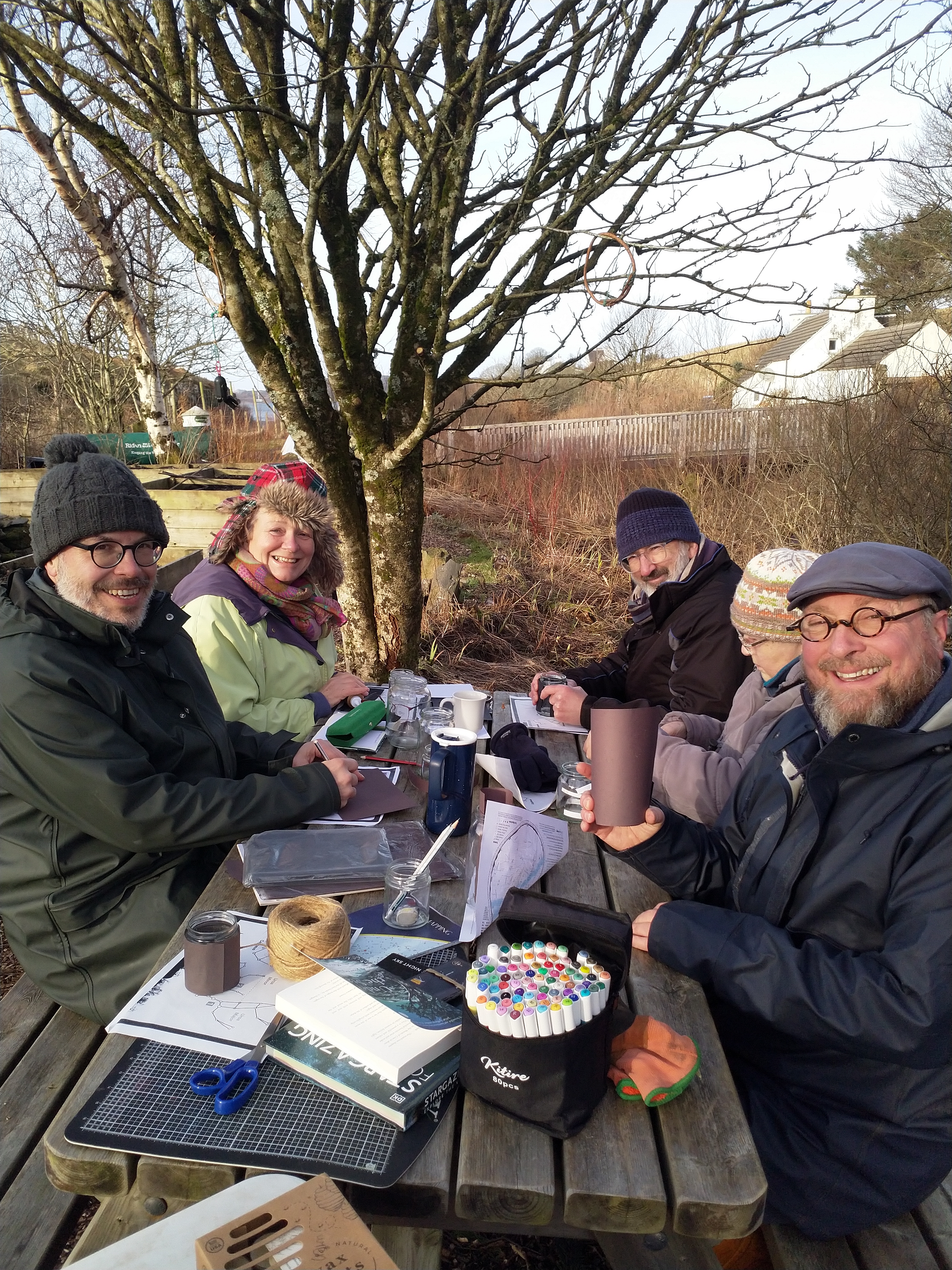
In week four we thought about starlight and made lanterns with holes punched to show glowing constellations, helping us to remember the patterns and look for them in the night sky.
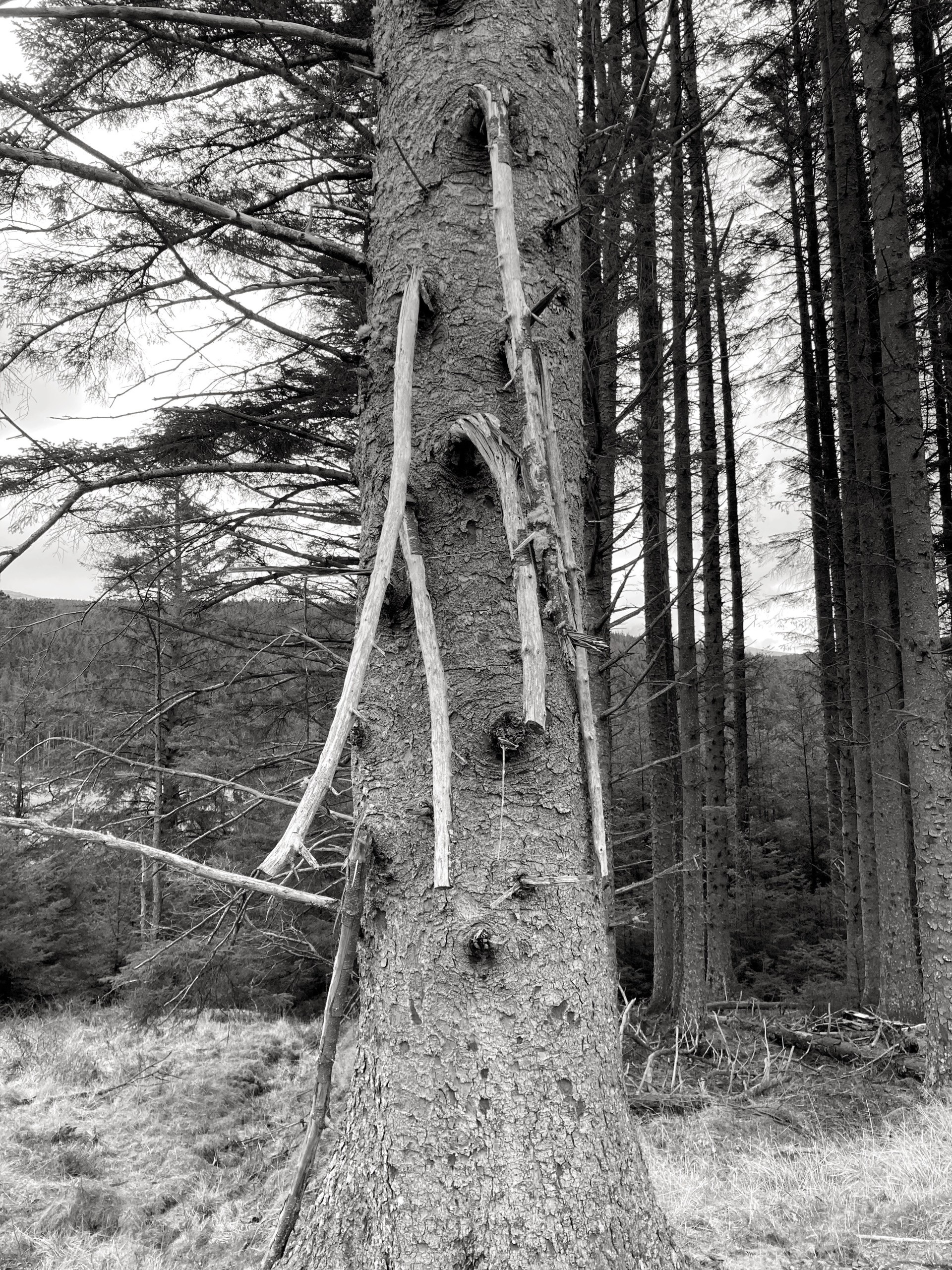
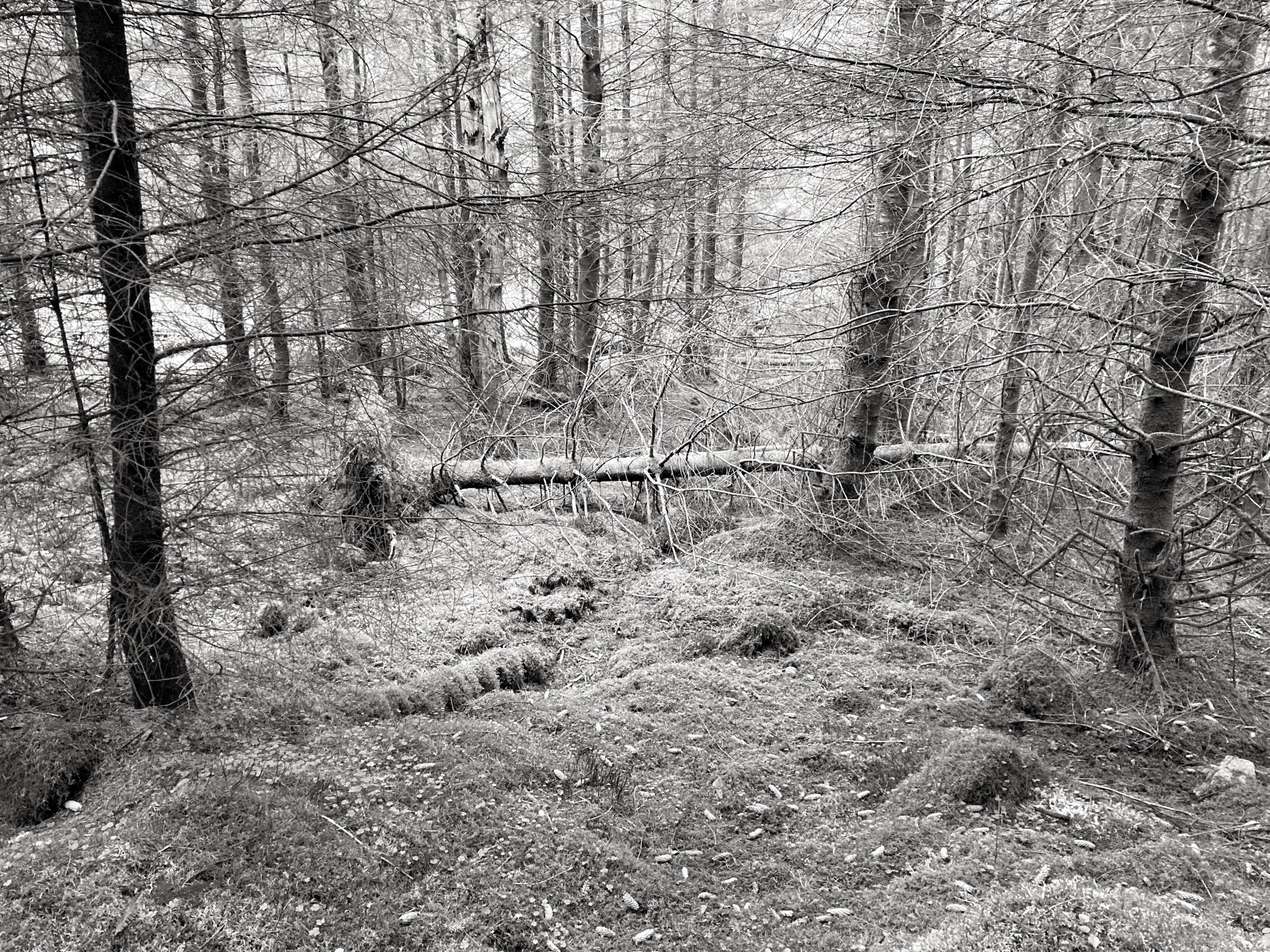
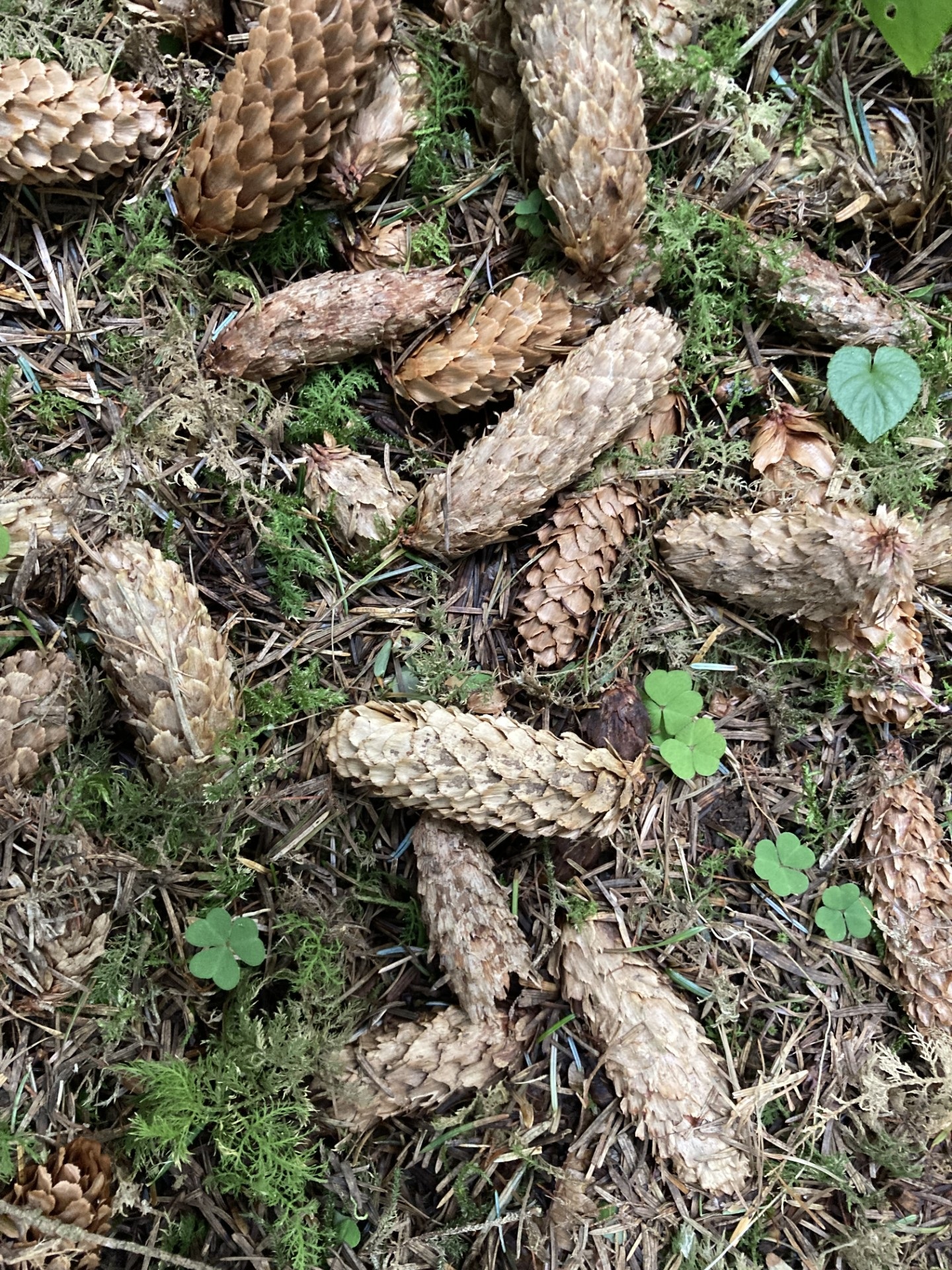
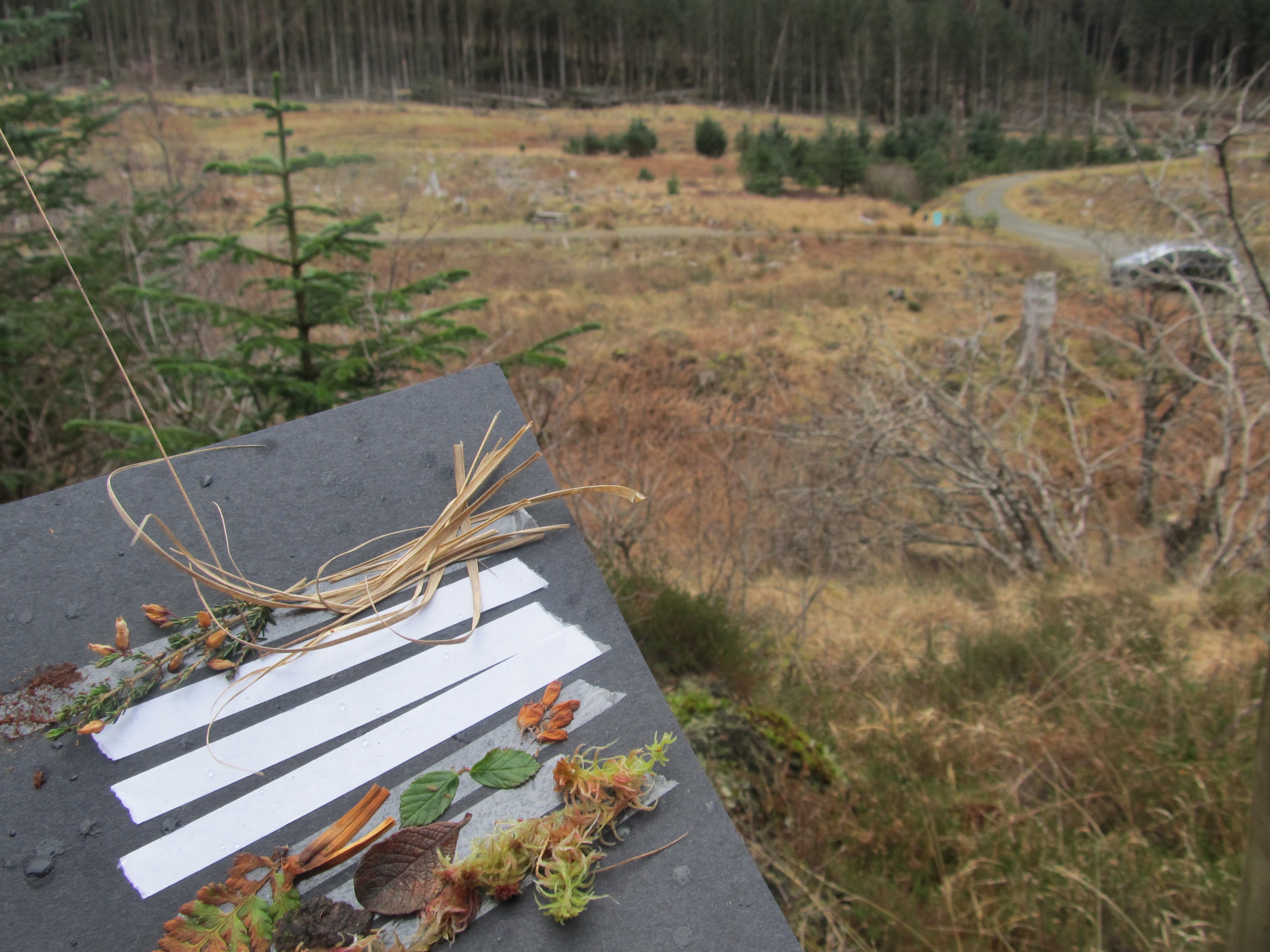
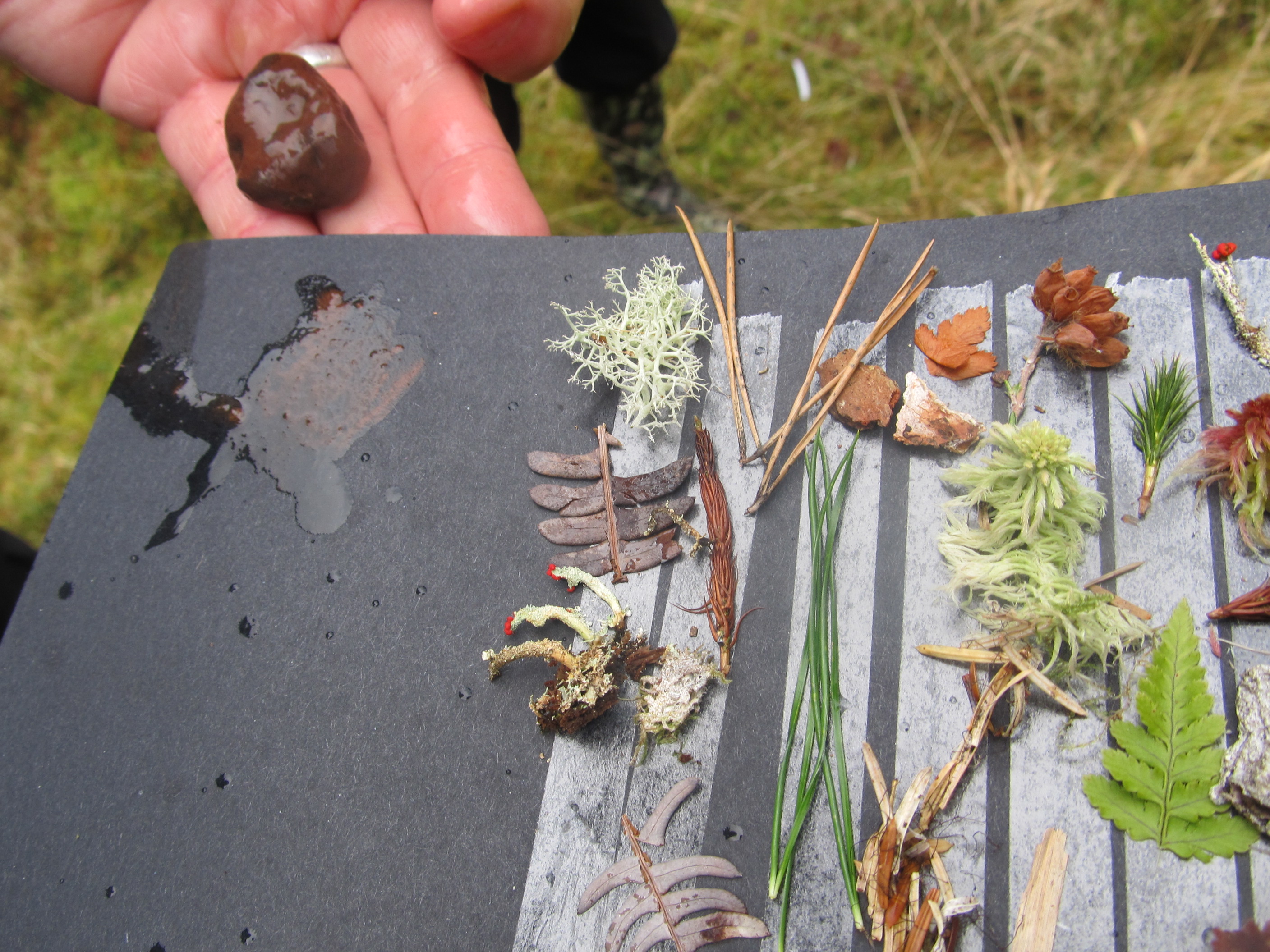
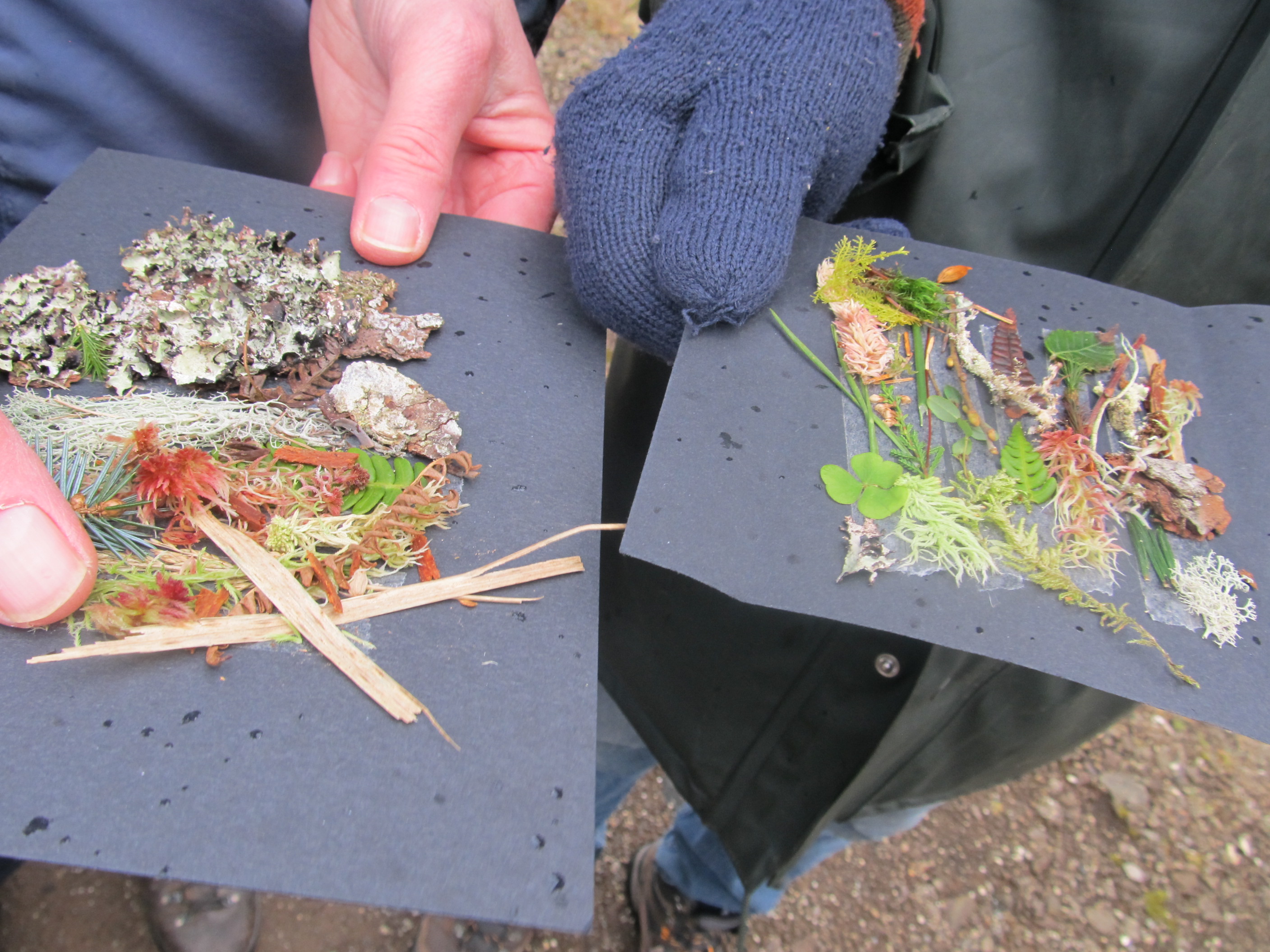
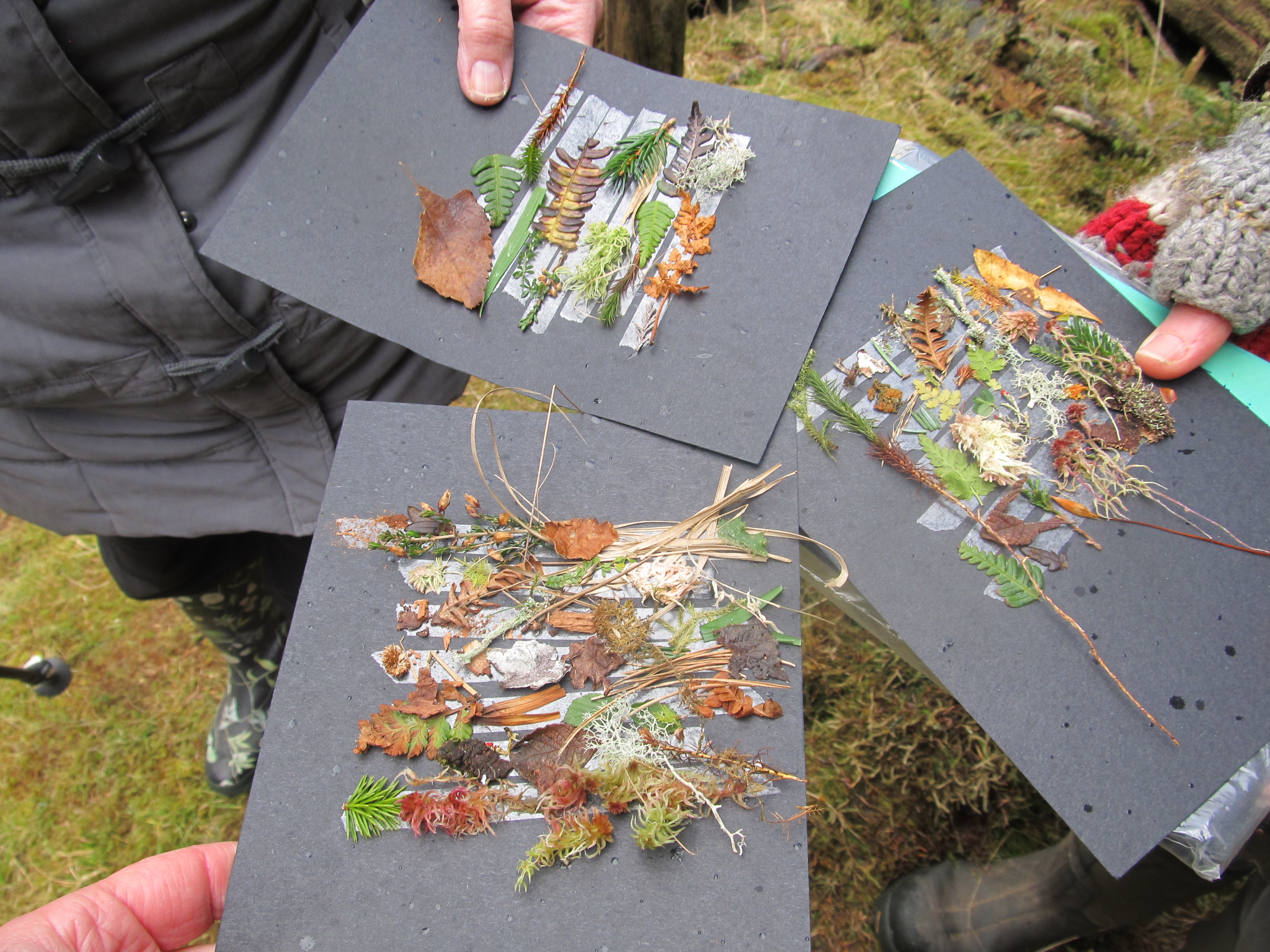
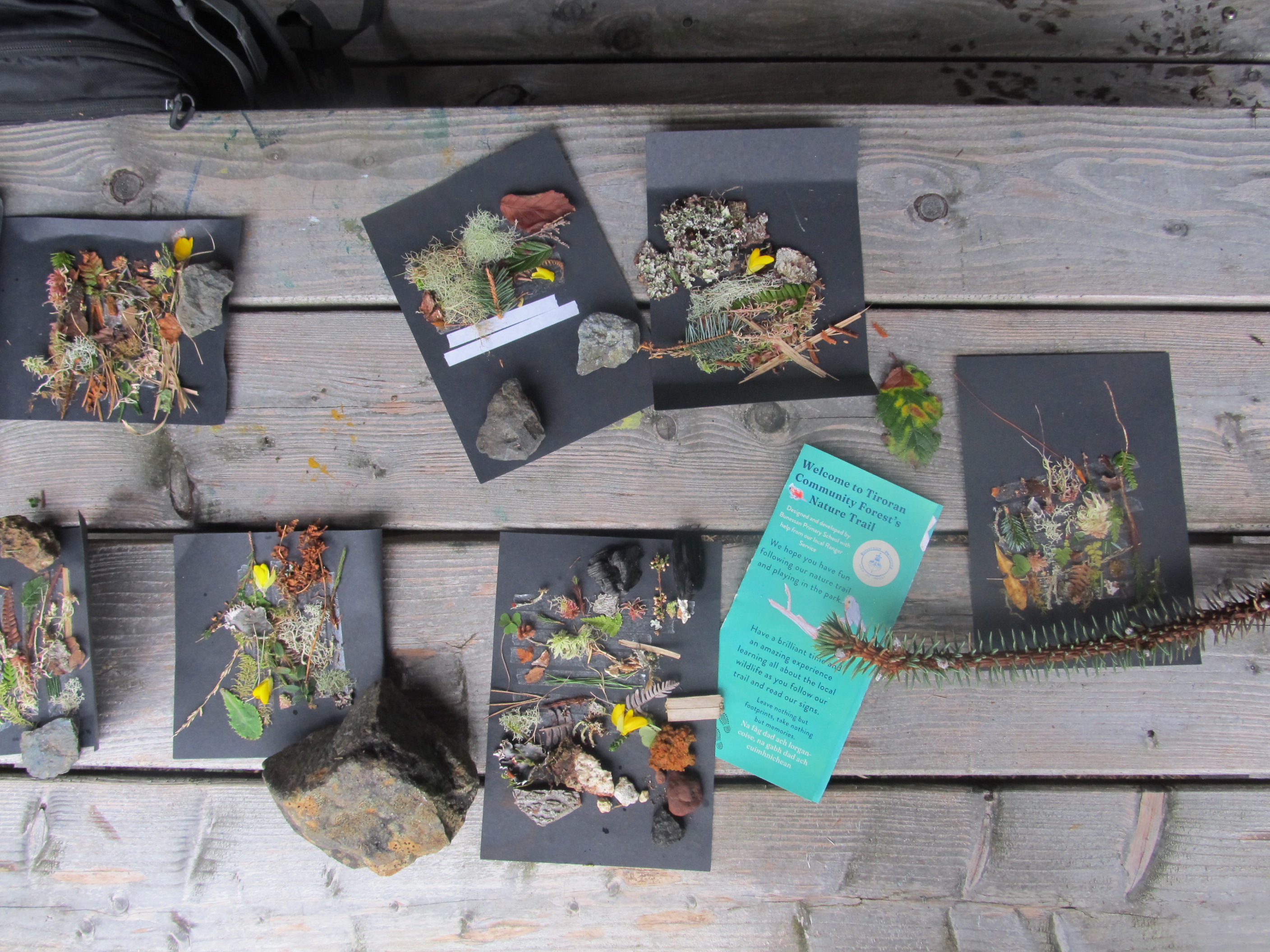
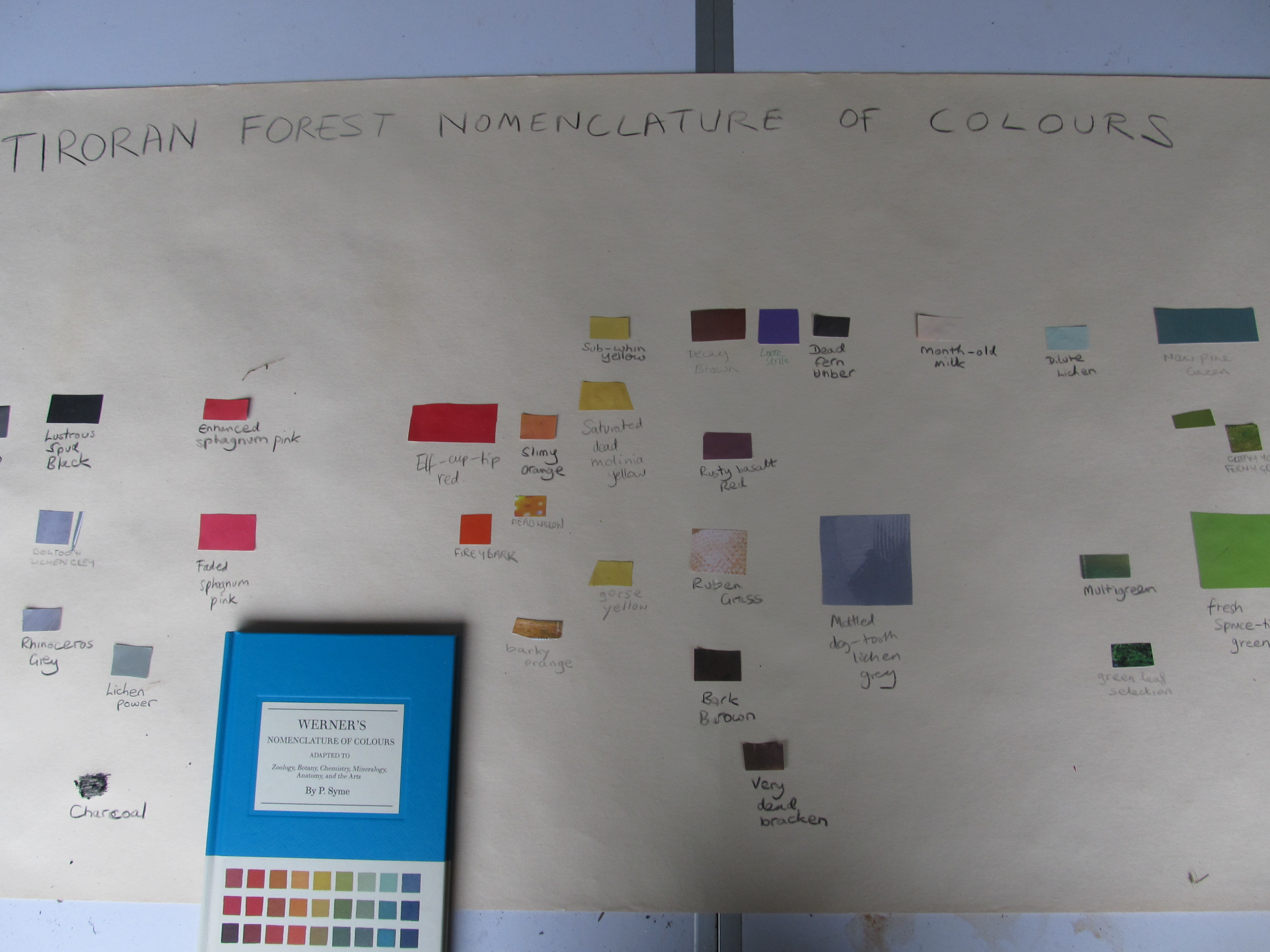
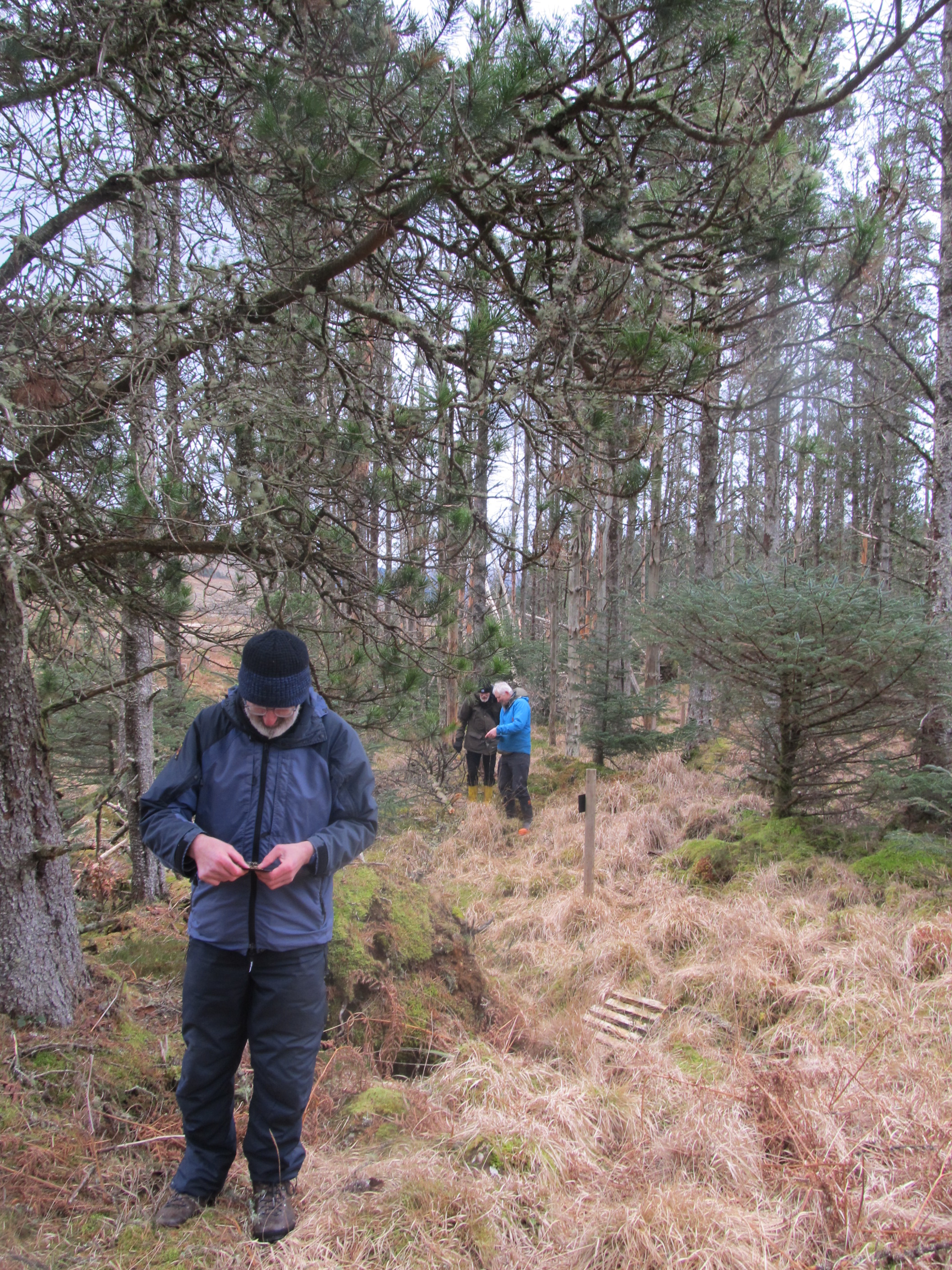
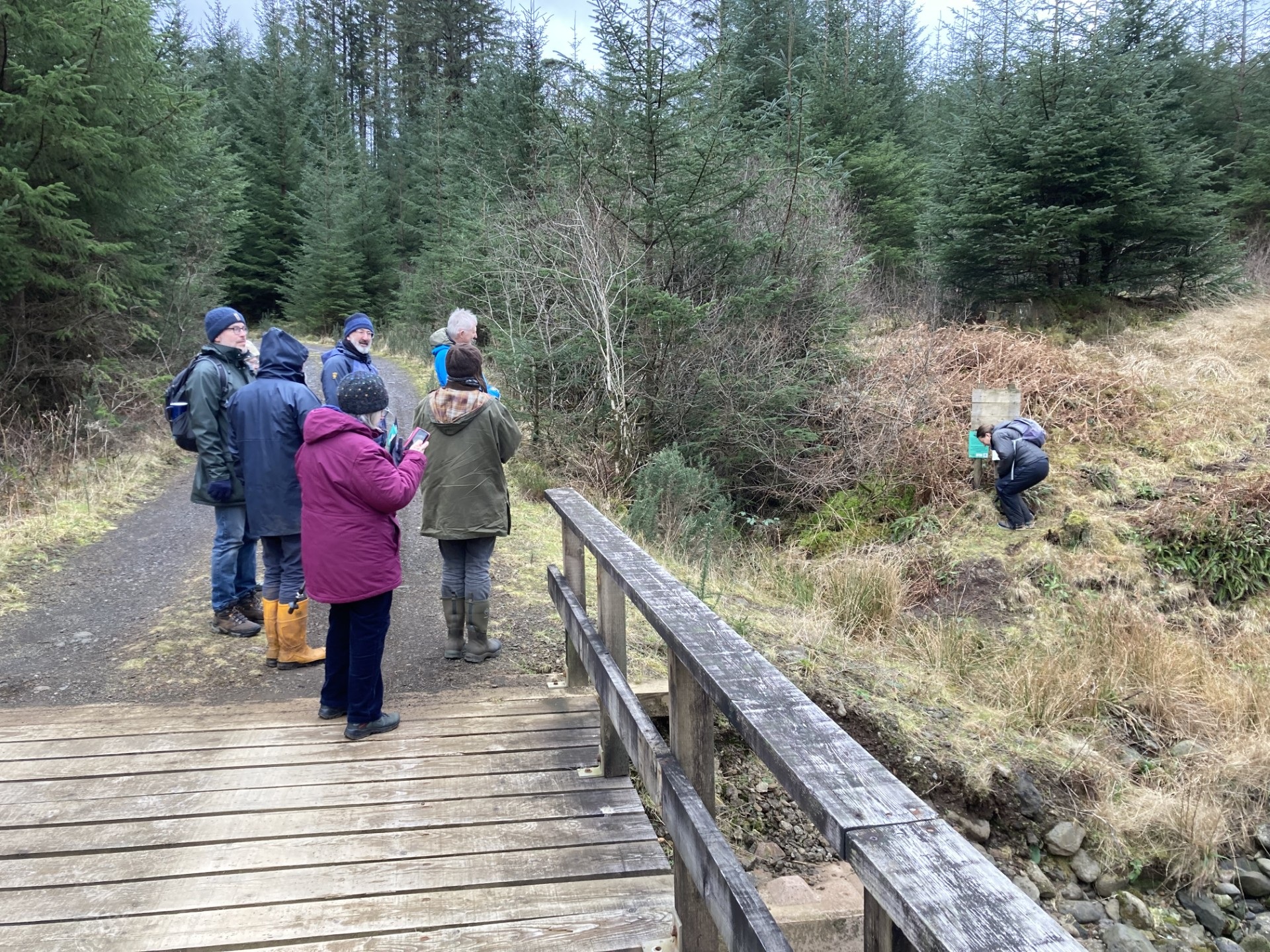
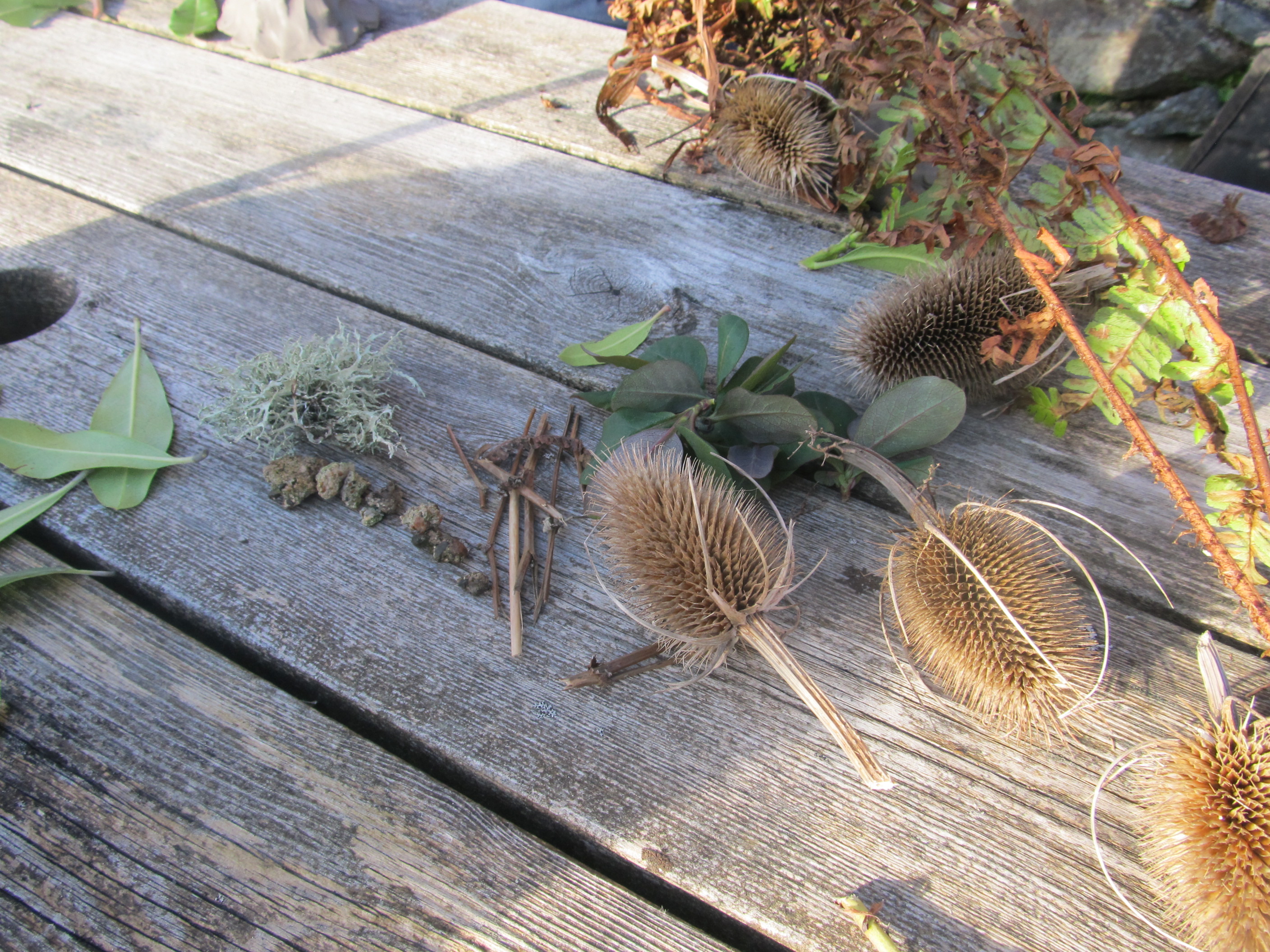
For our final session we took the Ross of Mull Community Transport minibus to Tiroran Community Forest. It was great to hear laughter drifting through the trees as we thought about how low winter sunlight can pick out details otherwise un-noticed, then tried to find as many colours as we could and later created our own collage from old magazines, giving each colour a creative name!
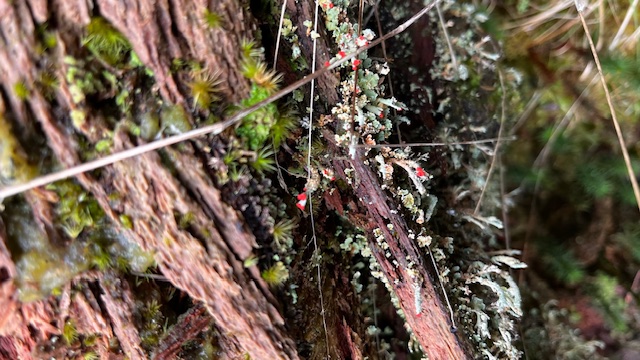
Some of the details we noticed…
Collecting colour samples and transforming them into a collage inspired by Werner’s Nomenclature of Colours, used by Charles Darwin and other explorers to help describe the new life forms they were encountering on their travels!
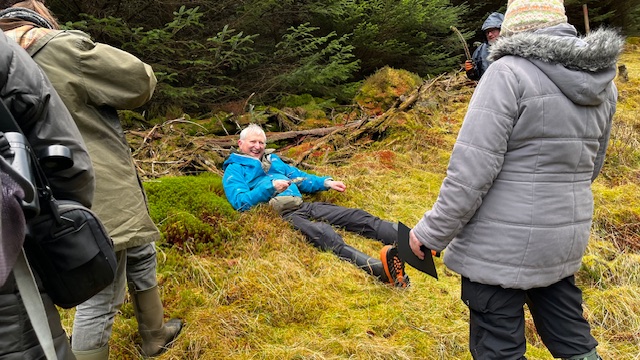
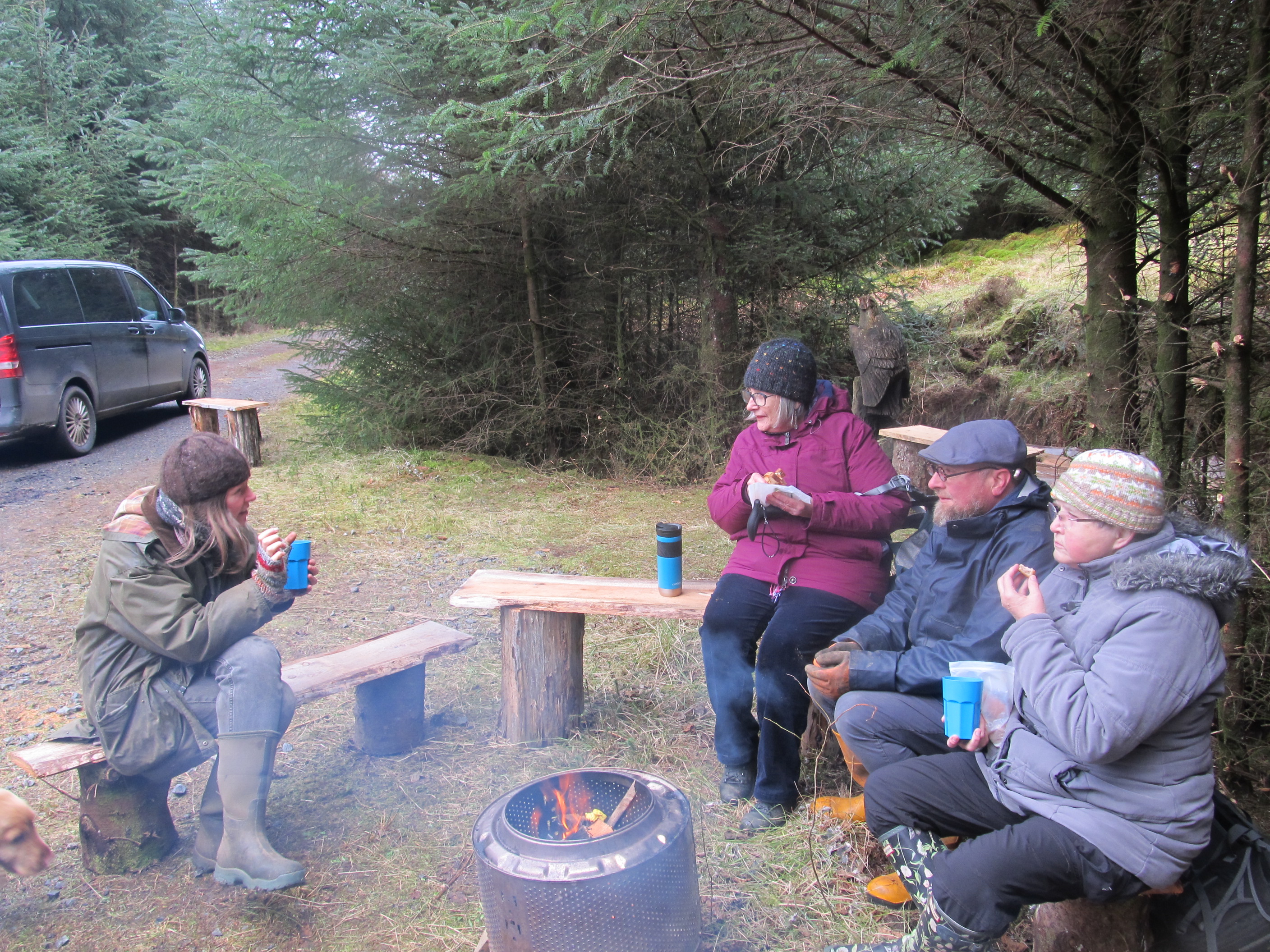
Participants on the walk and enjoying a chat around the fire, John testing out the softness of the moss!
Recently we showcased our work through the Scottish Countryside Rangers Association social media channels. Here’s a summary of who we are and what we’re working on this year.
Hi. I am Jan Dunlop and the Ranger Manager for Mull and Iona Ranger Service. My job predominantly covers the north of the island and the islands of Ulva and Gometra.
The beauty of our jobs are that we can plan for our days but something else quite often becomes more of a priority and we have the flexibility to work with this. We are very lucky to have a very wide remit from environmental education for all ages, working with land managers on access type issues, conservation management and in particular helping manage Calgary SSSI and encouraging use of Ardura, our community woodland; and that is just for starters.
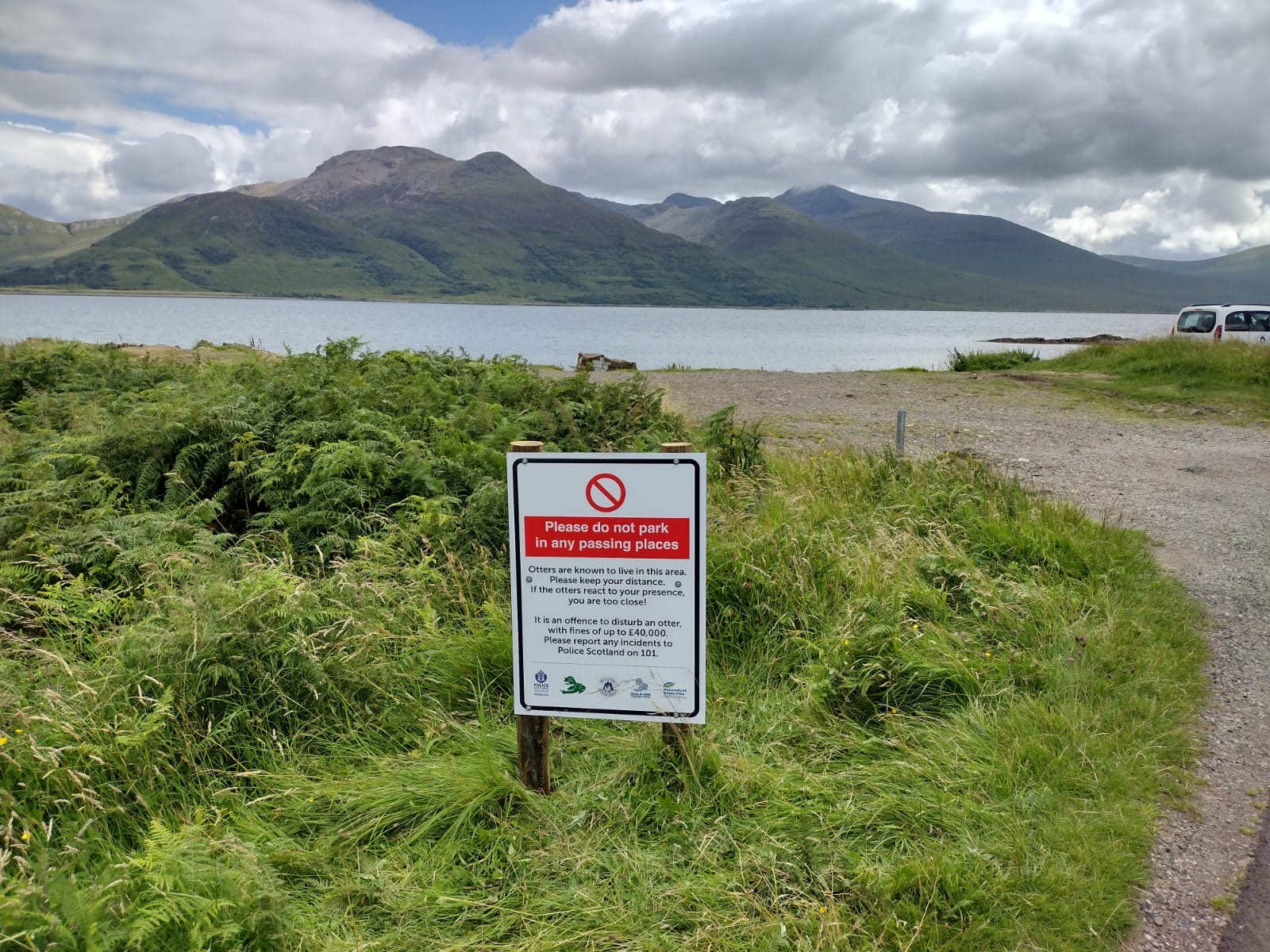
Mull is a key spot for wildlife watching and photography, and some of our job is educating about responsible wildlife watching particularly otters, hen harriers and eagles.
Our volunteers and our local communities make our job a real pleasure to do and wouldn’t be possible without them. Working on an island is also very special as are our close work colleagues. Funding for our Ranger service is our biggest challenge and has got increasingly hard over the last 25 years that the ranger service has been in existence, but like mink we are pretty hard to eradicate.
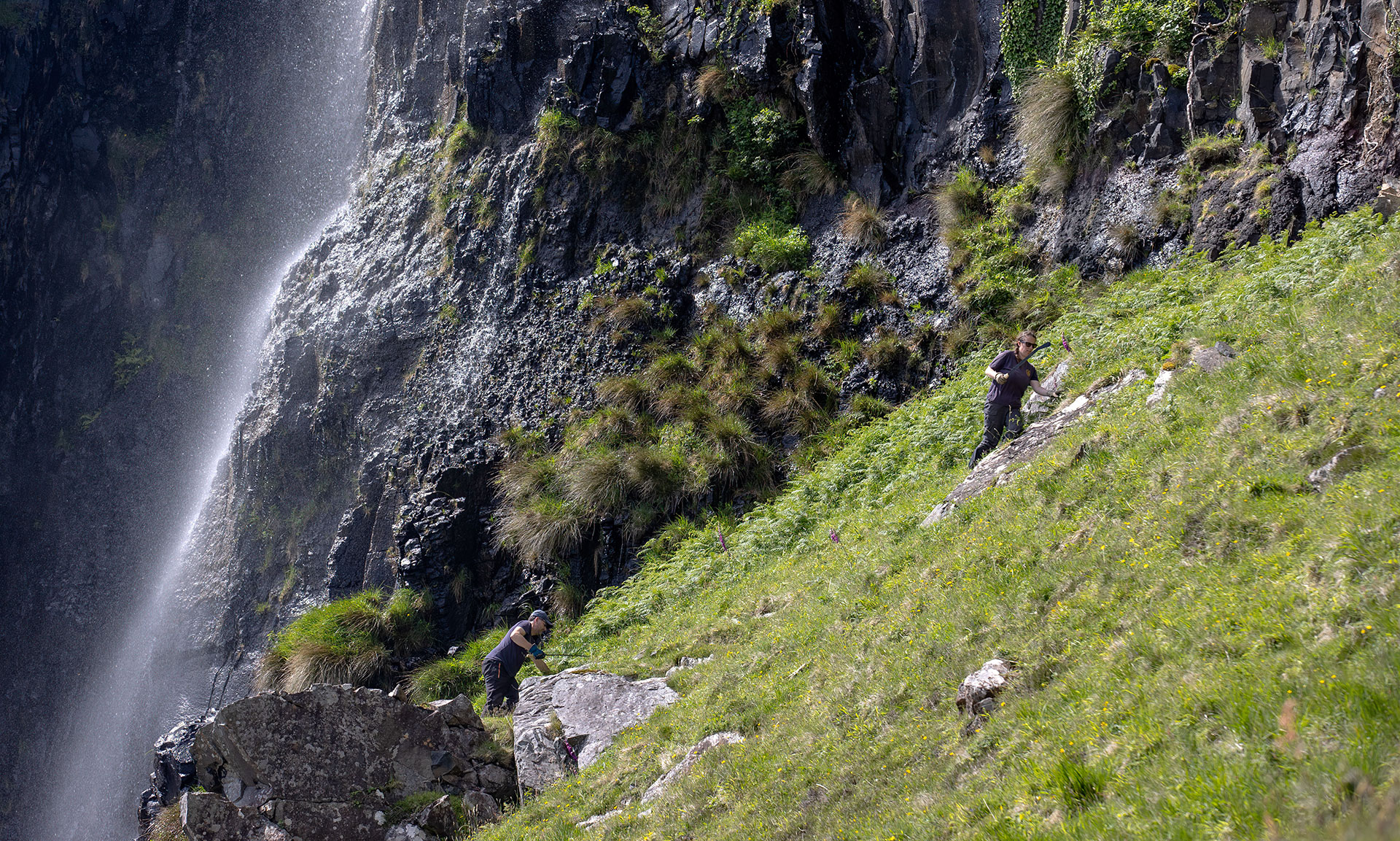
Hi, I’m Emily Wilkins and I work in a partnership ranger role between Mull and Iona Community Trust and National Trust for Scotland. My focus is on the south-west part of Mull (known as the Ross) and the NTS estates of Burg (on Mull), Iona, Staffa and the Treshnish Isles, getting involved in visitor engagement, access work, wildlife monitoring, environmental education and outdoor wellbeing events along with a great team of colleagues and volunteers. At this time of year survey work is a priority, in particular for the rare Slender Scotch Burnet moth and the plants on which it depends. Maintaining good habitat for the moth means finding a balance with grazing cattle, sheep, deer and feral goats, and also involves us in some adventurous bracken clearance on steep slopes! Find out more here: https://www.nts.org.uk/stories/burgs-beautiful-slender-scotch-burnet-moth
Hi I’m May, one of the NTS Seasonal Rangers on Iona, Staffa, and the Treshinish Isles, this is my first season! Our regular job on Iona is on Tuesdays when we run short, guided nature walks for visitors from our visitor shelter. In just 45 minutes we aim to introduce folk to the nature and wildlife on the island, something that doesn’t often get focussed on! We talk a lot on our new conservation farming efforts, including our new flock of Cheviot and Shetland sheep that will be doing some conservation grazing for us. All of this is to aid the fortunes of the elusive Corncrake, a moorhen sized bird that has declined by 70% since the 1970s, partly due to the intensification of farming. Not often seen, Corncrakes have a distinctive call, echoed in their scientific name of Crex crex. Another part of our work on Iona involves population surveys of the Corncrakes which have to be carried out between midnight and 3am as that’s when the calling is most active!
As part of our conservation farming efforts, we have left some meadows ungrazed and unmown, which has led to a wealth of wildflowers growing in them! Primrose, sea campion, meadow cranesbill, spring squill, cuckooflower, heath spotted and northern marsh orchids, yellow flag iris; the list is almost endless. Wildflowers are something we always make an effort to point out on our guided walks and the insects love them! Iona is such an amazing place for the visitors to come and visit and I love showing them around the island!
Hi. I am Peter Skinner, one of the NTS rangers for Staffa, Lunga and Iona for my second summer season.
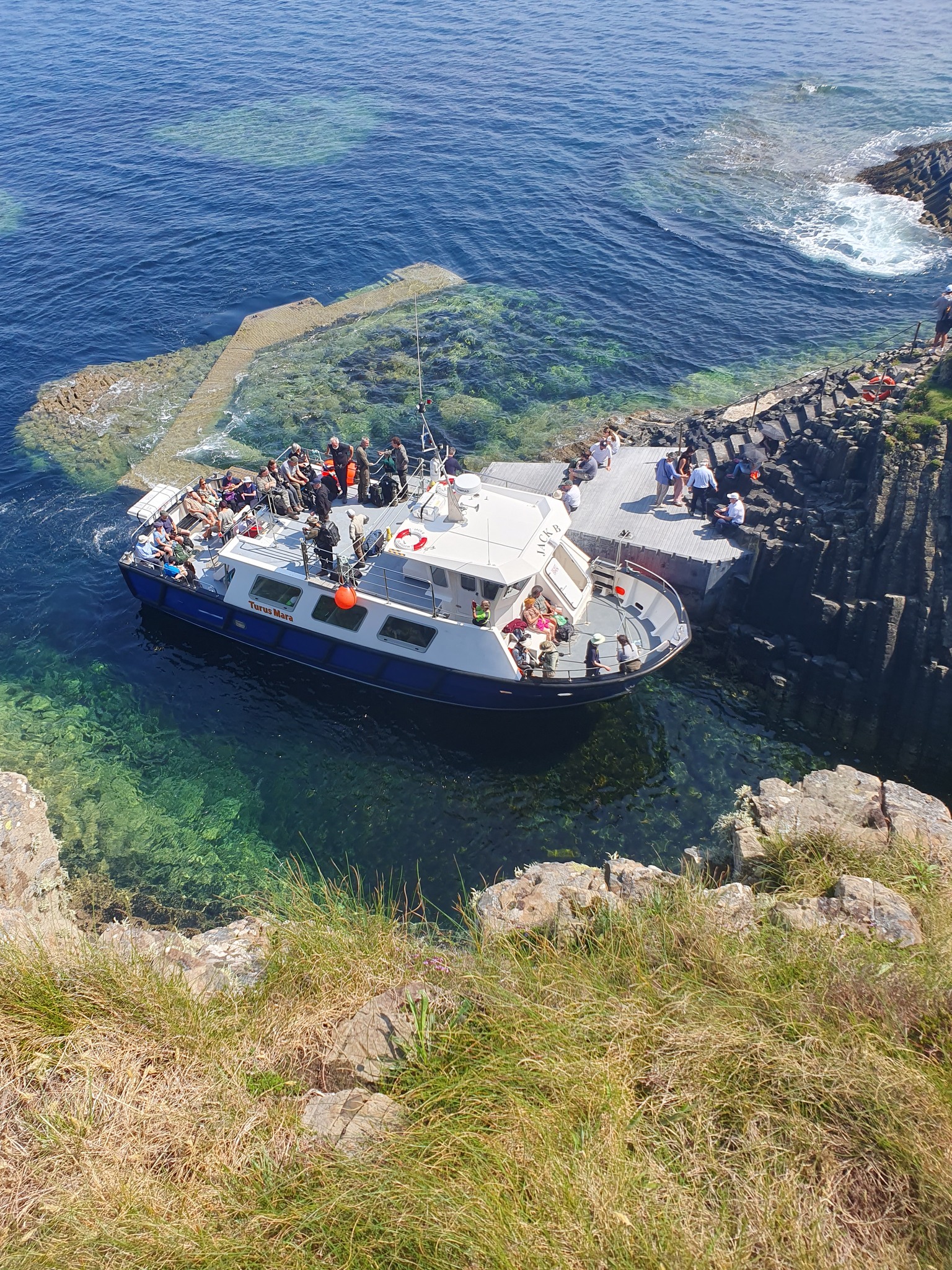
Staffa has just reopened to visitors after work building a new jetty. The picture shows one of the boats bringing visitors, of which there can be 4 to 5 hundred on a busy day. They come to see the amazing geology, puffins and other wildlife. My job is to greet the visitors, answer lots of questions and ensure the wildlife is respected with so many visitors. We monitor some of the seabirds such as fulmar, shags, gulls and storm petrels. We also record all aspects of nature such as this common blue butterfly.
It is great seeing so many people encounter puffins for the first time. It feels like a privilege to work in such an amazing place, help protect it any enable so many visitors to experience coming here.
The seabird season is in full swing on Lunga with the sound of shag, razorbill, guillemot, puffin and kittiwake chicks filling the air (to name a few!). Before we know it, the birds will be back out to sea for another winter.
Lunga is the largest of the Treshnish Isles, an archipelago in the Inner Hebrides that came into the care of the National Trust for Scotland in 2023. My name is Louise and I am privileged to be a ranger for my third season, sharing these beautiful islands rich in wildlife. Each day brings a variety of tasks like recording sightings, checking wax blocks for the presence of rodents (or hopefully lack of!) and answering thoughtful questions. June is an exciting time on Lunga, bringing lots of lovely visitors and new life, as well as, the Treshnish Isles Auk Ringing Group (TIARG) attending to do the annual counts and tagging of seabirds.
A particular favourite for a lot of people, me included, is watching the moment a puffin brings a beak full of sandeels back to the burrow where a puffling eagerly awaits! If you capture a seabird with fish in its beak you can contribute to ‘Seabirds, camera, action!’ to help Scotland’s seabirds! Find out out more here:
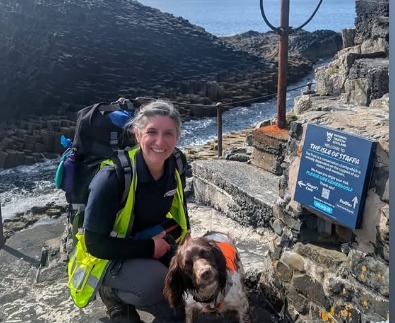
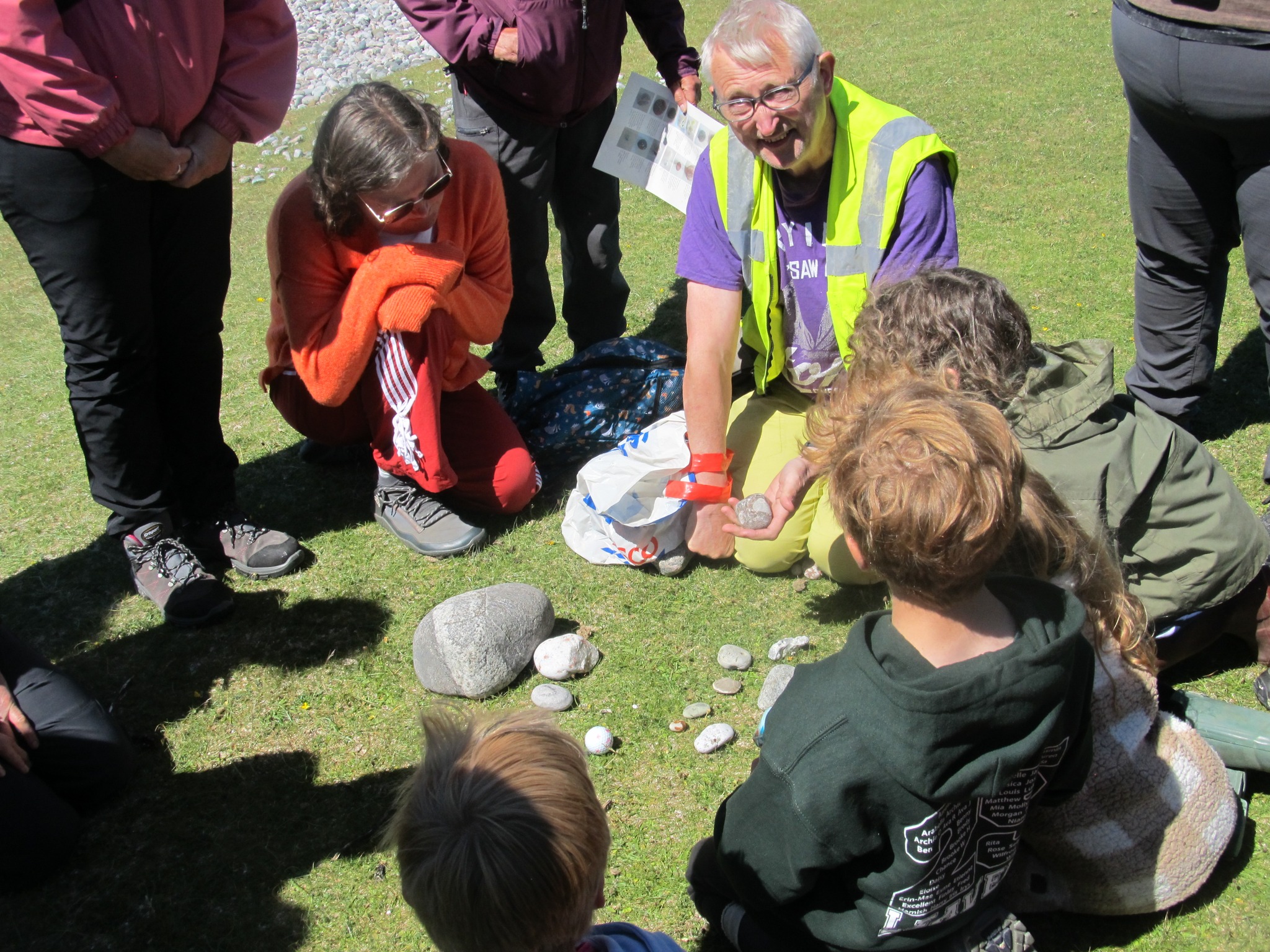
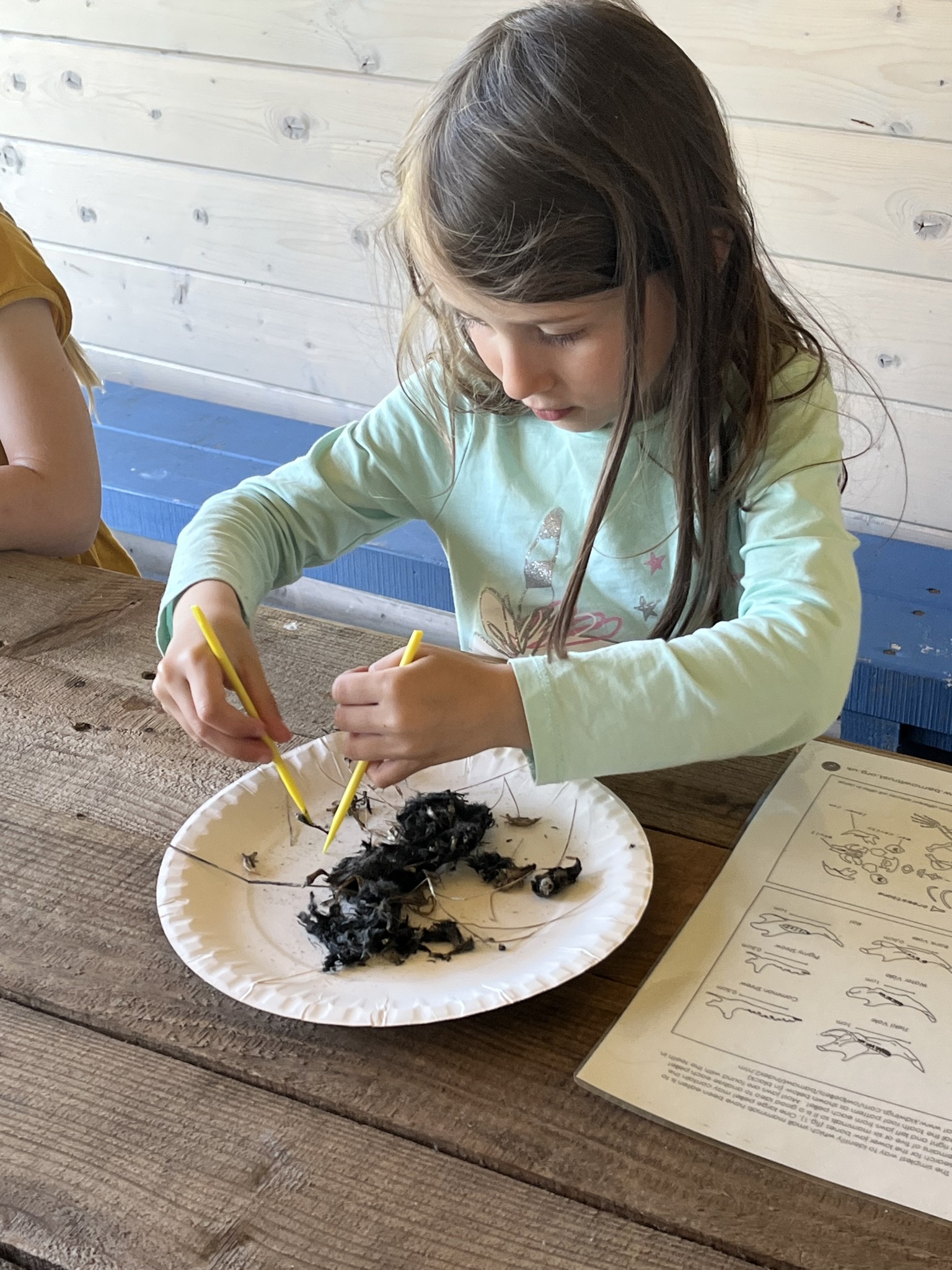
What else have we been up to recently? In the last couple of months we have hosted a royal visit to Ardura Community Forest; worked with our local primary schools on topics ranging from owl pellet dissecting, to adders, slow worms and bees; carried out a seabird census of Iona’s offshore islets; searched for alpine plants and carried out Habitat Impact Assessments high up above Burg’s clifftops; raised awareness about responsible visitor behaviour; run a community garden bioblitz; teamed up with a local geologist for two popular Pebble Picnic events; encouraged volunteers to participate in Buglife’s Riverfly project; hosted Rachel and Reid (the rat-detecting dog) from Biosecurity Scotland – thankfully our seabird islands remain rat-free! Never a dull moment!
Enjoy this updated short film about our work. Sourcing funding to keep the ranger service afloat is an ongoing task so if you value what we do and would like to contribute, there is a justgiving page here: https://www.justgiving.com/campaign/supportmullandionarangerservice
The ranger service collaborated with Toben Lewis of Baile Mòr Books for an event this week.
Participants gathered at Ardalanish beach for a clean-up and to search for items that could be recycled into book binding art. Our island coastlines collect a lot of rubbish that washes up from the sea, a sad reminder of how much plastic is thrown away.
Leaving the beach cleaner than we found it.
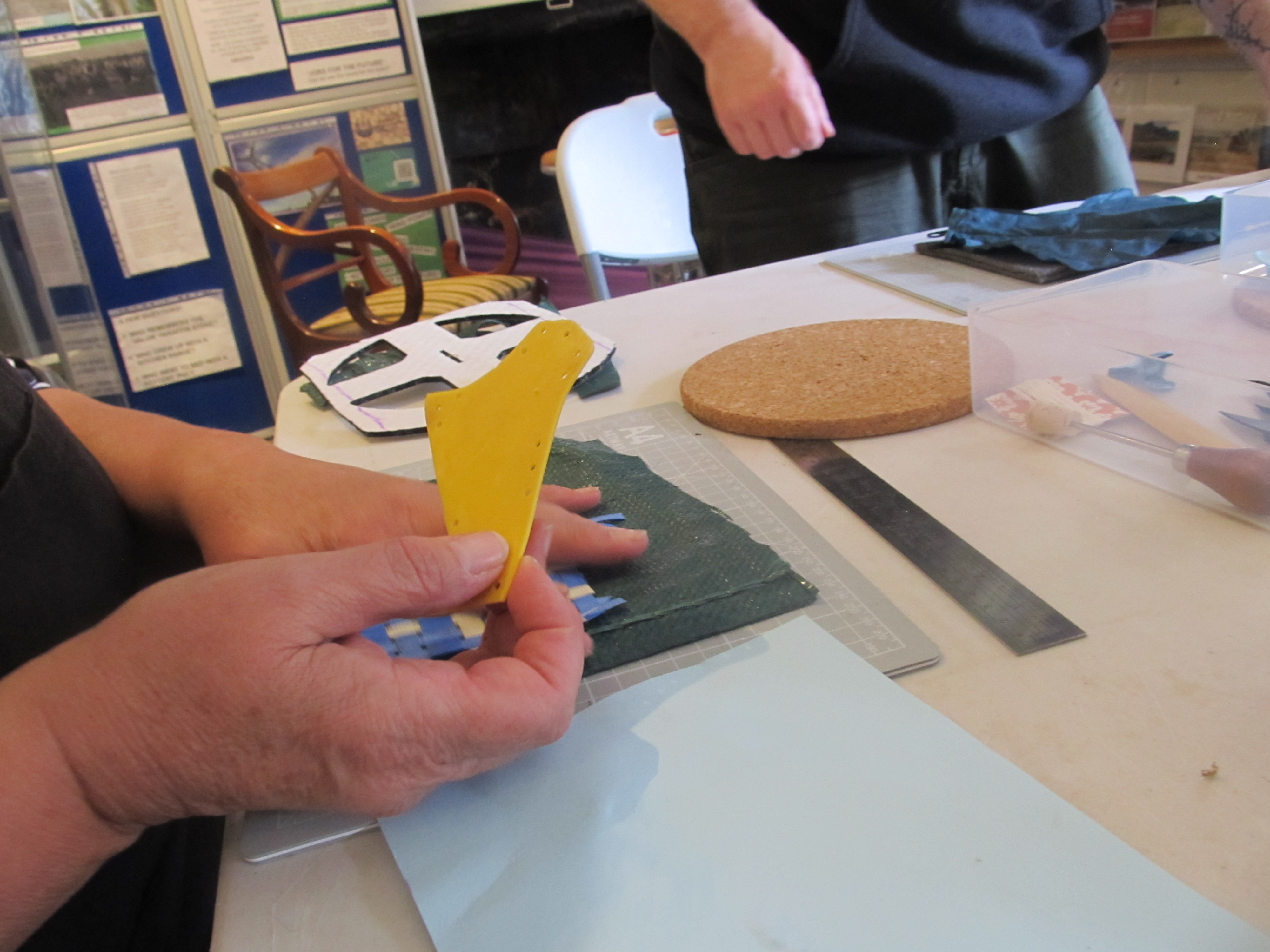
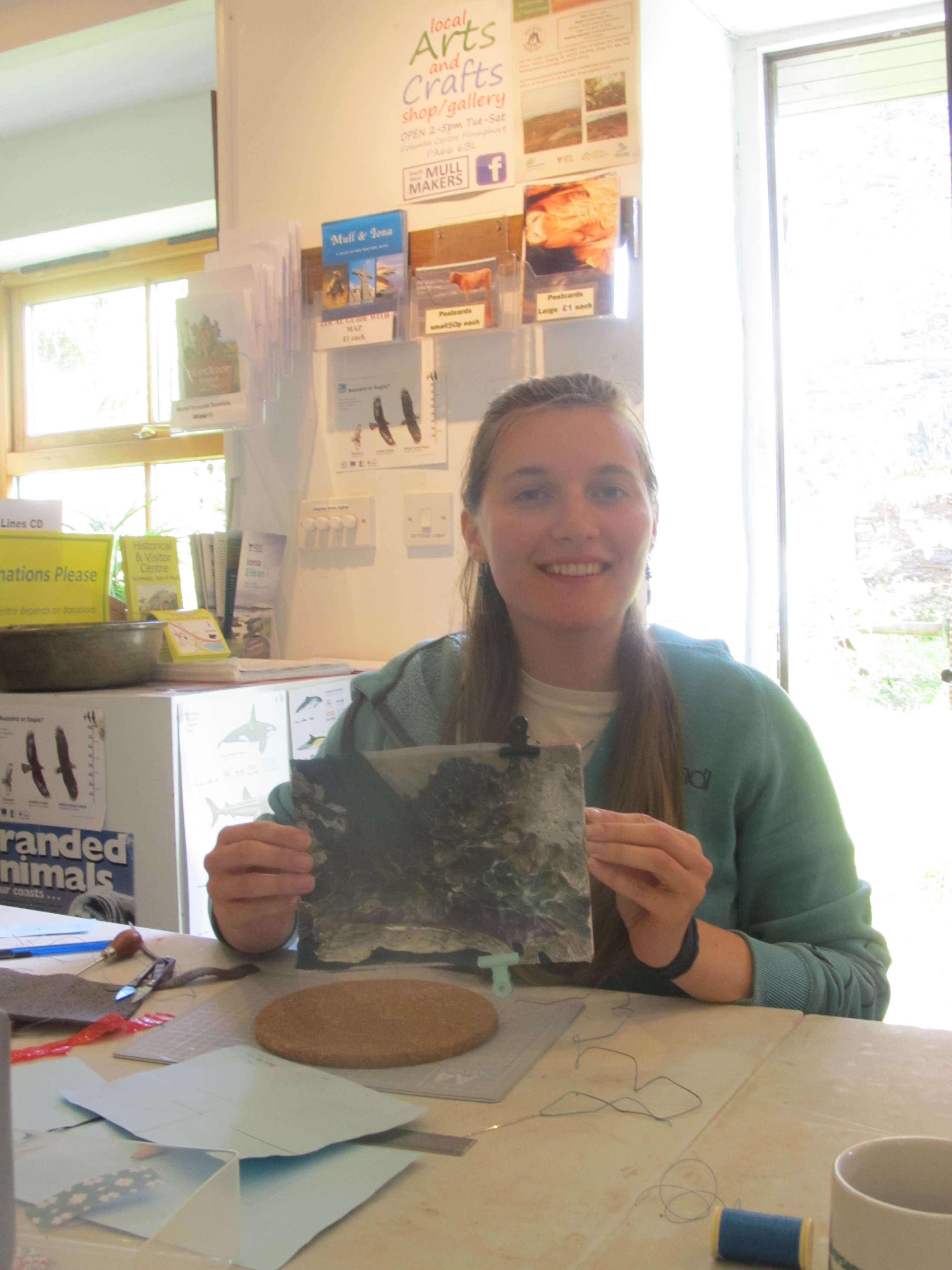
In the afternoon some of us had a go at making our own books under Toben’s expert tuition. We began to transform a pile of potential materials…
We drilled and cut and stitched, learned the correct way to fold paper and tried a Japanese binding technique. We even included some paper made from seaweed.
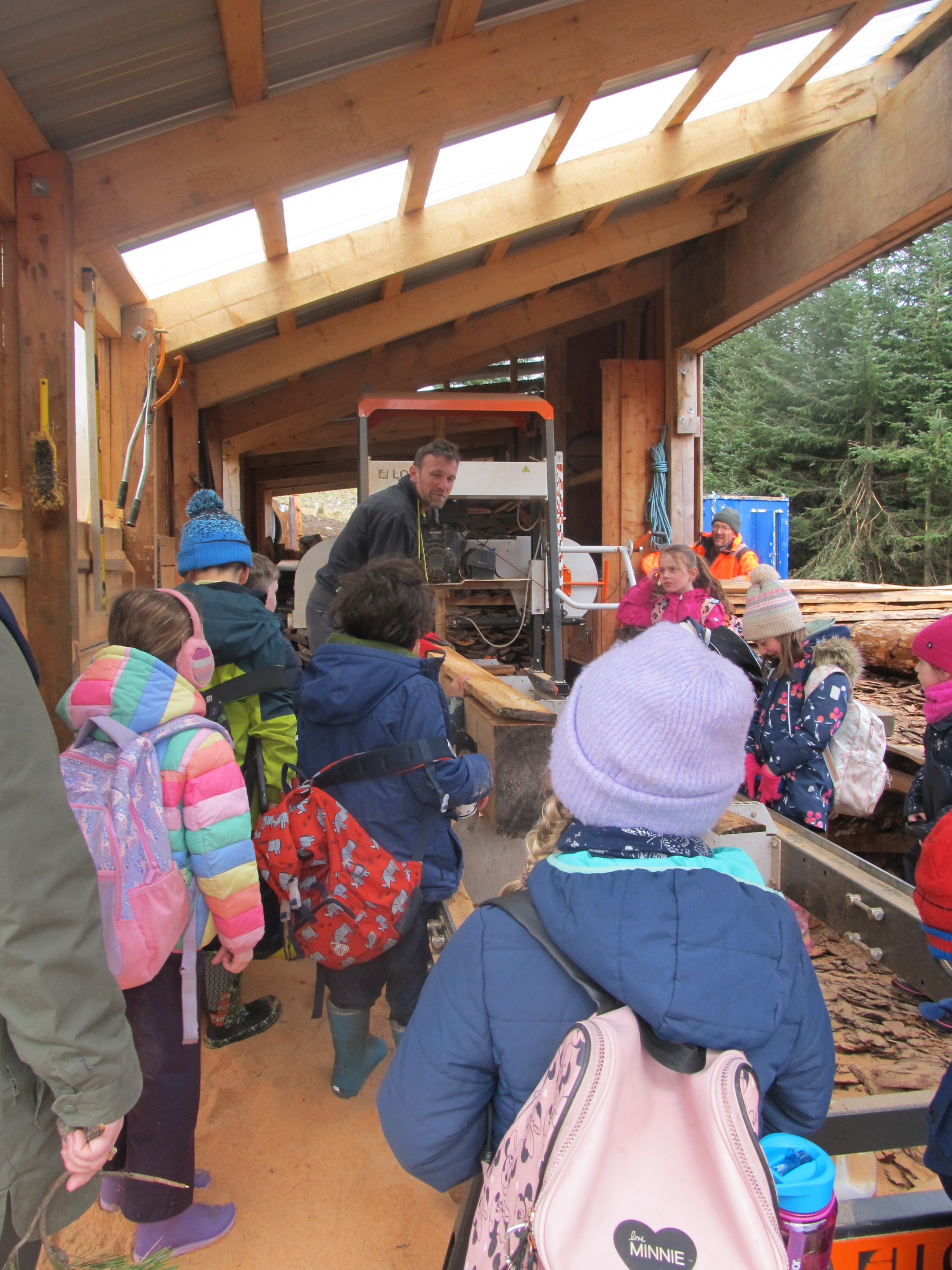
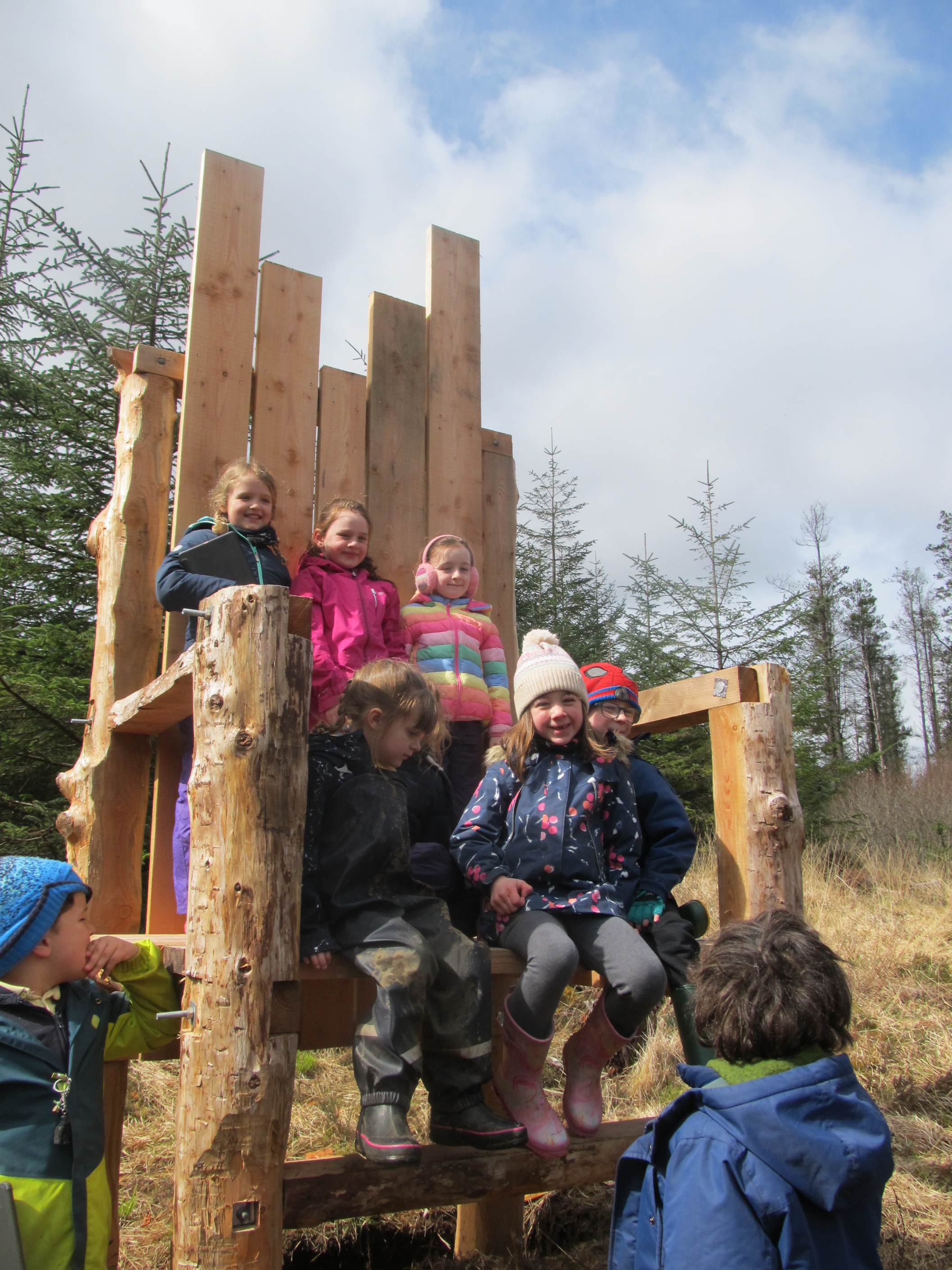
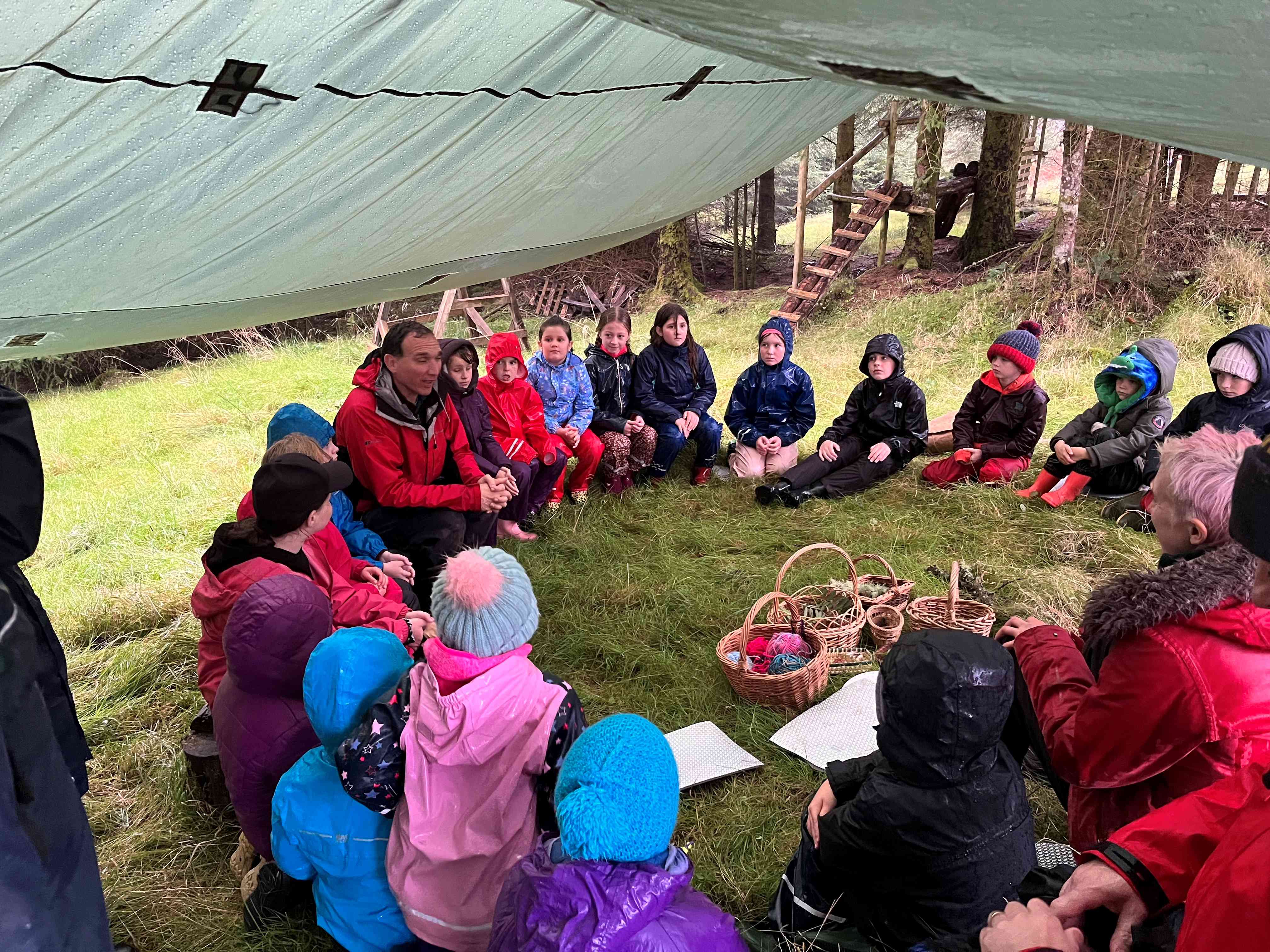
A little round-up of some recent ranger sessions with the children of the Ross of Mull and Iona. Environmental education is an integral part of our work, encouraging everyone to connect with nature and take action to care for it.
We run afterschool clubs with both Bunessan and Iona primary schools.
Fiona Fraser helped us learn how to be archaeologists with her simulated dig activities.
Both groups found out about the night sky, making star constellations with candles on the beach.
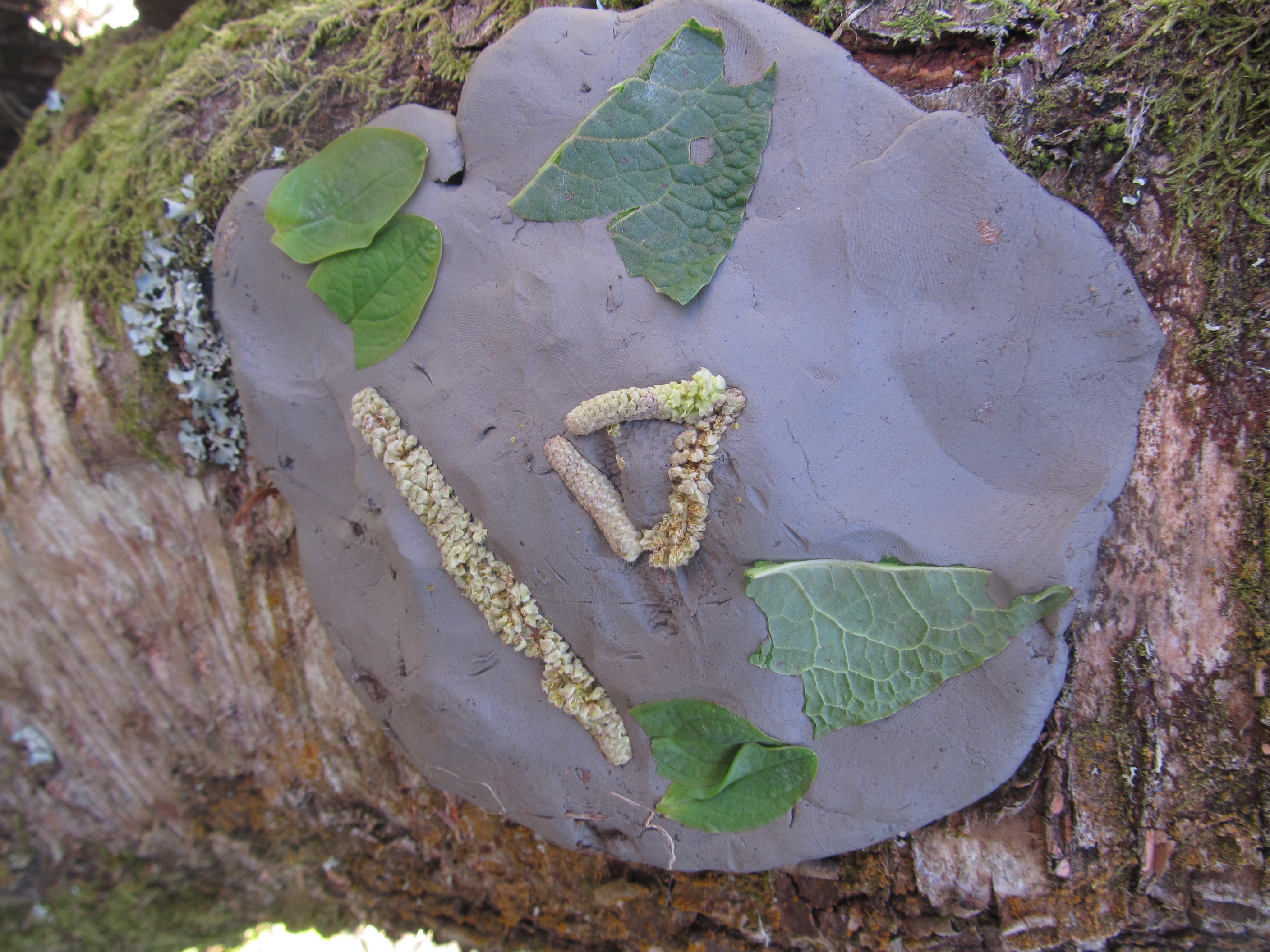
As spring approached we investigated nearby trees and how to identify them from their bark and twigs before the leaves had opened, then thought about what characters might represent them!
Meanwhile in class time, Iona primary became soil scientists helping us investigate the grassland health of nearby farmland, and Bunessan primary are busy writing new information signs for their nature trail at Tiroran Community Forest.
Thank you to all volunteers, parents, colleagues and teachers – it’s always a pleasure to collaborate!
At the end of September the ranger service teamed up with Rowanbank Environmental Arts and Education to bring their Positive Imaginings Climate Circus to the woodlands of Mull!
Undaunted by the (at times challenging) weather, the team began to set up and rehearse at Aros Park and Tiroran Community Forest.
We worked with children and staff from all 6 Mull primary schools on interactive workshops about climate change. Sadly Iona school were unable to join in due to weather cancelling ferries.
A series of games and demonstrations helped to explain the science and causes of global warming, how it links to climate change, then we heard about situations around the world where many people had been inspired to become involved in solutions when just one person voiced their idea and started taking action in their own small way. People such as Wangari Maathai planting trees in Africa, or Afroz Shah cleaning beaches in India – their individual actions have built into global environmental movements.
The children used natural materials to make pictures of the positive futures they would like to see, featuring water-powered cars, solar panels, communities that grow their own food, and lots of trees.
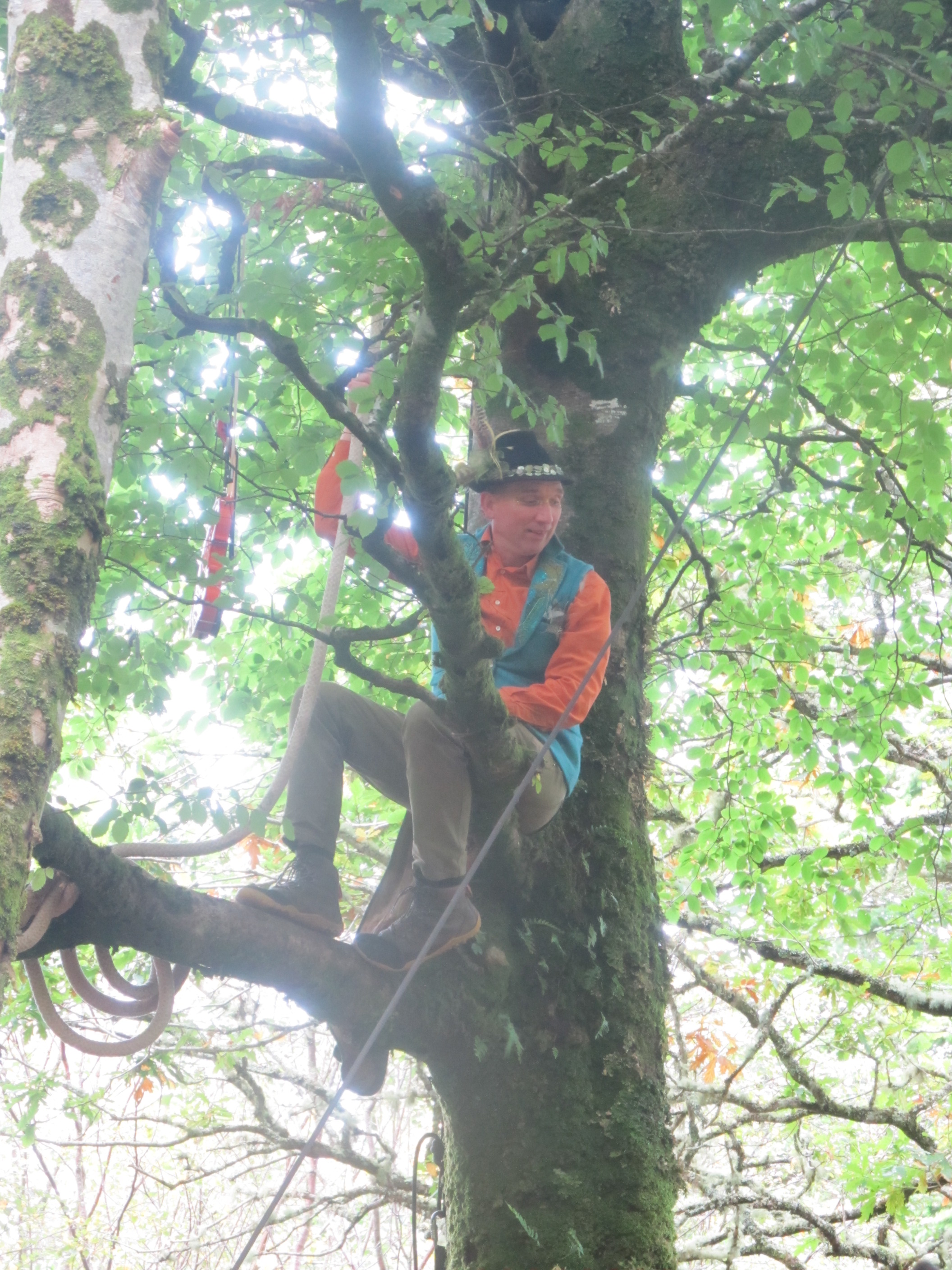
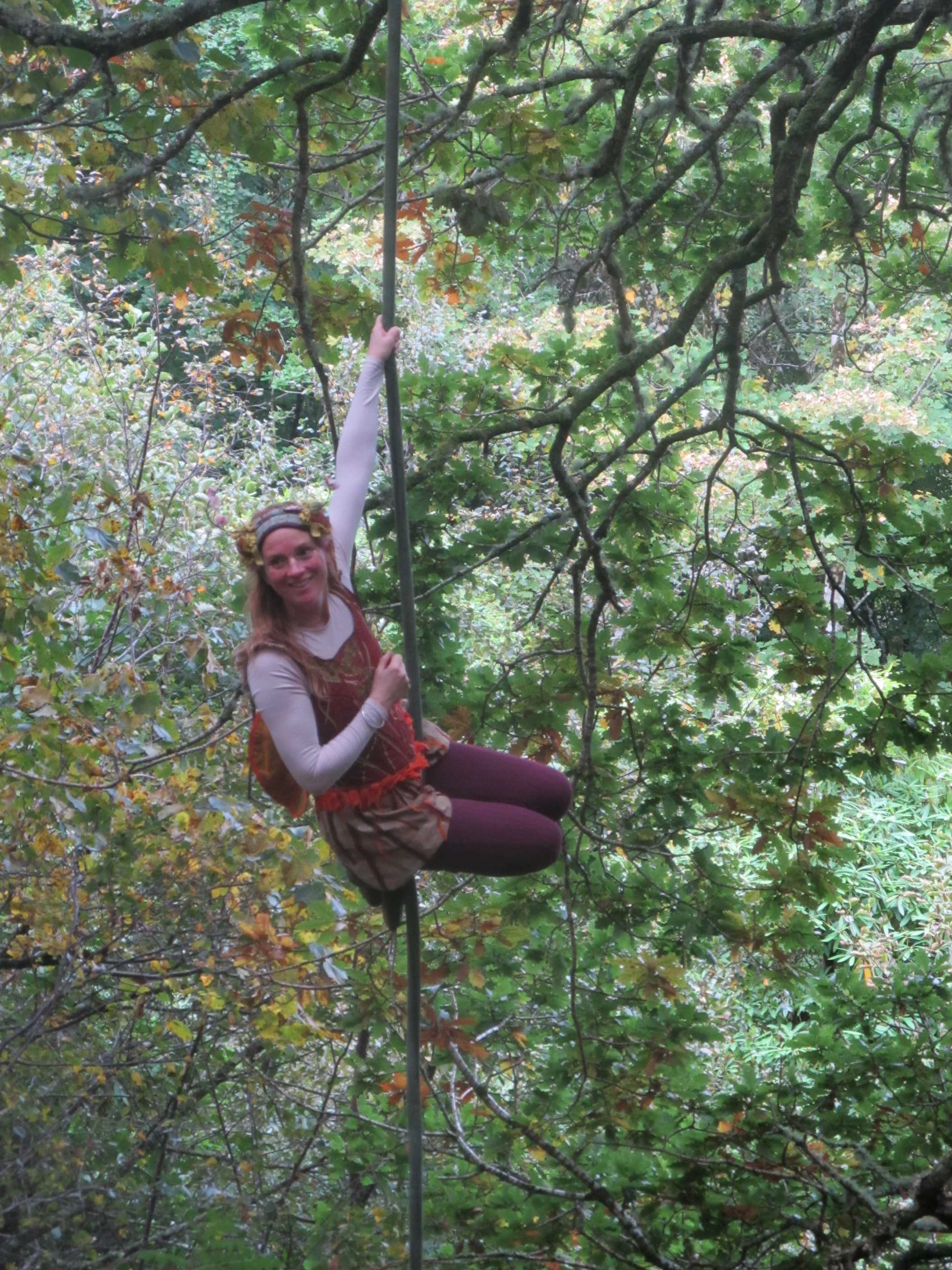
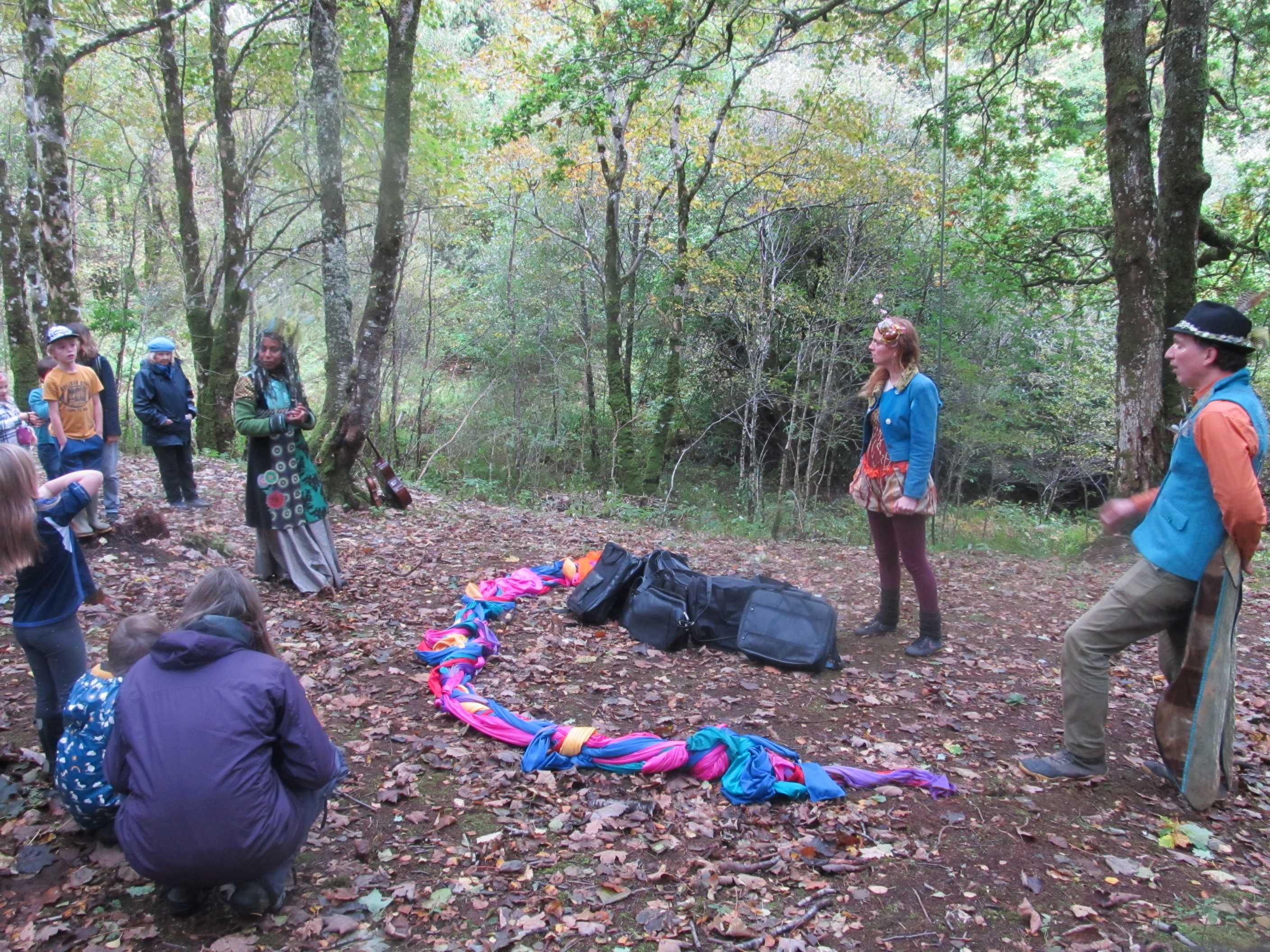
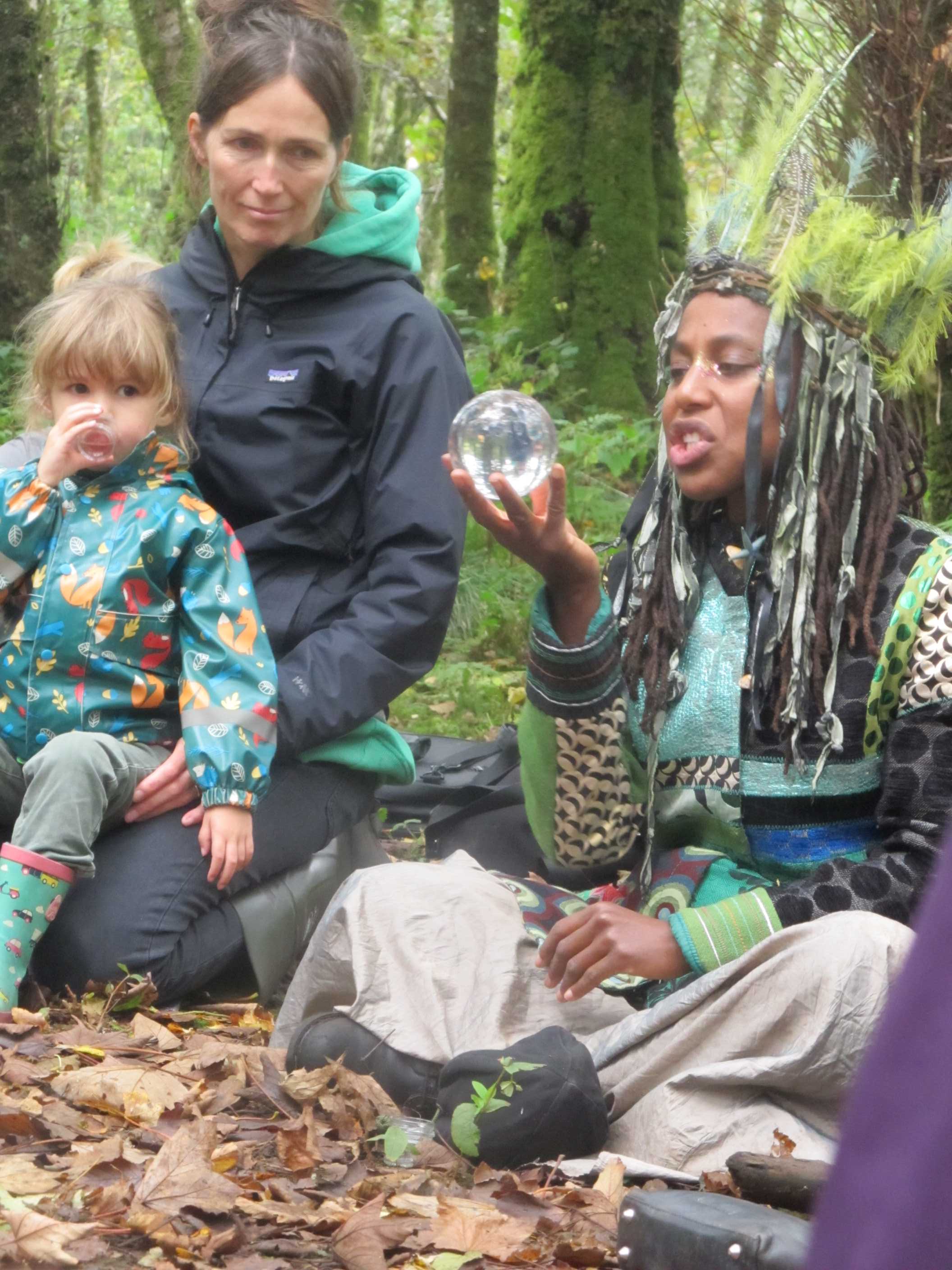
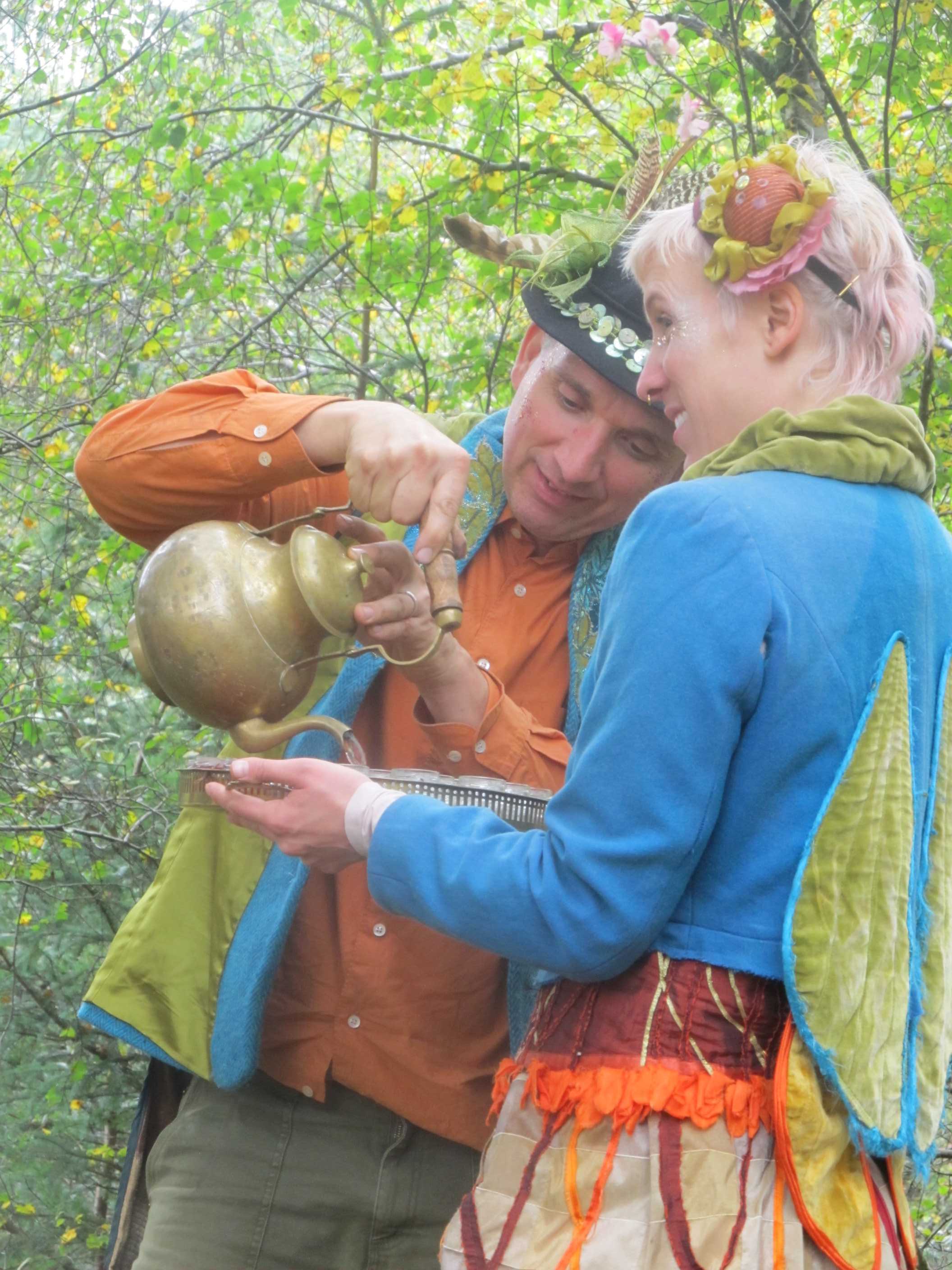
Later in the week everyone had a chance to experience a colourful and exciting outdoor performance through the joy and wonder of storytelling, circus and connecting with nature. As the audience arrive at the forest, they are met by Flow, the forest dreamer, and Jay, the planter of oak trees, who introduce them to all the plants and animals living there.
However, as the story unfolds, Flow starts finding black bags in the forest, which represent real environmental problems, and becomes weighed down with anxiety and despair. Jay and the audience must seek help from Anam the Dreamweaver.
Anam empowers people to make their dreams a reality, and weaves the children’s dreams into a bright cloth representing collective action.
At first Flow cannot see the colours, but Anam helps Flow understand that what is needed is a new perspective, to use our imagination to find new ways of thinking and doing. Flow learns how to live with her climate worries and manage these complex emotions: by working with others to take climate action; and by remembering to notice the natural beauty that exists all around us.
The performance ends with a ceremony in which everyone has a chance for their dreams to be heard, the first step towards living in a kinder way for all who share this planet.
Thanks to our fundraising efforts, the work with schools and an additional public performance were supported by The Waterfall Fund, Argyll and Bute Council Supporting Communities Fund, The National Lottery Community Fund and partners An Tobar and Mull Theatre, Forestry and Land Scotland, Mull & Iona Community Trust and South West Mull & Iona Development.
We need to change the pattern, to see things from a different perspective. How do you imagine a positive future here on our islands? What one action could you start taking for our shared environment and communities?
Photos by Ranger Service and Rowanbank staff and volunteers
Back at the end of April, Rebecca Lewis from Buglife joined us on Mull to lead a Riverfly training session on the River Aros.
Cased Caddis
The Riverfly Partnership (RP) was formed in 2004 and brings together anglers, conservationists, entomologists, scientists, watercourse managers and government agencies to increase our knowledge of riverfly populations and actively conserve their habitats.
One of the RP’s leading projects, launched in 2007, is the ‘Anglers Monitoring Initiative (AMI)’. The AMI enables trained volunteer groups to apply a simple monitoring technique to record the presence and absence of 8 invertebrate groups, 7 of which are riverflies. This allows us to monitor the biological water quality of our rivers. The volunteer groups monitor their local rivers on a regular, often monthly, basis and if severe changes are detected a rapid response by the statutory bodies is ensured.
“Empowering citizens to protect their rivers“
The Riverfly Partnership
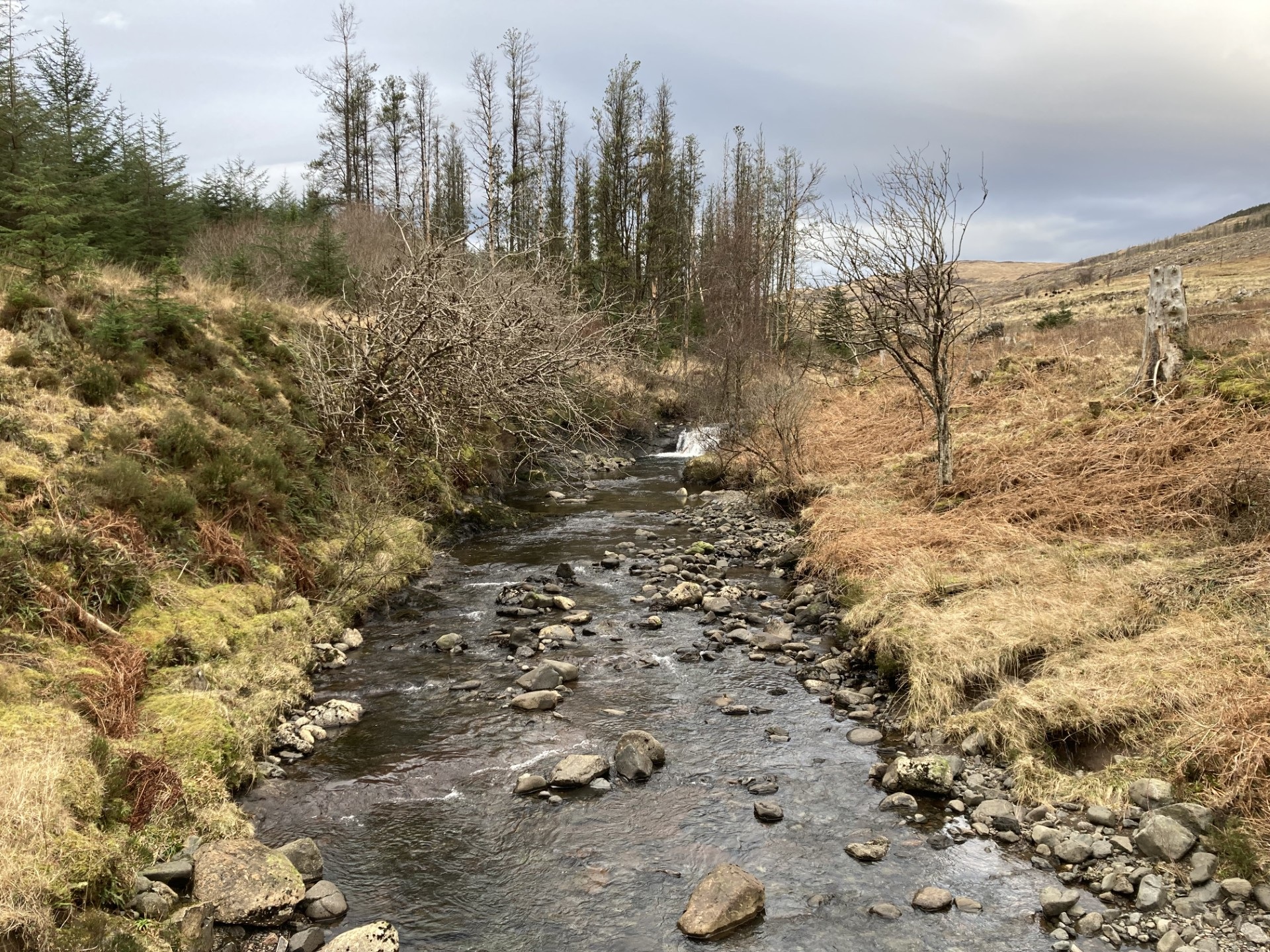
Training on the River Aros
We now have a small group of trained volunteers on the island who undertook an online training session, followed by spending a few hours with Rebecca on the banks of the Aros to put into practice the sampling and monitoring skills.
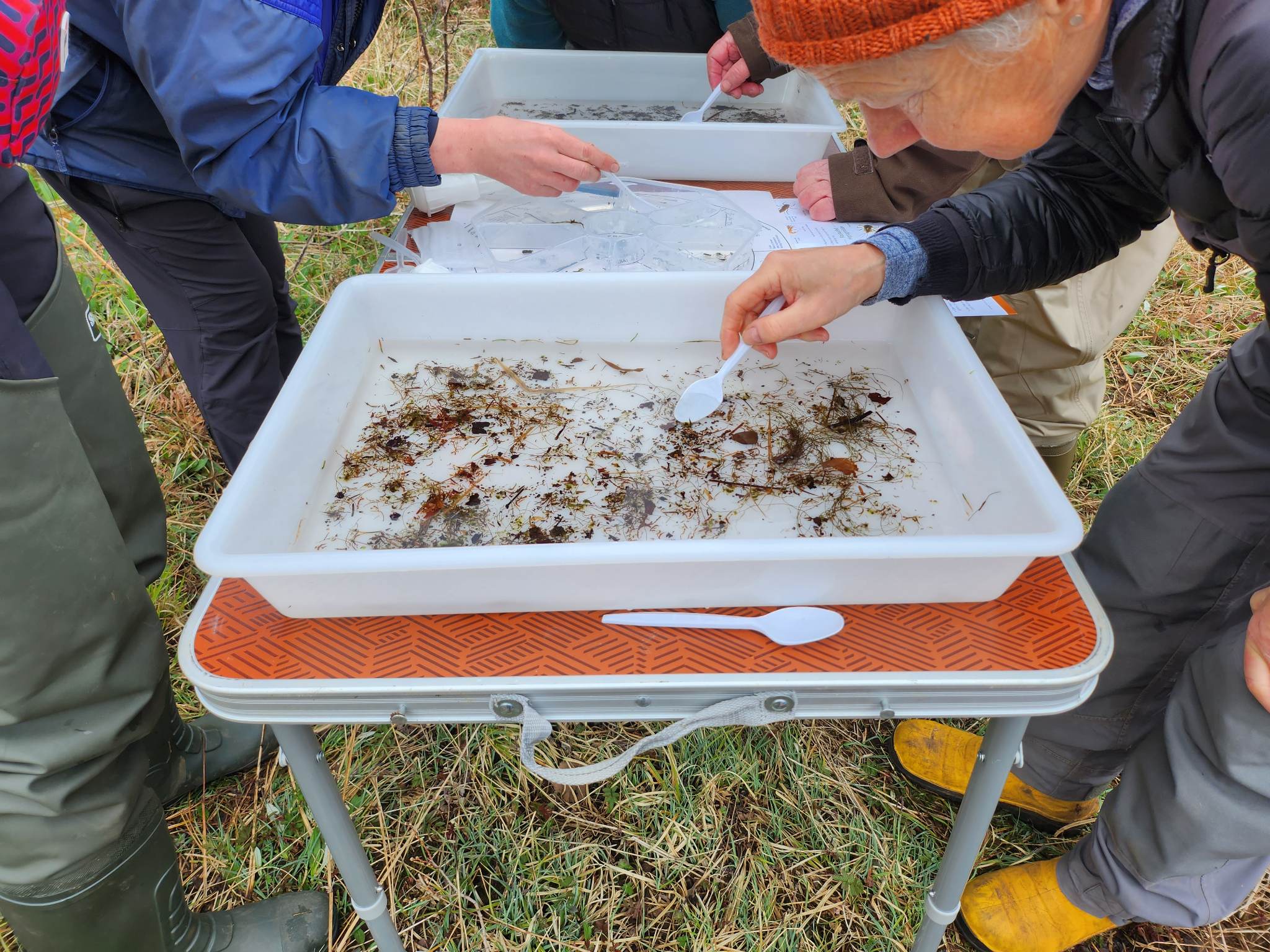
The sample collection itself takes only four minutes in total, with three minutes of kick sampling and a further one minute of rock sampling, then the fun part begins!
We spent a significant amount of time pouring over our trays that were filled with a veritable smorgasbord of aquatic invertebrates. We were able to separate individuals into eight groups with the help of a fantastic sorting mat (we can’t wait to use this with adults and schools). This included Stoneflies, Mayflies, Cased Caddis and Freshwater Shrimps. We were pleased to find a great mixture of species and some that aren’t included within the eight groups like Freshwater Limpets, snails and worms. We counted and scored our sample, which will be used as our baseline for future surveys here.
Volunteers Wanted!
We plan to have three sample sites along the River Aros which will be surveyed by volunteers roughly every six weeks. We have a small group of volunteers who attended both the online training and the practical session but we’d love to welcome others to join and develop their skills. We hope to be able to provide more training in the future with Buglife and this will be an opportunity open to those those who join us.
We’re keen to develop a core group which can share out the survey sites along the river and share out each of the survey dates to lighten the load and make sure it’s a fun and friendly experience. The minimum would be at least two people running a survey but the more the merrier and we can always bring along a hot drink and slice of cake to enjoy together on the river bank!
We’re also hoping to start surveying the River Lussa which runs adjacent to Ardura Community Forest. This will help us to keep track of any changes in the river system as the community forest begins to implement it’s long term biodiversity action plan – hopefully we’ll see positive changes in the riverfly populations as native trees are re-established.
How to get involved…
Come along and join us for our next survey on the River Aros on Sunday 11th June.
Jan and I will be there to support those volunteering and we’ll continue to learn together.
Buglife also provided us with specialist equipment including a few sizes of waders and buoyancy aids but it is not necessary to enter the water if you don’t want to. The actual sample collection time in the river is small and the identifying and counting is where we really need support.
If you think you’d like to get involved, do contact either Jan (jdunlop@mict.co.uk) or Rachel (rfrench@mict.co.uk) and we can answer any of your questions.
Meanwhile the National Trust for Scotland are recruiting for 2 roles which will work alongside our ranger service here on Mull, Iona and Staffa – a Staffa Seasonal Ranger, and an Inner Hebrides Property Manager.
This is the year that Scotland hosts COP26, when world leaders will gather in Glasgow in November aiming to make progress on tackling climate change. Our summer Nature Adventure Days programme for 11-18 year-olds wove this theme through explorations of our countryside and coastline, thinking about ways in which we influence our natural environment locally and globally and about how we can amplify the voices of our young people and their opinions on climate change.
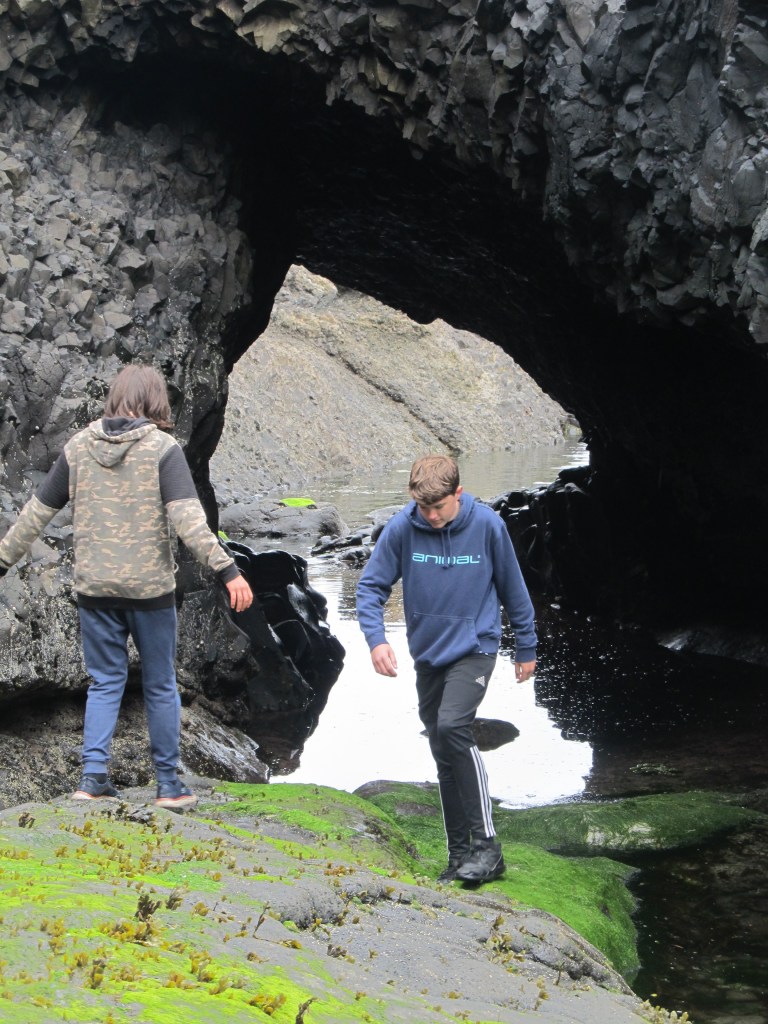
Thanks to continued funding from Baillie Gifford, this year the ranger service was able to offer 5 days of activities working in partnership with Headland Explorations. On the 7th July, 8 young people enjoyed a day on Staffa, travelling with Staffa Trips and experiencing a close encounter with a minke whale! A low tide gave the oppportuntity to explore the coastline below the puffin burrows with the whirr of puffin wings going back and fowards above our heads. We had lunch at the puffin colony and then took part in a storm petrel survey, playing a recorded call and listening for the response to find nest sites hidden amongst fallen boulders and old walls.
Exploring Staffa’s coastline
We thought about how the landscape and its wildlife has changed due to human actions, and might change in the future. On Staffa this ranges from the impacts of sea level rise (already being felt in the loss of other islands around the world) and increasing storms, facilities built for visitors (the hotel proposals that never came to be; a tourist shelter in use 200 years ago is now wildlife habitat again; whereas current visitor levels require improvements to paths and stairways to help with erosion and overcrowding), to the changing population numbers of seabirds and grazing animals.
These photos taken by participants Alex Welsh and William McLellan
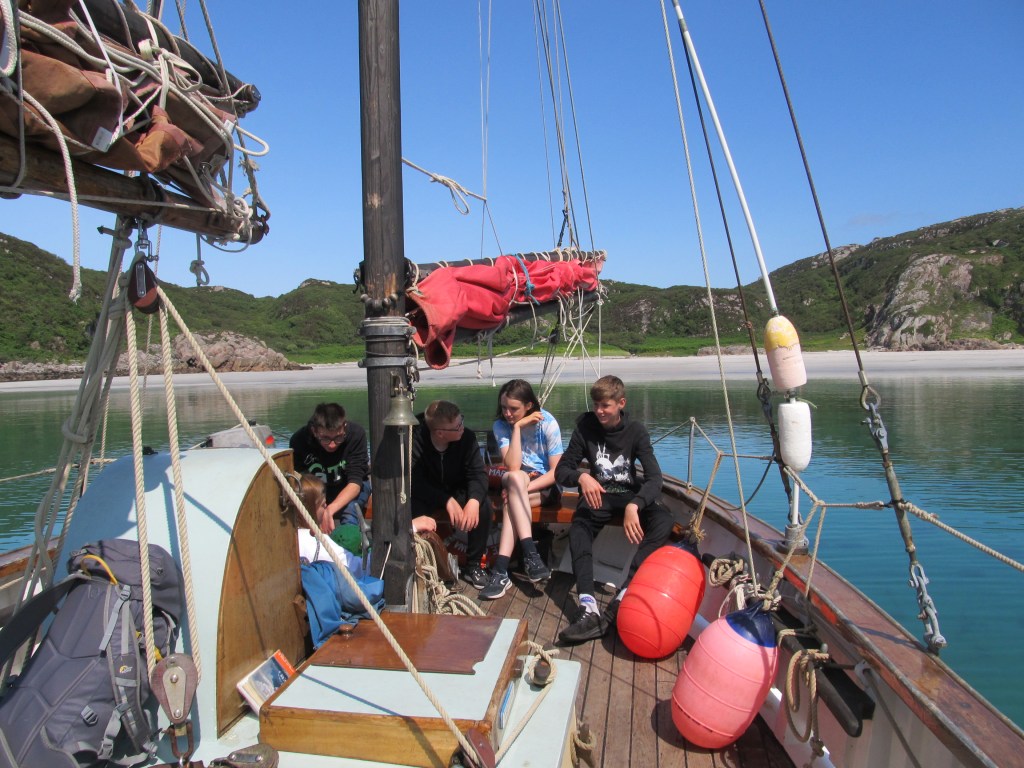
The 21st of July saw another group of 8 young people voyage aboard the beautiful B.Marie with Alternative Boat Hire Iona. On a warm day with not enough wind for sailing, they decided on a trip around the south coast of the Ross of Mull to Traigh Gheal beach where they cleared up rubbish swept in from the sea, and enjoyed some impromptu raft-building and dinghy training! Lunchtime conversation centred around where all this marine plastic comes from, and how we can reduce it at source by choosing less packaging in the products we buy. Some clothing is even made out of recycled plastics collected from the oceans! We also talked about the areas where we don’t have direct control over our own choices, and part of the answer is to campaign and make our views known to decision-makers who can do something about the bigger issues.
Leaving the lovely Traigh Gheal beach a little cleaner than we found it!
The following week saw 4 intrepid adventurers climb up into the cloud on the Ardmeanach hills above Tiroran, to be rewarded with opportunities for rock-scrambling, an exciting find of a golden eagle wing feather, and an epic game of hide-and-seek in the woods on the way back down. Carpets of colourful flowers prompted discussions on biodiversity, and our lunchtime chat focused on pollinating insects, their importance in producing much of the food we eat, and what we can do to help them flourish. We looked down over Tiroran Community forest which we are also trying to make a better place for nature.
Enjoying the hills in spite of the low cloud, aided by an umbrella hat!
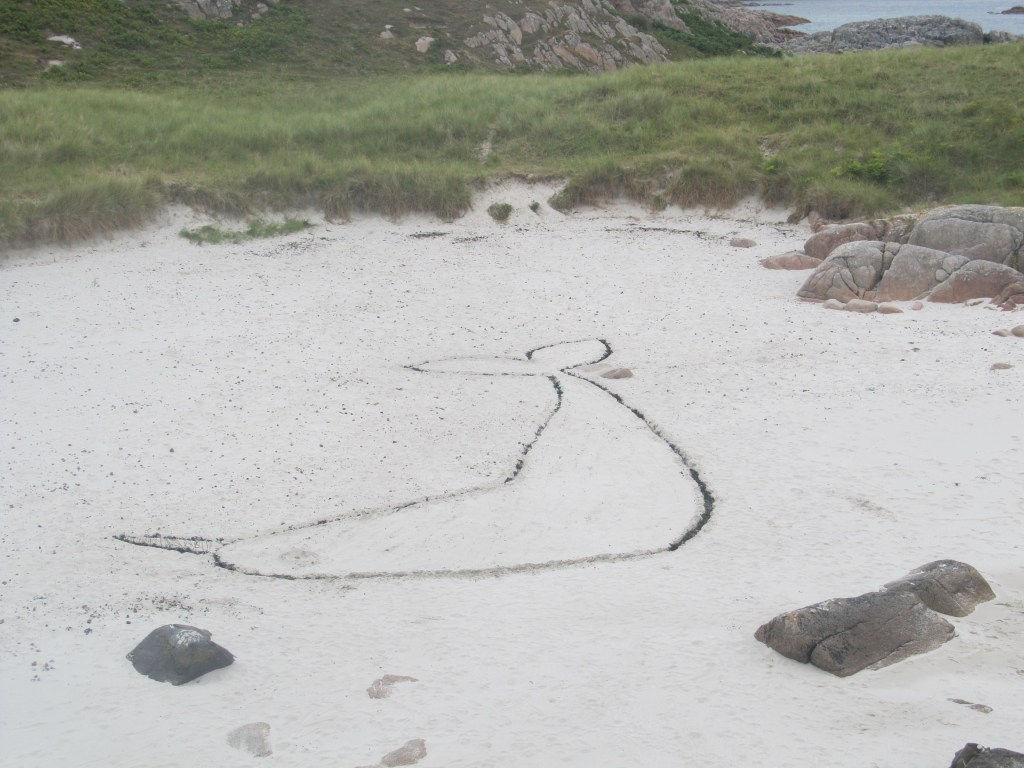
On 4th August we were rock climbing near Knockvologan with 11 young people. On the nearby beach of Traigh a’Mhill Knockvologan Studies artists helped us find ways to work as a team and produce giant artworks, inspired by the geoglyphs that ancient peoples used to mark their landscapes. Today’s lunchtime conversation was about how feeling a connection to our local environment (such as through rock climbing, outdoor art or growing our own food) can help us care for it – and that we can make choices such as purchasing local food or Fairtrade products to help others improve their own local environments while producing crops that we can’t grow here in our climate.
Connecting with nature through beach art and climbing at Knockvologan
The final Nature Adventure Day this year found a group of 6 young people kayaking with Bendoran Watersports. After a great time on the water they thought about messages they would like to pass on to those in power politically or commercially, see if you can spot any of them here. If you would also like to make your views known ahead of COP26, please add your voice to the Climate Scotland campaign and show our leaders you care.
Our ranger service is under threat due to lack of funding. If you value the work that we do, please consider donating here. NatureScot will match fund every contribution up to a total of £6000 so every little helps!





































 Mull & Iona Ranger Service