We can plan events but not the weather! Please dress appropriately, wear sturdy footwear with ankle support and bring water to drink, snacks and sunscreen if required.
Sunday 5th May – Work party@ Calgary.
Come and help tidy Calgary Bay for the season.
Time: 1.30pm to 4.00pm
Meeting: at the camping area
Refreshments provided
Further info from Jan on 07765898600.
Wednesday 8th May – Carsaig Coastal Walk
Join the ranger service to explore this stunning coastal landscape below cliffs, with plenty of wildflowers, waterfalls, native woodland and seashore habitats. Spot seals and potentially other marine mammals, perhaps an eagle will make an appearance too! You might like to bring a picnic to enjoy after the walk.
Time: 10am-1pm Cost: £10 adult, £5 child
Booking essential: contact 07717581405 or ewilkins@nts.org.uk
Meeting point given on booking, car-sharing encouraged as very limited parking at Carsaig.
Wednesday 15th May – Guided walk on Ulva.(Cancelled until June 12th)
Come and join the Mull and Iona Ranger Service on a guided walk around a small part of this tranquil Island, giving you a taster for future visits. During this exploration there will be opportunities to learn about the islands past and to look at island life now.
Time 10.30am till 1.30pm Cost: £10 Adult, £5 child (does not include ferry fare)
Booking essential: contact 07765898600 or jdunlop:mict.co.uk.
Meeting at Ulva Ferry
Wednesday 22nd May – Tireragan Spring Walk
Join the ranger service and Tireragan Trust to explore the woodlands and wetlands of this beautiful nature reserve, stopping for wildlife watching along the way and learning about recent peat restoration efforts.
You’ll need waterproof walking boots or wellies that are comfortable to walk in, as the paths can be very wet. Bring a packed lunch.
Exciting news! National Trust for Scotland are recruiting for 3 seasonal ranger posts across our islands this year. Please indicate at the top of the application form which is your preferred location. (Currently only the Staffa job description is on the website, but the Lunga and Staffa/Lunga/Iona roles should appear there next week and are very similar.) https://www.nts.org.uk/volunteering-jobs/job-search/highlands-islands-region
One of the organisations our ranger service works in partnership with is the National Trust for Scotland. Guest blog from Louise King, this year’s NTS Staffa seasonal ranger, looking back on this summer.
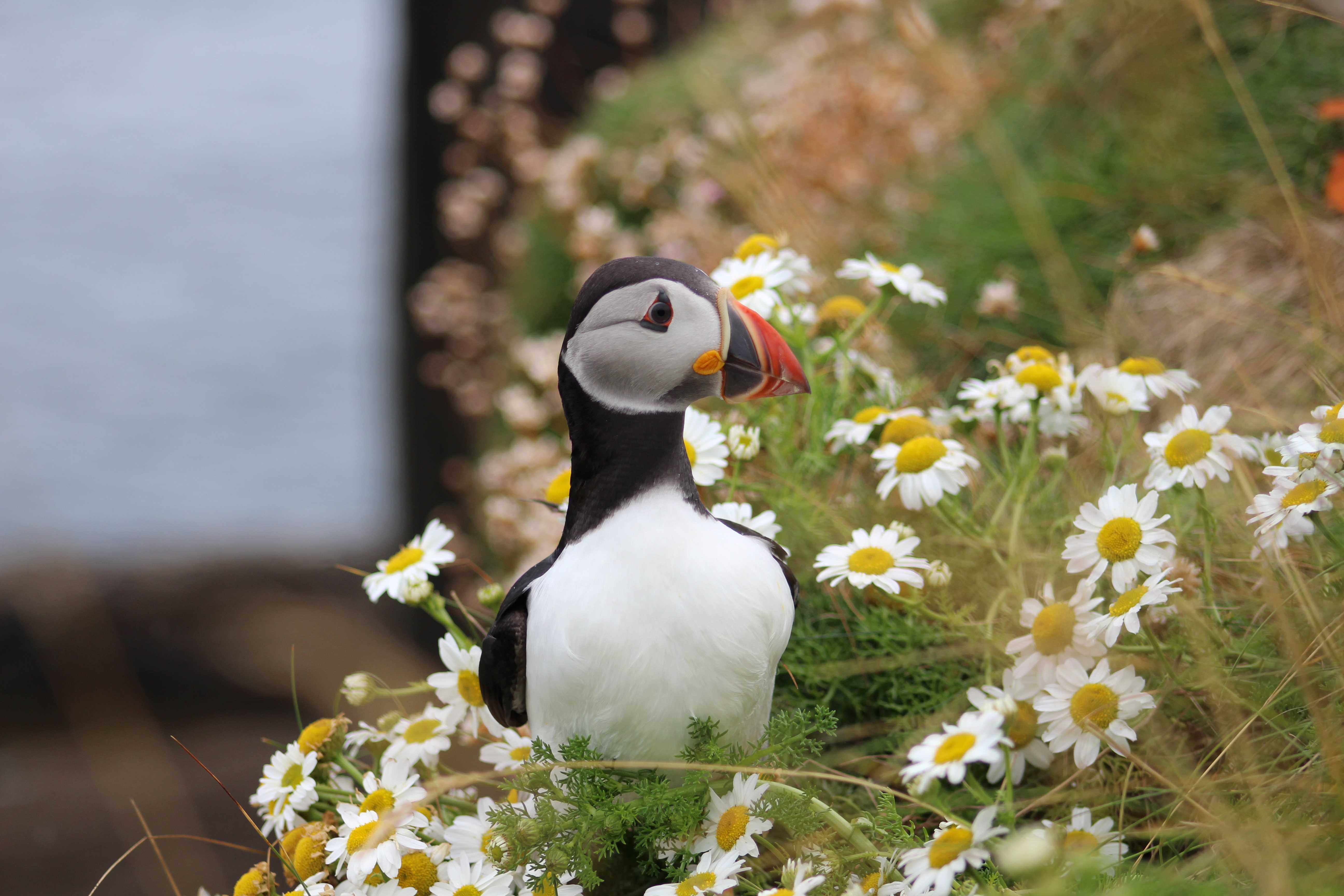
Staffa is particularly well known for two things: Fingal’s Cave, a remarkable sea cave carved into the free-standing basalt columns, and the comical, pint-sized puffins that make the island clifftops their home between April and early August each year. As incredible as these two elements are, there is even more to Staffa. It is a completely awe-inspiring island, with a constant fluidity to match the flowing topography of the landscape and the surrounding seas.
Before being entrusted with the position of ranger (my dream job!) thanks to the funding raised by players of People’s Postcode Lottery, I had been fortunate to visit Staffa on several occasions. Even though I now step ashore almost daily, no two days are alike. There is always something different to see, a new nook to explore, changing colours through the seasons, distinctive bird song filling the air, the weather showing its power, and unexpected wildlife encounters.
My day begins on the geologically rich shores of Fionnphort in Mull, where the tour operators’ boats welcome us aboard. There is always a hum of excitement in the air, as people from all walks of life gather to visit the spectacular Inner Hebrides, each with their own stories.
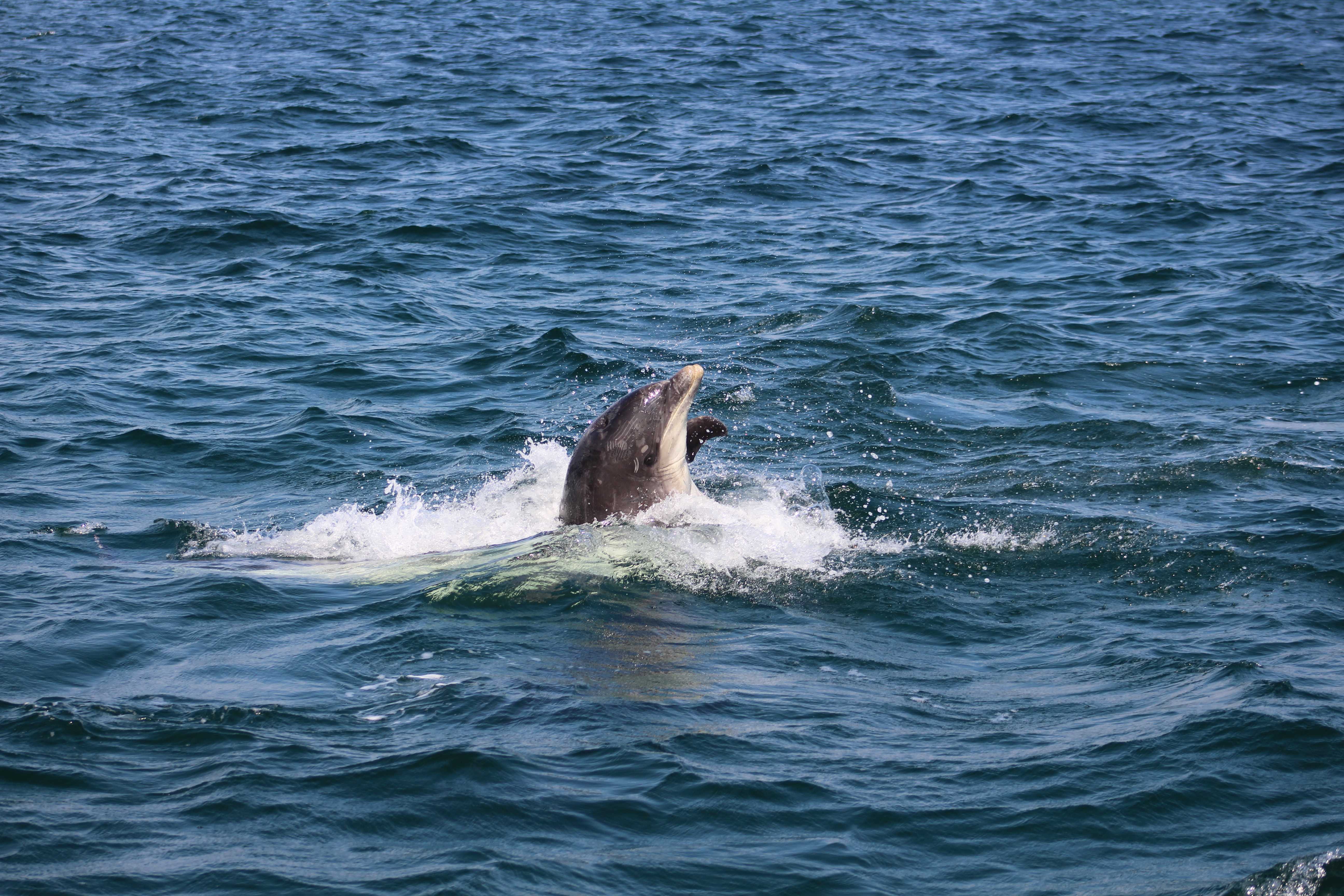
From the get-go, Staffa is in sight, along with several other island properties we manage in the area: Iona, Burg and, very excitingly, the newest Trust property at the Treshnish Isles. My work supports our conservation charity’s vision to care for, protect and share these special places, now and for future generations to enjoy. The 6-mile boat journey north is an experience in itself, whether riding the long rolling waves of the Atlantic swell or gliding through mirror-like seas. The seas of the Hebrides are abundant in marine life. Particular highlights so far have been lunge-feeding minke whales, seals sunning themselves, my first-ever basking shark, leaping common dolphins, blooms of jellyfish and boisterous bottlenose dolphins – not bad for the daily commute!
Upon reaching Staffa, many people are overwhelmed by the sight of the Great Face’s basalt columns towering over us. After landing at Clamshell Cave, manoeuvred expertly by the skippers, I scramble along the causeway to Fingal’s Cave, checking the path as I go to ensure it’s safe for visitors. The cave is rarely quiet, be it the sound of roaring waves that inspired Mendelssohn’s The Hebrides overture or people making their own music on calm days. Often, there are echoing gasps of amazement … and even the occasional bagpipe rendition too.
I then climb the staircase to the top of the island, following the newly laid meandering paths to the puffin colony. Here, people eagerly await the puffins’ emergence from the sea below. These little birds take to the skies in a wheeling flight, flapping in unison in large circles out from the sea along the edge of the cliff before landing, often with a less-than-graceful thud, by their burrows. The sight of these bright-billed birds mere metres away brings a chorus of excited gasps, some people even shedding joyous tears. It’s a special moment in people’s lives that I feel humbled to witness.
I spend a lot of time here at the north end of the island by the burrows, engaging with visitors to help give an insight into the ‘secret life’ of the puffins, answering any questions and discussing the environmental importance of these seabirds.
Beyond my set daily tasks, my adventures vary. So far, they have led me to cover more of Staffa than I could have imagined. I have studied wildflowers, rambled in rockpools and surveyed many of the breeding bird species including puffins, shags, fulmars, black guillemots, gulls and storm petrels. Hearing the latter’s soft purr and calls from among fallen rocks was a special moment, made more so because I was able to share it with some kayakers. Despite their own amazing travels inciting a little jealousy in me, they said this made their holiday.
I have also had the opportunity to explore many of the caves on Staffa, including the Cannonball Cave whose cylindrical chasm is thought to have been created by a tree trapped in the lava flow that eroded away – how cool is that! From wildflowers coming into bloom and baby birds being born, to surprise encounters with otters, white-tailed eagles and a humpback whale towards Lunga, I never know what’s in store for me!
One of my favourite spots on the island, where I find a little peace between landings, is perched above the Great Face, looking down onto Boat Cave. Here you can clearly see the three untouched formations of ash, basalt columns and chaotically jointed pebble effect. On stormy days, the wind whistling round the cliffs stirs up the birds who float effortlessly, whilst calm days provide the best spotting opportunities for marine life and passing boats. It certainly puts a lot of things into perspective.
Working on Staffa is not without its challenges. Being exposed to the elements, it’s easy to see why this island has remained uninhabited. Some days appear miserable, wet and windy; others offer no shelter from the glaring sun (who knew that happened in Scotland!). Luckily, no matter the weather, each day brings a surprise and some fun of its own.
The impact Staffa has on people personally is astounding. Whether you find serenity or have your senses overwhelmed, it evokes a reaction in everyone. I am unbelievably privileged to be able to share with people, and impart my knowledge on, such an extraordinary place, full of history and natural landscapes. I love doing my bit to protect Staffa, so it can be cherished for many years to come.
The conservation and engagement work carried out by Louise on Staffa was supported through funding from players of People’s Postcode Lottery, who have now raised more than £1 billion for thousands of charities and local good causes.
At the end of September the ranger service teamed up with Rowanbank Environmental Arts and Education to bring their Positive Imaginings Climate Circus to the woodlands of Mull!
Undaunted by the (at times challenging) weather, the team began to set up and rehearse at Aros Park and Tiroran Community Forest.
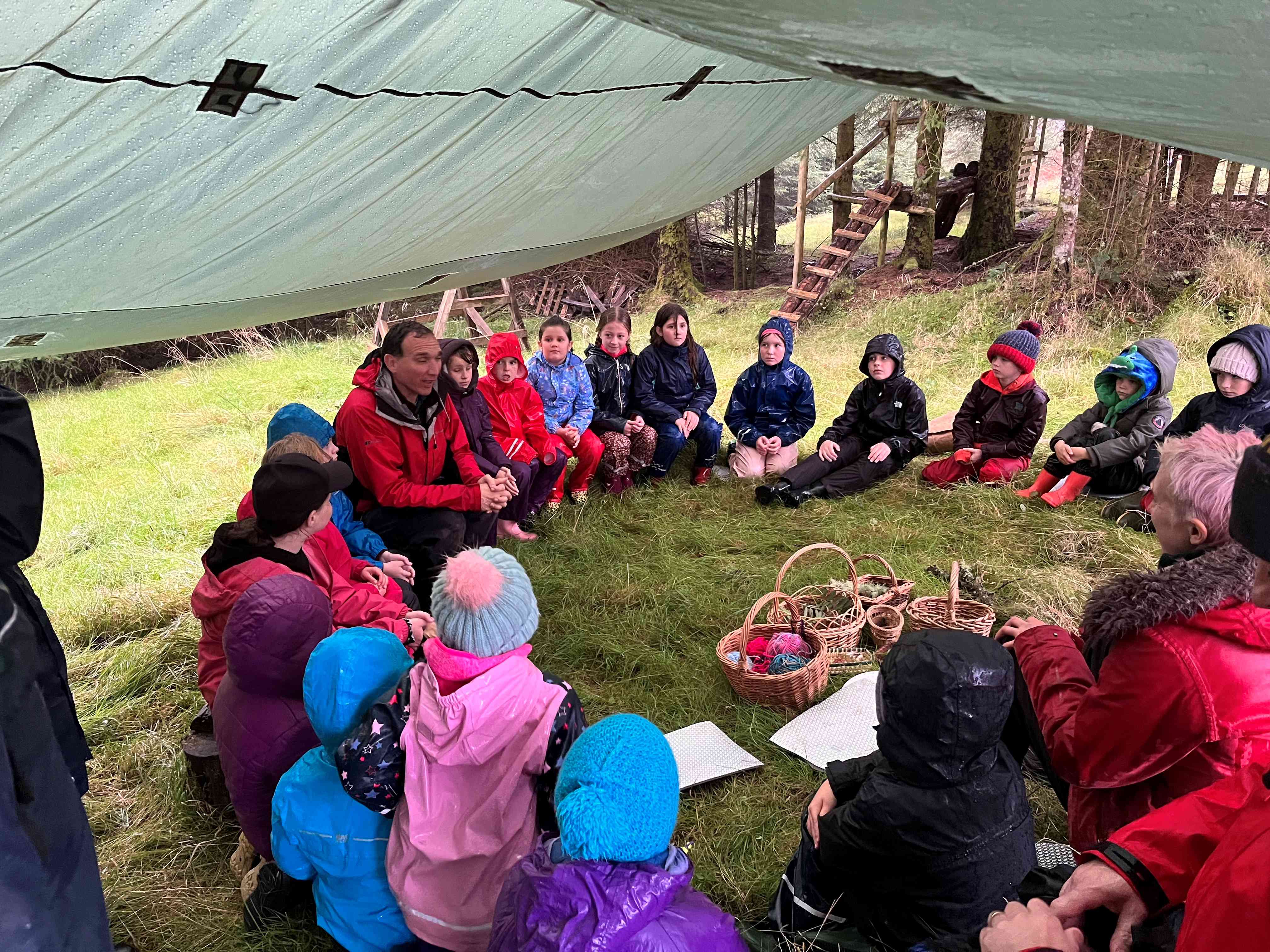
We worked with children and staff from all 6 Mull primary schools on interactive workshops about climate change. Sadly Iona school were unable to join in due to weather cancelling ferries.
A series of games and demonstrations helped to explain the science and causes of global warming, how it links to climate change, then we heard about situations around the world where many people had been inspired to become involved in solutions when just one person voiced their idea and started taking action in their own small way. People such as Wangari Maathai planting trees in Africa, or Afroz Shah cleaning beaches in India – their individual actions have built into global environmental movements.
The children used natural materials to make pictures of the positive futures they would like to see, featuring water-powered cars, solar panels, communities that grow their own food, and lots of trees.
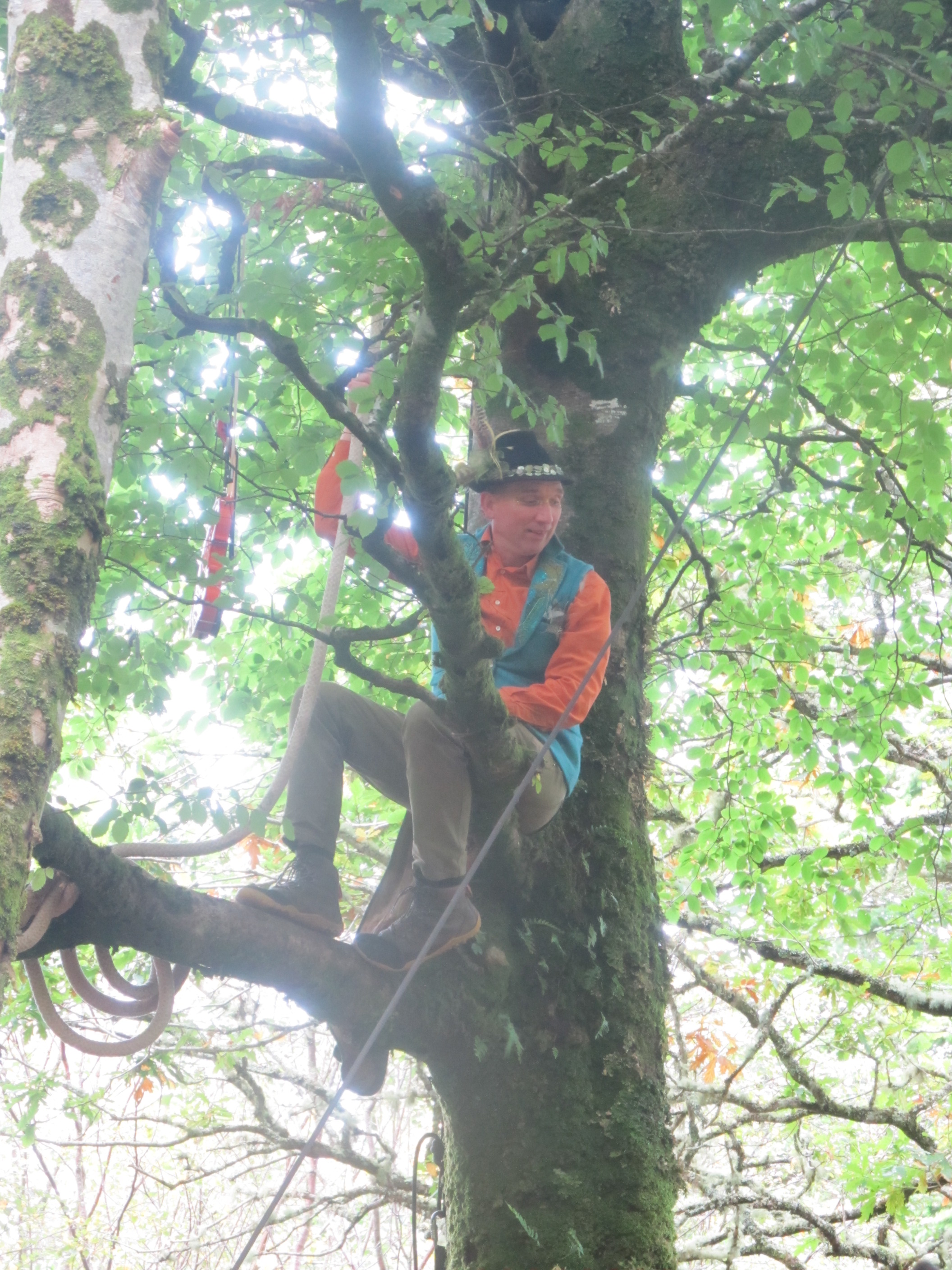
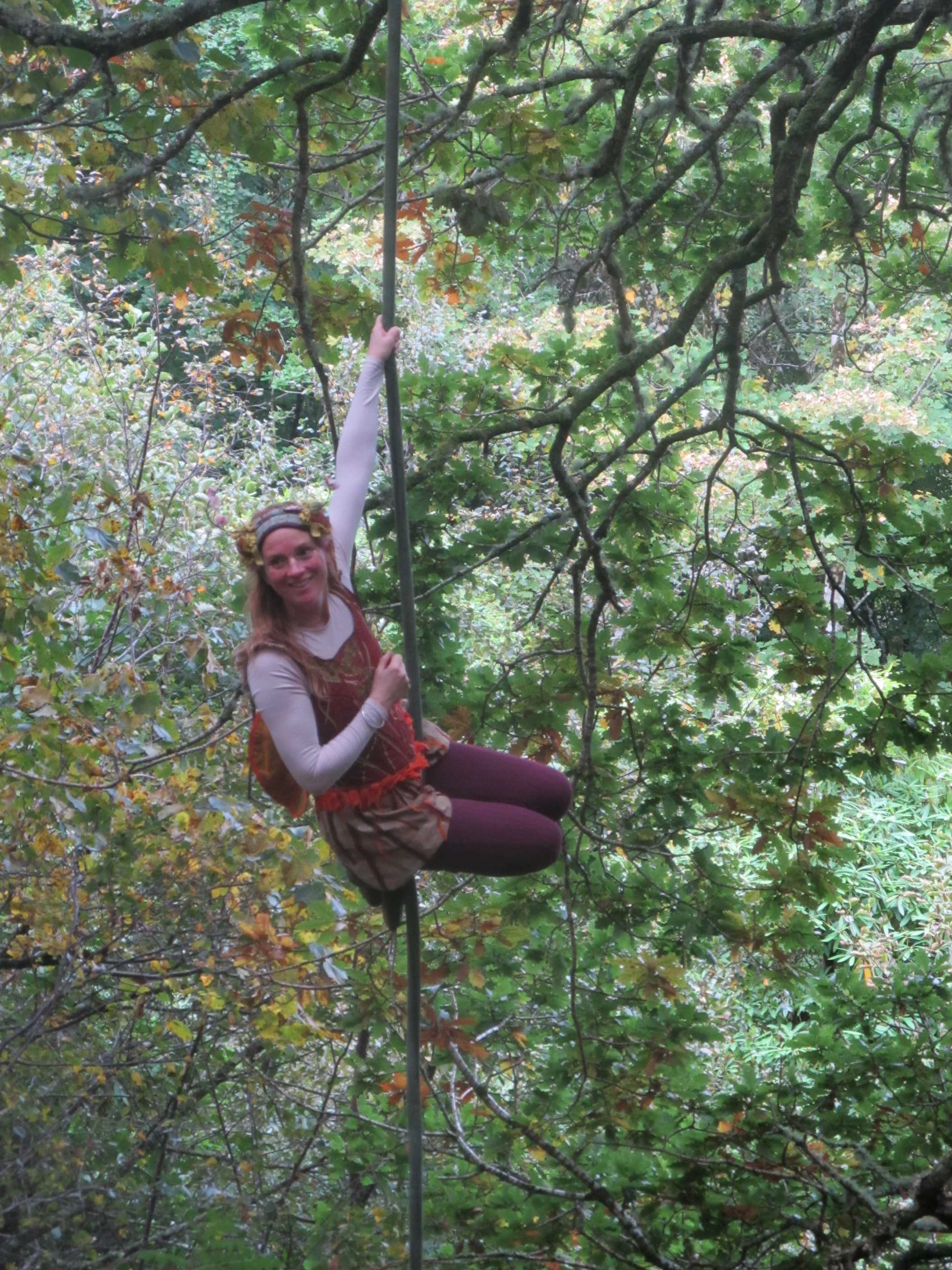
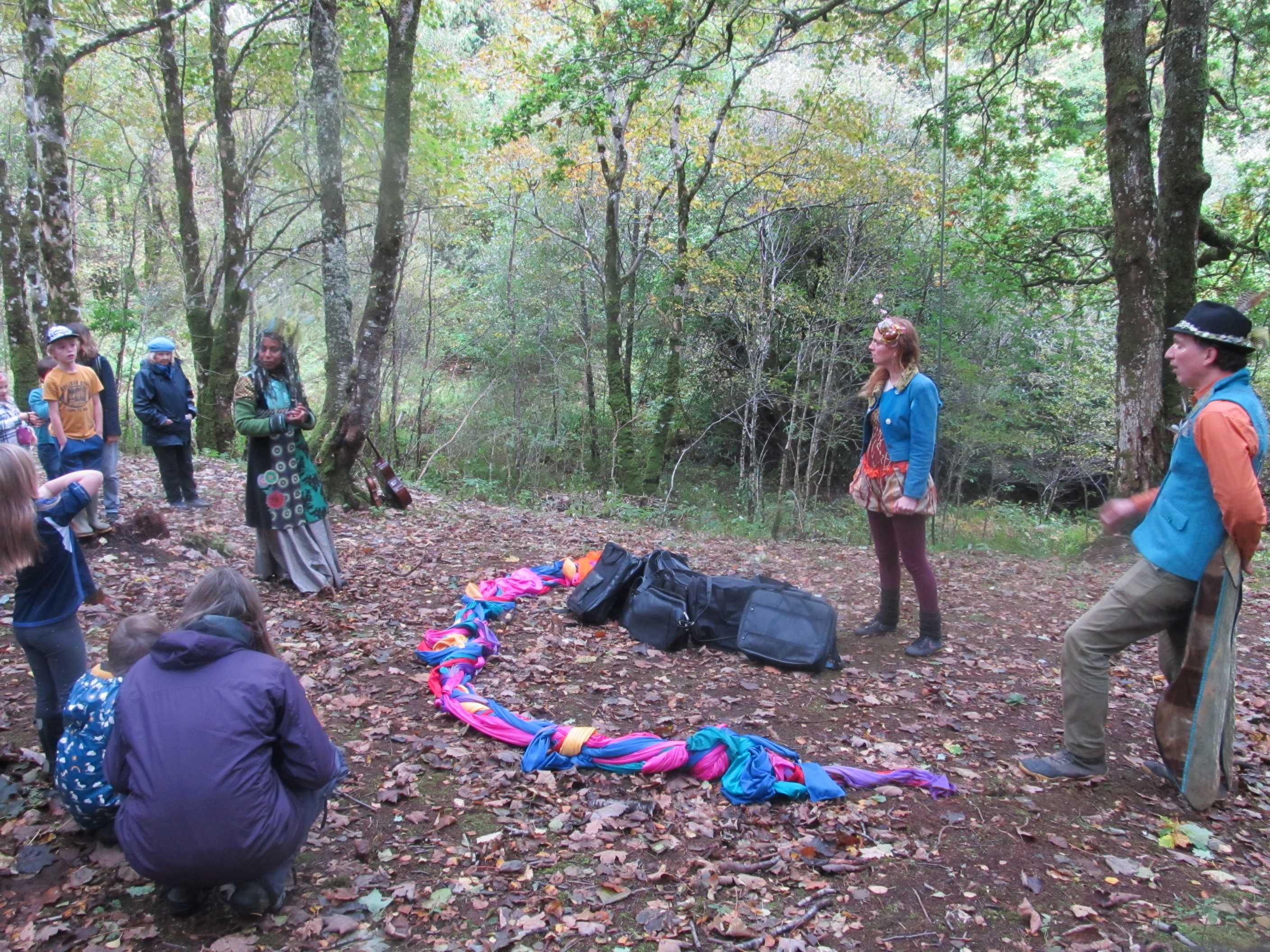
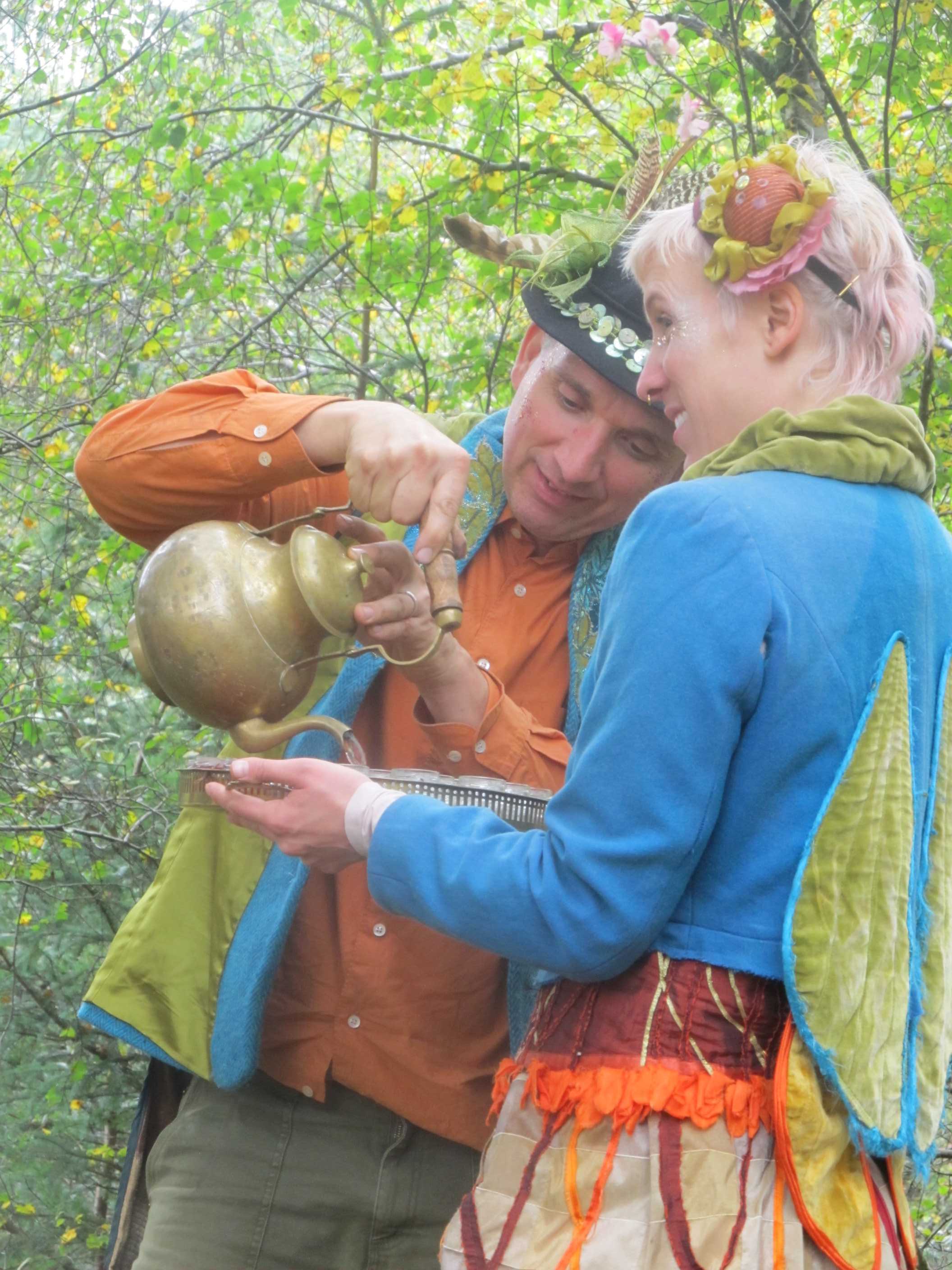
Later in the week everyone had a chance to experience a colourful and exciting outdoor performance through the joy and wonder of storytelling, circus and connecting with nature. As the audience arrive at the forest, they are met by Flow, the forest dreamer, and Jay, the planter of oak trees, who introduce them to all the plants and animals living there.
However, as the story unfolds, Flow starts finding black bags in the forest, which represent real environmental problems, and becomes weighed down with anxiety and despair. Jay and the audience must seek help from Anam the Dreamweaver.
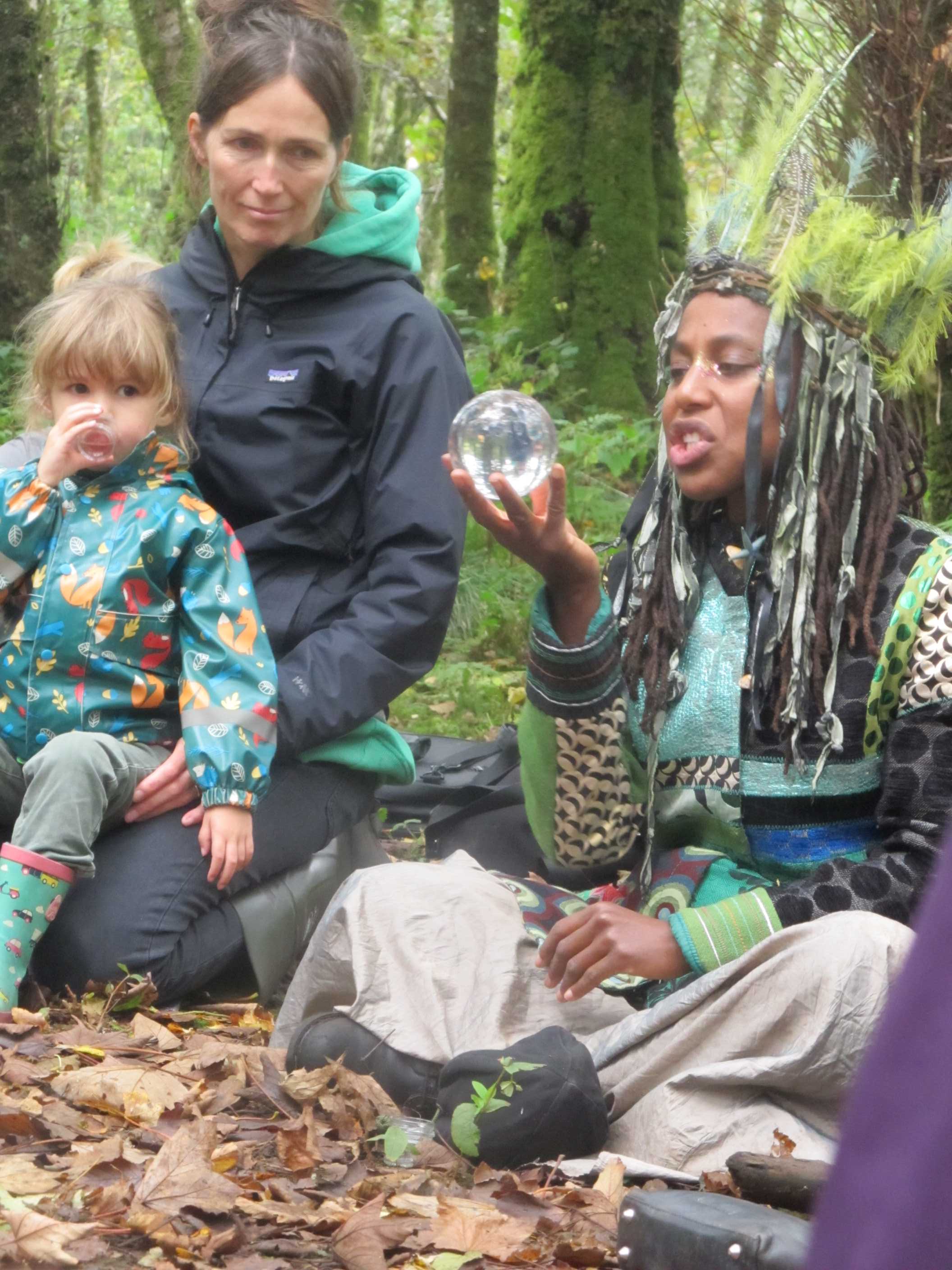
Anam empowers people to make their dreams a reality, and weaves the children’s dreams into a bright cloth representing collective action.
At first Flow cannot see the colours, but Anam helps Flow understand that what is needed is a new perspective, to use our imagination to find new ways of thinking and doing. Flow learns how to live with her climate worries and manage these complex emotions: by working with others to take climate action; and by remembering to notice the natural beauty that exists all around us.
The performance ends with a ceremony in which everyone has a chance for their dreams to be heard, the first step towards living in a kinder way for all who share this planet.
Thanks to our fundraising efforts, the work with schools and an additional public performance were supported by The Waterfall Fund, Argyll and Bute Council Supporting Communities Fund, The National Lottery Community Fund and partners An Tobar and Mull Theatre, Forestry and Land Scotland, Mull & Iona Community Trust and South West Mull & Iona Development.
We need to change the pattern, to see things from a different perspective. How do you imagine a positive future here on our islands? What one action could you start taking for our shared environment and communities?
Photos by Ranger Service and Rowanbank staff and volunteers
What felt like a long period to be away from home, a partner and a cat, has flown by a bit too quickly. Those swallows that were just arriving as I started my job are now gathering together, preparing for their long journey south, just as I prep for a return to my studies. Eagle chicks have fledged, leaves are starting to turn, hay has been baled. It’s been nice to watch it all happen across such a large area, having had the opportunity to travel around the whole island regularly in the course of my weekly duties.
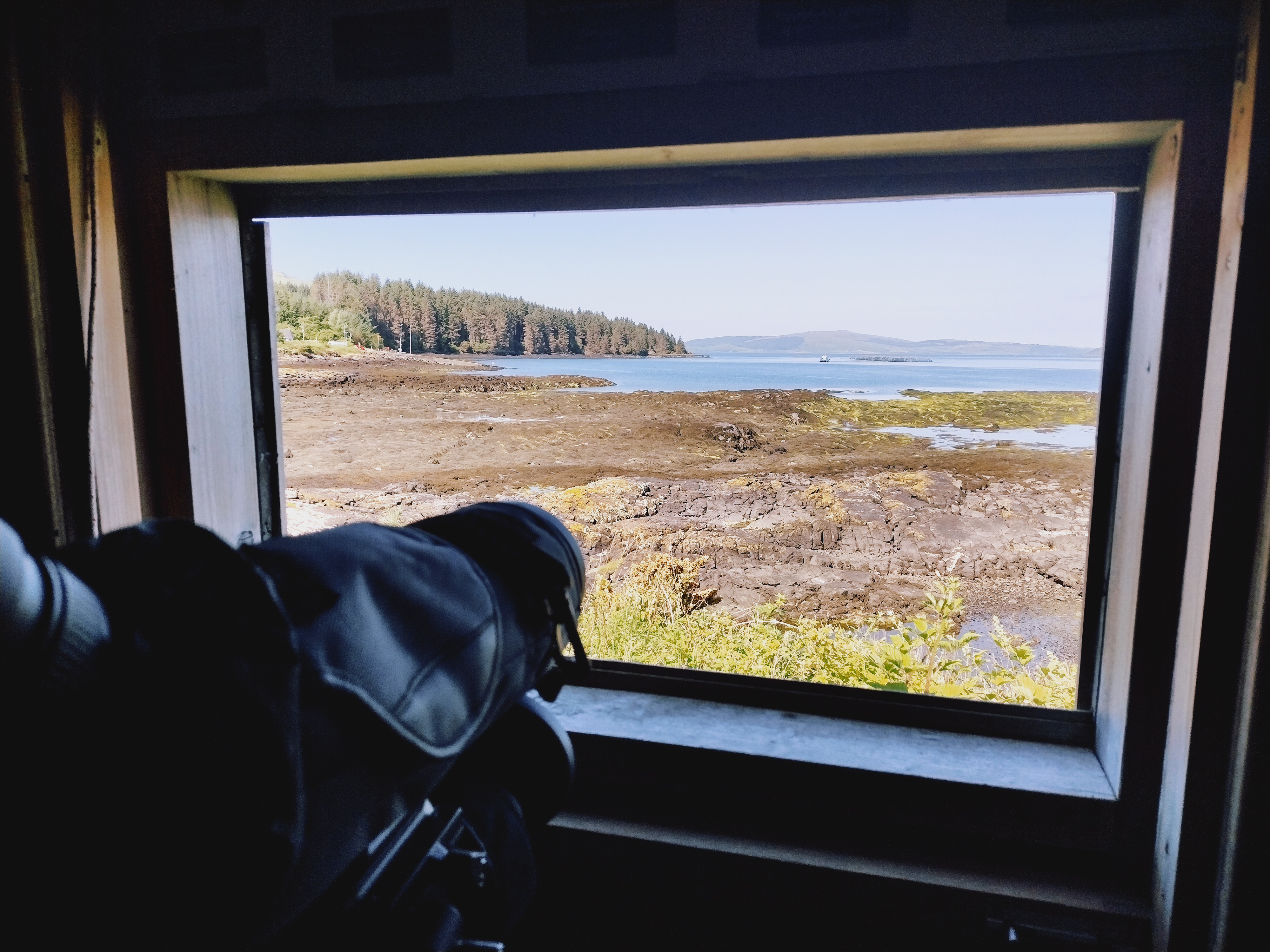
The highlights have been many – usually wildlife related. Watching a white-tailed eagle build up strength in its wings before leaving the nest was one. Spending a morning in a wildlife hide with 15 holidaymakers as we watched an otter feed for 45 minutes (before another three white-tailed eagles arrived in trees opposite) was another. And I had a lovely evening standing amongst dozens of bats at Loch Torr, just earlier this week.
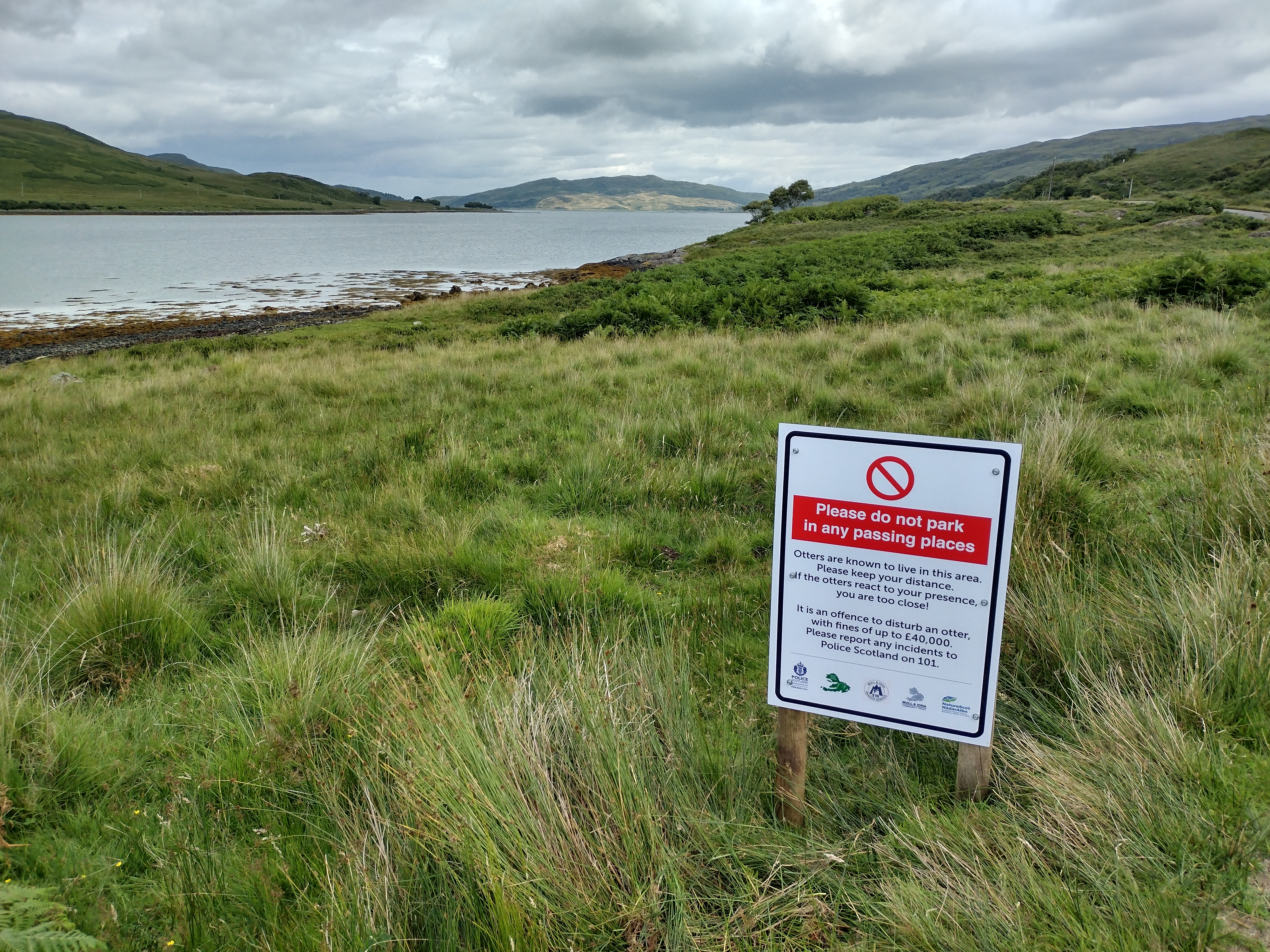
There’s been plenty to enjoy with the people I’ve worked with as well. Jan has been a hero helping me acclimatise to the role (and helping me find accommodation!), while the occasional workload overlap with Emily at the south end of the island also helped me find my feet. One project I was involved in feels like it’s only just begun – A stakeholder group involving island-based representatives from MICT, Police Scotland, Mull Otter Group, the RSPB and wildlife tour operators, alongside input from national organisations including NatureScot and the National Wildlife Crime Unit, came together to address the recent issues with otter disturbance on the island. The result was new otter-watching guidance, designed to be concise and easy to understand to all visitors – whether they intend to have the binoculars out all day, or if the exciting sighting of an otter is secondary to their planned activities. While it will appear basic to some, we hope it cuts through to those who wouldn’t necessarily research wildlife-watching fieldcraft before they arrive. If anything, it was great to have a group of likeminded individuals from a wide range of organisations come together to help protect one of the island’s star species. The plan is to print leaflets and posters with this guidance, and promote this as a collective concern for all involved.
So thank you to all who have been involved in the above project. And a thank you to all the residents who have kept me informed of concerns from their own area, all the visitors who have been a pleasure to speak to at lochsides and in wildlife hides, and especially to all the café owners who’ve kept me well fed and caffeinated throughout the summer. Til next time!
Paul Fraser, Seasonal Wildlife and Community Engagement Ranger
Protect Mull’s otters
When watching wildlife, the animals’ welfare should always come first.
Keep your distance. If an otter reacts to your presence, then you are too close.
Remain quiet, keep a low profile and stay downwind. Move slowly, and only when the otter is underwater.
Never follow or chase an otter if it tries to leave the area.
Do not disturb other species, particularly ground-nesting birds.
Park responsibly. Never block roads or passing places.
Remember, it is an offence to disturb an otter or obstruct access to its breeding ground or resting place. This is punishable with up to 12 months imprisonment and a fine of up to £40,000. Please report any incidents to Police Scotland on 101.
There can hardly be a better job than travelling between stunning locations around Mull, chatting with folk and scanning the landscape for wildlife. While there’s the occasional uncomfortable encounter with overzealous wildlife watchers, it’s been reassuring to learn that the vast majority of people have the best interests of the animals at heart.
One of the only downsides is I’m rarely in one place for long. My ‘patrol’ area covers the whole island meaning I have plenty of places to go, people to see, and little time to practice the key wildlife-watching tactic that I preach: patience.
Even when I do have time to search out specific species, my day can sometimes (actually, oftentimes) end in disappointment. Fortunately, I’ve always been one to enjoy whatever nature sends my way, which, as it turns out, can be quite a lot on Mull.
So while I might not get much of an opportunity to enjoy the big ‘headline’ species found on and around the island – the eagles, the otters, the seals and cetaceans – I always try to make the most of the smaller but no less special encounters I have whilst out and about.
While many scan the skies and lochs on the drive to Lochbuie, they can miss some brilliant sights mere metres away. Throughout June and July, I’ve watched rugby ball-sized greylag goslings lose their early fluffy down and gain their adult feathers. Young snipe have peeked out at me from behind grass. And I’ve seen lapwing chicks (surely the cutest?) stumble around the grassier areas, while their parents stand on alert nearby.
A call regarding irresponsible wildlife watchers getting too close for comfort to an eagle nest meant a long afternoon drive around the middle of the island, to install some warning signage and reattach a traffic barrier. Fortunately, curlew and wheatears kept me entertained along the way; a stranded adder allowed me to test my snake rescue skills; and a huge golden-ringed dragonfly plonked itself down next to me as I got to hammering the signs together.
Finally, a visit to Loch Torr Wildlife Hide, where the visitors present were disappointed not to see eagles and otters, became a competition to see who could identify the most species. House martins, sand martins and swallows were all visible from one spot, offering a great opportunity to compare their physical appearance and flight patterns. Redpolls and whitethroats made an appearance, while a small field vole fed amongst the scrub a mere 2 metres away, oblivious to our presence.
It can be easy to get caught up looking for the ‘big ticket’ species, but it can be disheartening too. So be sure to to keep your eyes and ears open to other wildlife nearby – You might see your new favourite creature!
Staffa is one of the islands we look after here at the ranger service, it’s part of our partnership with the National Trust for Scotland.
Plenty of activity on this little island recently! Louise King, the new NTS seasonal ranger has arrived and is enjoying getting to know the place and enhancing our visitor experience with plenty of information, often to be found at the puffin colony where birds are returning and have just started coming on land to sort out their burrows for egg laying. Louise brings a lot of knowledge about rockpool creatures and marine mammals, here she is investigating the intertidal zone.
Sadly the birds that are not returning are our fulmars. Cliff faces that were dotted with nest sites a few years ago are now eerily quiet. Fulmar populations are declining nationally, with marine plastic and climate change affecting food supplies, but ours gave up their breeding attempt mid-season last year and have not returned. We don’t know if they were spooked by something or whether it’s just part of the general decline for this species, but it’s sad to lose a breeding species from the island. Hopefully they will try and re-establish a colony in the future.
Empty cliff face this year compared to last year’s studded with the white dots of nesting fulmars (photo by Rachel Bonnici).
More positively, Louise and Emily spent a night on Staffa with volunteer bird-enthusiast Igua, to enable a dawn black guillemot count which revealed numbers of this auk species are healthy. Birds nest in hidden cracks in the cliffs, but fly down before sunrise ready to head out to sea to fish, displaying their big red clown feet as they perch on the edge of the rocks ready to dive in!
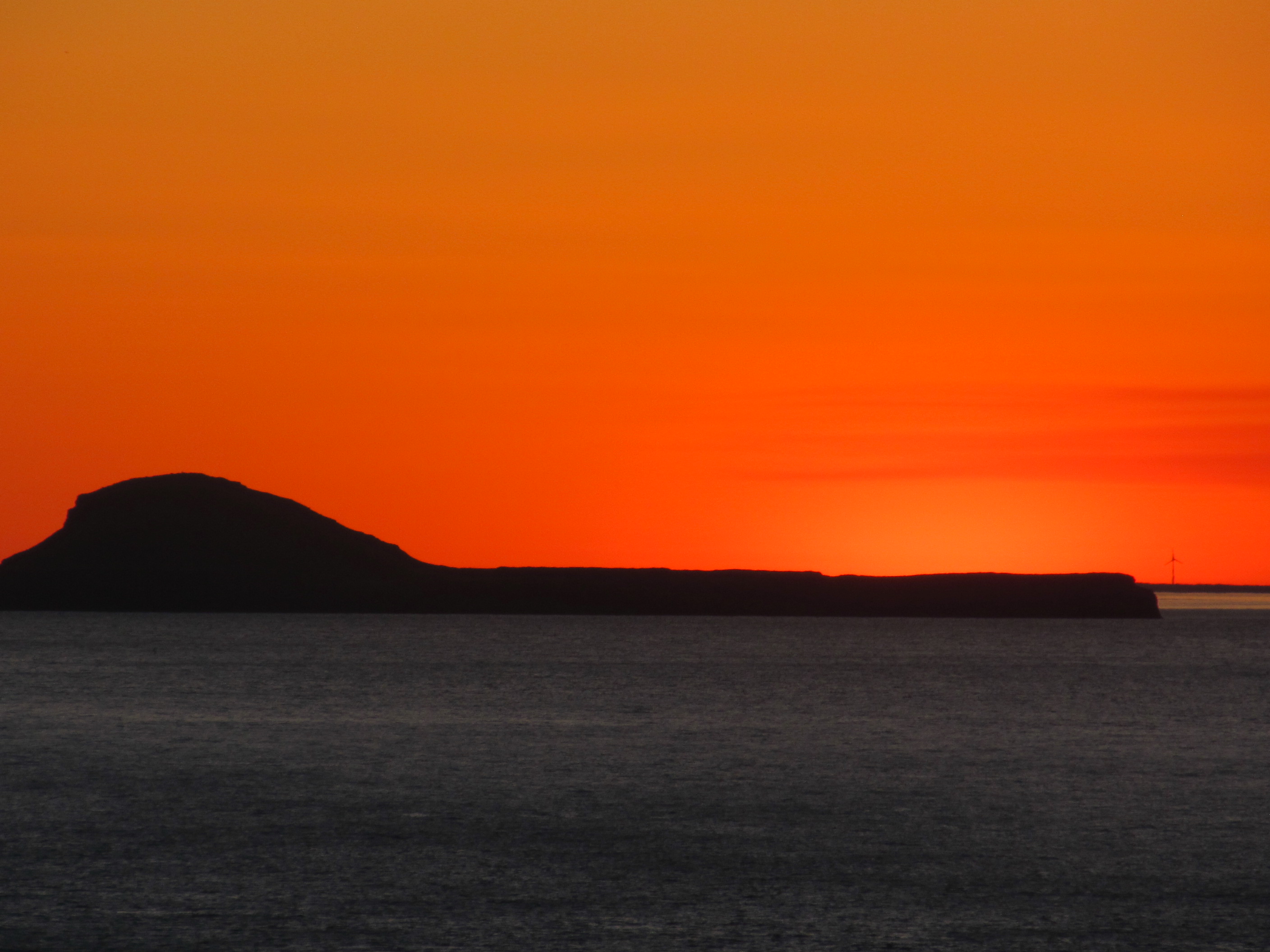
Black guillemot (photo by Terry Ward) and sunset light over Staffa with views to neighbouring islands
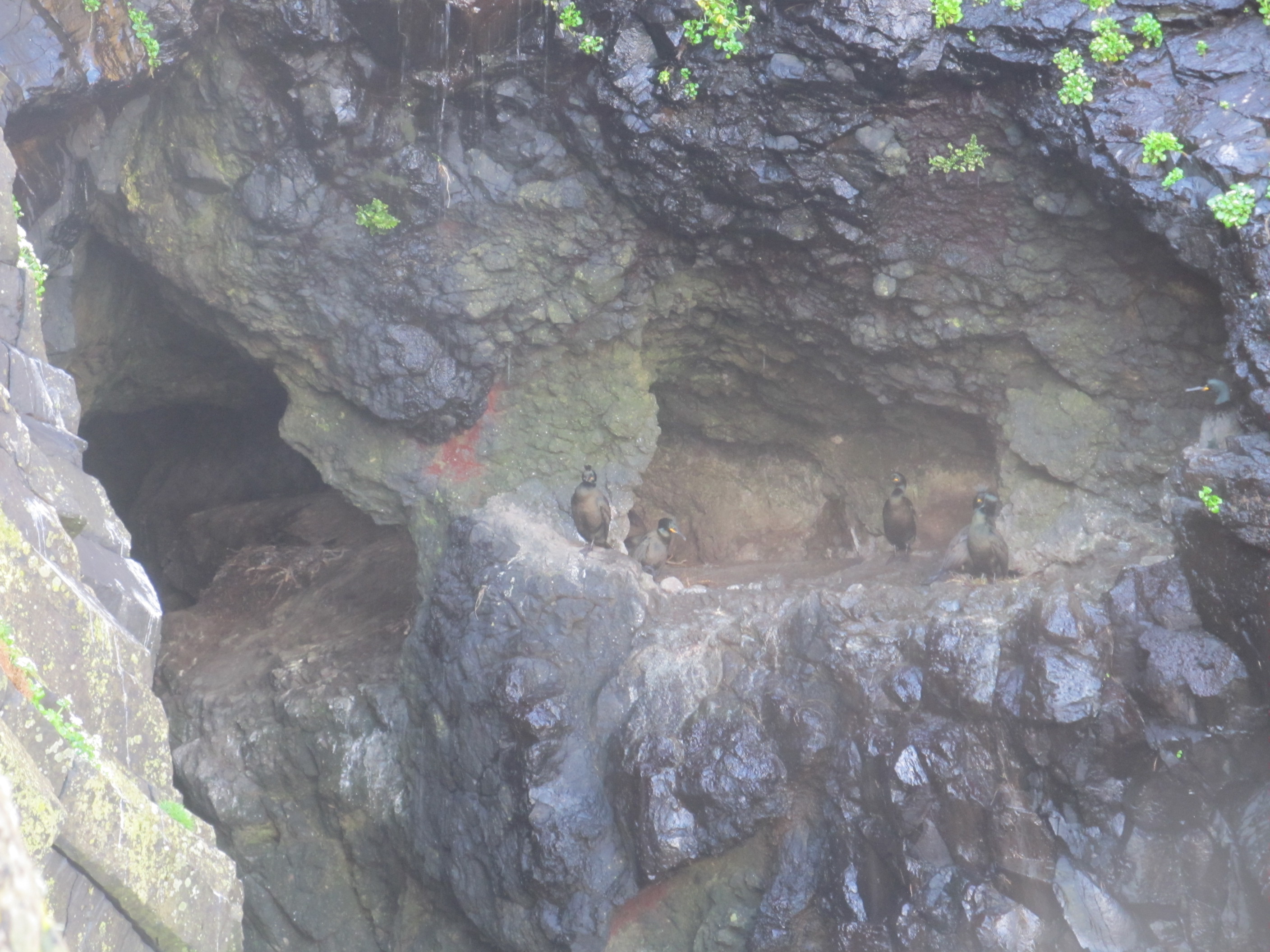
In other wildife news, we are keeping a close eye on the colony of shags breeding in Clamshell Cave this year. As they are so close to the landing jetty we need to ensure they have fledged all of their chicks before we start improvement works there in late summer/autumn. This means Staffa will be closed to all landings for a couple of months from mid-late August onwards.
Landing jetty, and shags getting ready to breed area in nearby Clamshell Cave, can you spot any nests?
On the maintenance side of things, we hosted NTS Footpath Manager Bob Brown last week to help us plan future repair work. We love welcoming visitors to explore this National Nature Reserve, but tens of thousands of human feet every year do take their toll on the ground surface, so we are gradually making paths more durable and less muddy. We also completed a spring beach clean and good to see there wasn’t too much rubbish needing taken away.
Bob checking the condition of recent footpath repair work
As avian influenza (bird flu) continues to be a threat to seabird colonies, we will be installing a disinfectant mat and roping off some areas to reduce disturbance to our seabirds, please watch out for signage on the island and play your part in protecting our wildlife.
Meanwhile the National Trust for Scotland are recruiting for 2 roles which will work alongside our ranger service here on Mull, Iona and Staffa – a Staffa Seasonal Ranger, and an Inner Hebrides Property Manager.
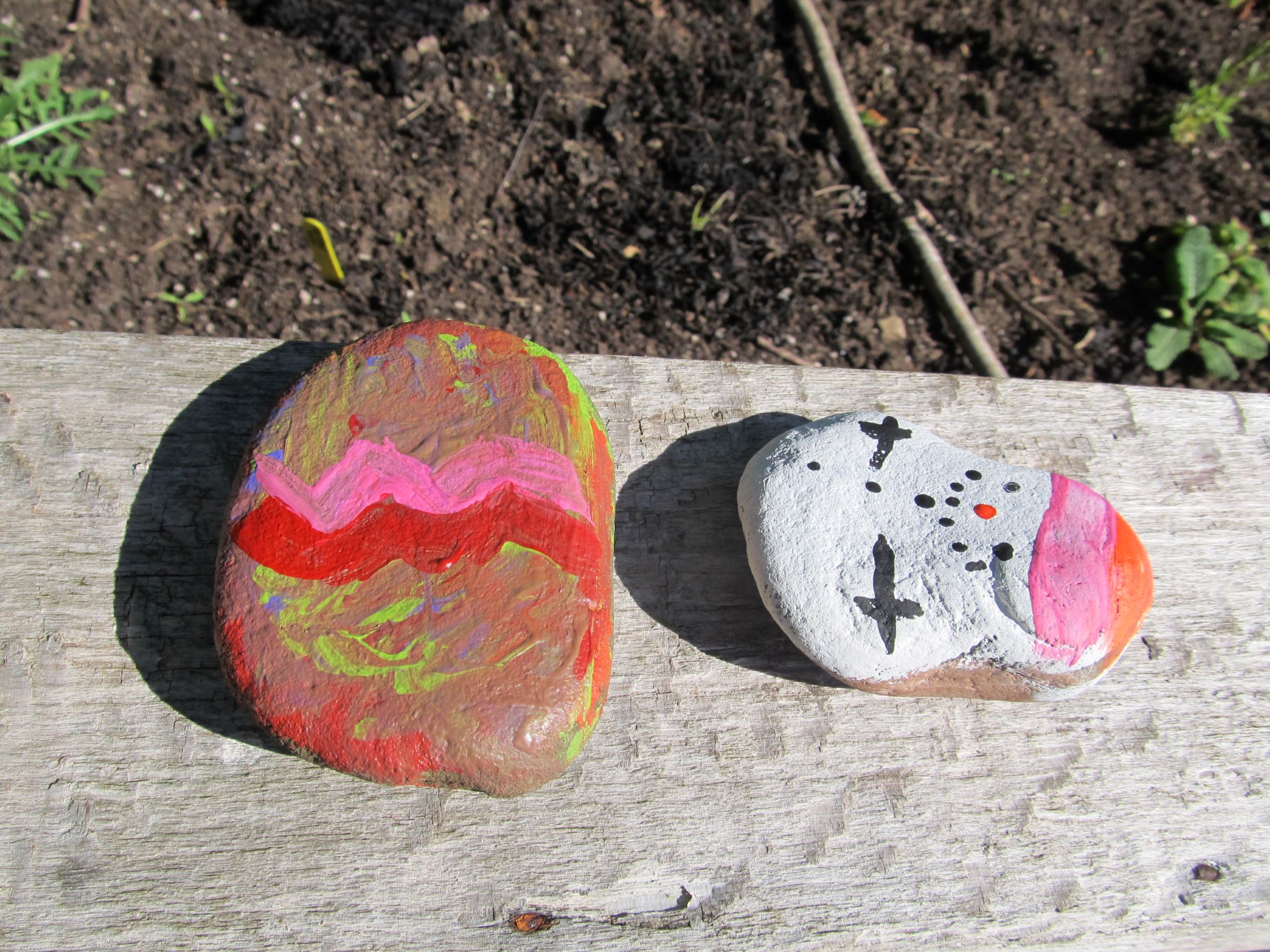
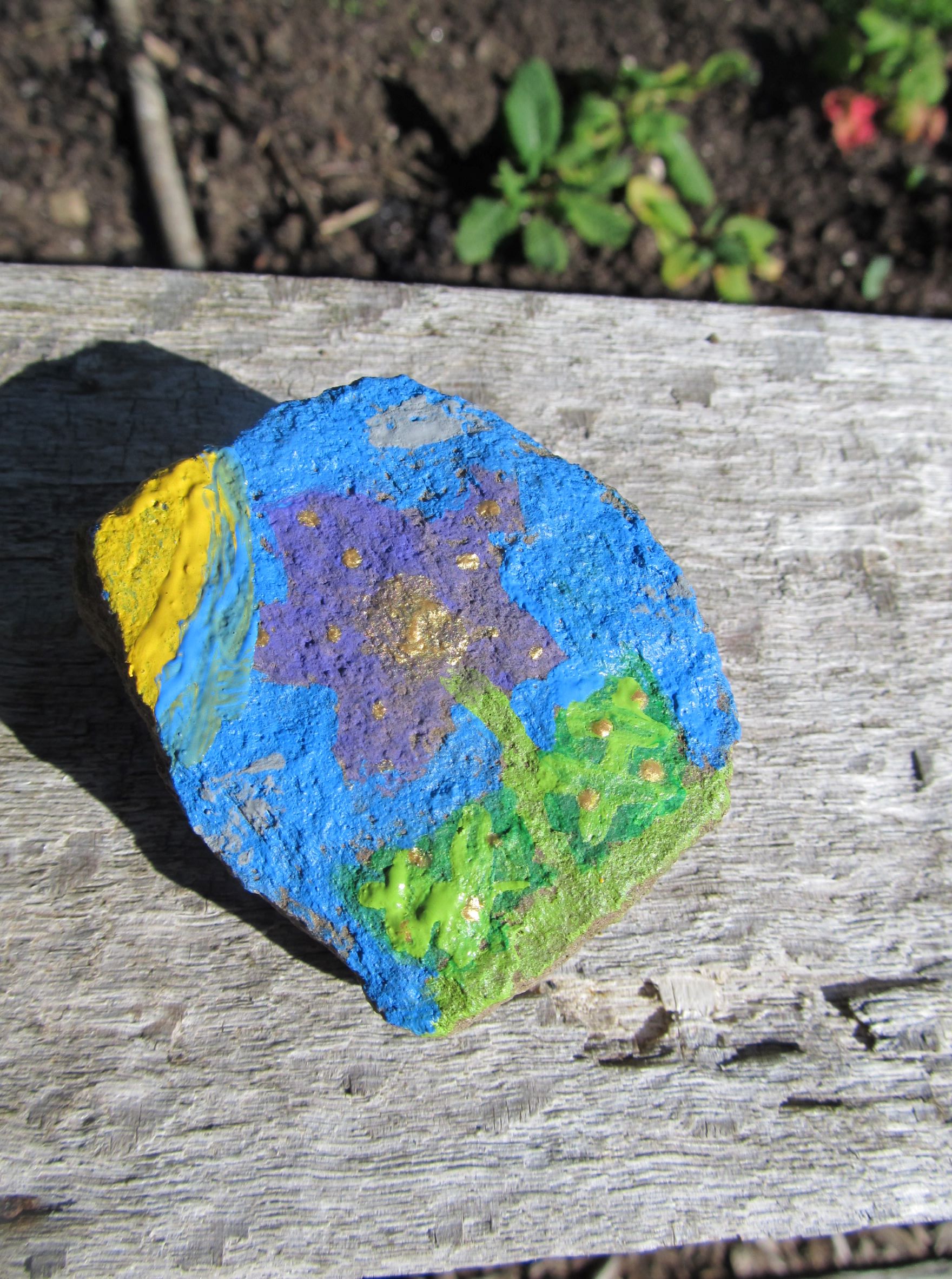
Creativity can help us to celebrate our enjoyment of nature, which motivates us to care for it. Both Iona and Bunessan afterschool clubs have had great fun with art activities recently, many thanks to Shirley and Julie for leading these.
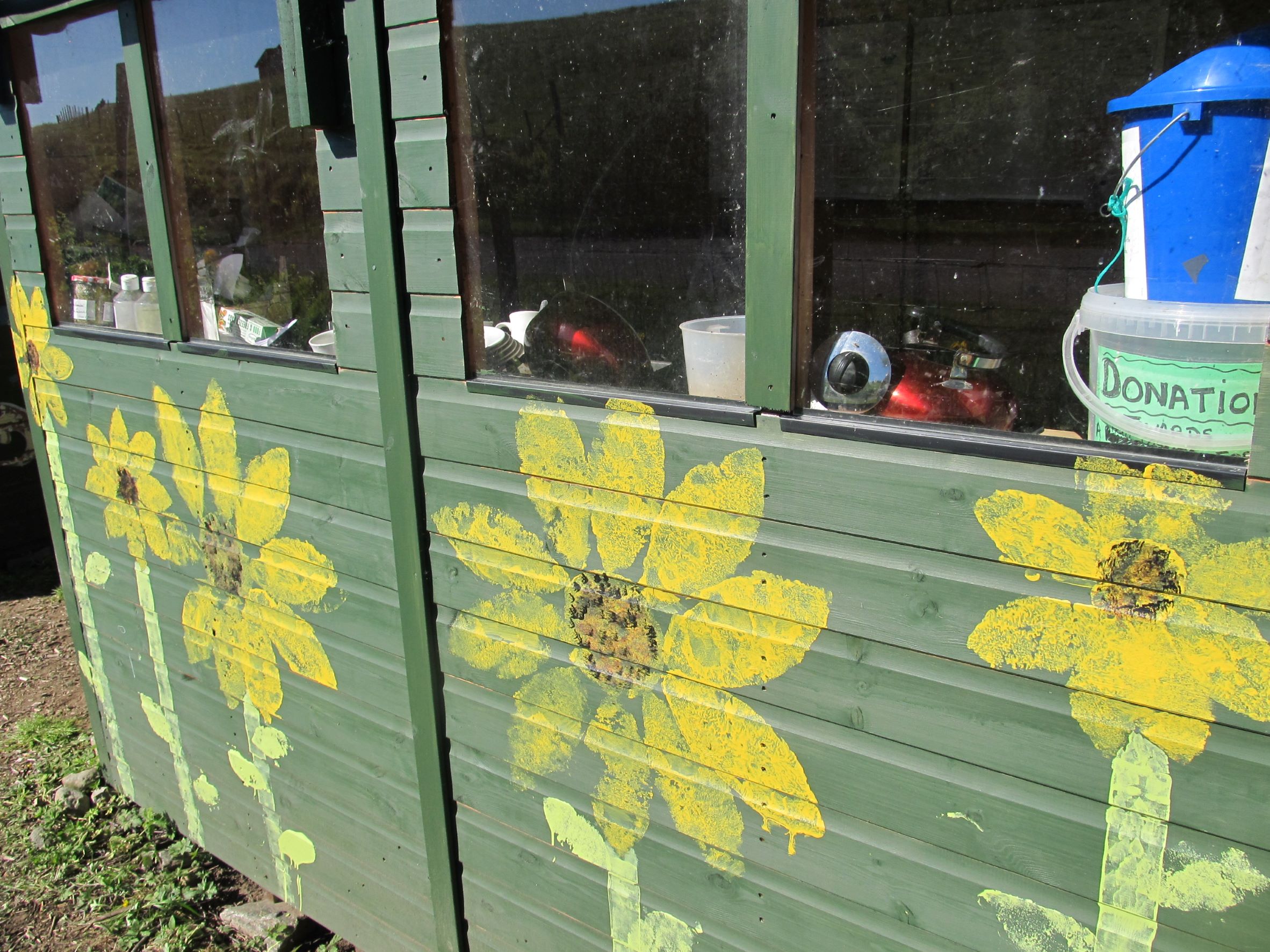
The newer shed at the Ross of Mull Community Garden is now adorned with these cheery flowers.
Use the slider to view a lichen-covered rock on an Iona beach and a painted copy of the pattern onto a smaller stone. Plenty of creativity on show with these painted stones!Stone painting in progress
We’ve also had a lot of fun with den building, outdoor cooking, investigating freshwater invertebrates and those which help the composting process, tree height measuring, making bug hotels and learning to recognise birdsongs. Look out for events on offer over the summer holidays.





















 Mull & Iona Ranger Service